

Think about the Toyota Corolla. What pops into your mind? It’s just as likely to be a beige, automatic sedan engineered for trouble-free commuting as it is the black and white AE86 fastback from a well-known Japanese anime series, or a dusty one driving past in the background of a news report from a faraway country. That’s the legacy of the Corolla’s 60 years in production.
Even if the model series has grown from one segment to another during all this time, it’s been built with the same name for six decades, providing dependable and durable motoring around the globe for anyone who needs a Corolla, with the occasional oddball version for flavor. As well as the most basic ones, let’s take a look at some of the more interesting Corollas over the years.


Toyota still makes Corollas in the Takaoka plant that was specifically built to build the 1966 Corolla. Over the years, manufacturing has expanded around the world to locations such as the New United Motor Manufacturing (NUMMI) plant in Fremont, where a Tesla plant is located today, and Burnaston, UK, where the GR Corolla is also built. American Corolla production takes place in Mississippi, at the TMMMS plant.
Starting Small
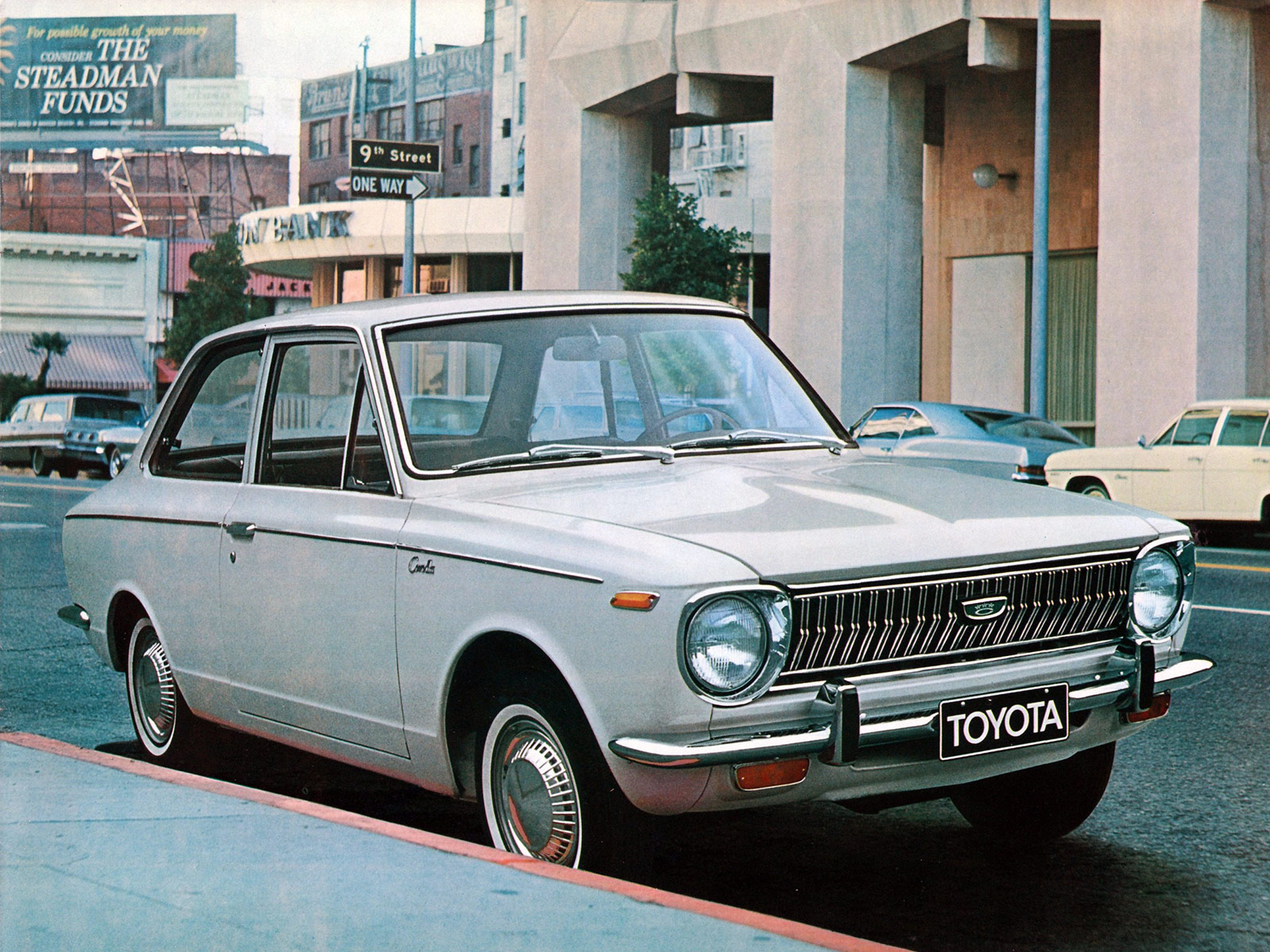
The first Corolla was a tiny sedan with an engine barely over one liter in displacement. After two years of Corolla production, the first cars were shipped to North America in coupe, sedan, and wagon styles.
It took until the mid-1970s for the Corolla to grow significantly, as the third-generation car was noticeably longer and wider than the E10 and E20 generations. Logically, it was marketed as the Big Corolla in Finland, as in this ad from 1976:
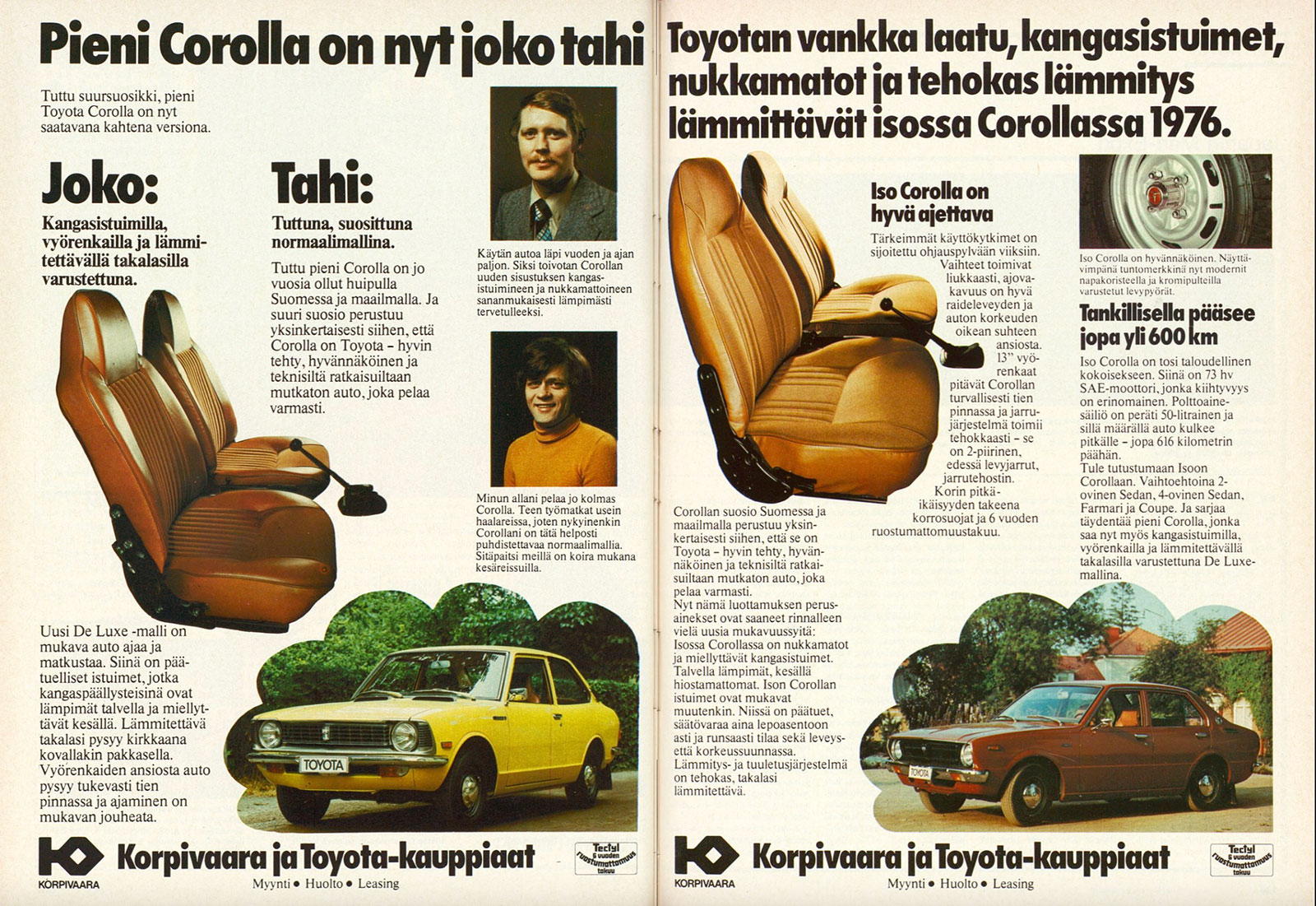
The Finnish importer had stockpiled enough old-style E20 Corollas after production ended in 1974, so they were sold alongside the new E30 generation Corolla for a while.
As it often happens, Toyota also kept making the old E20 generation wagon and van past the sedans’ discontinuation, as they were built until 1978. The square fourth-generation car (E70) was already introduced in early 1979.
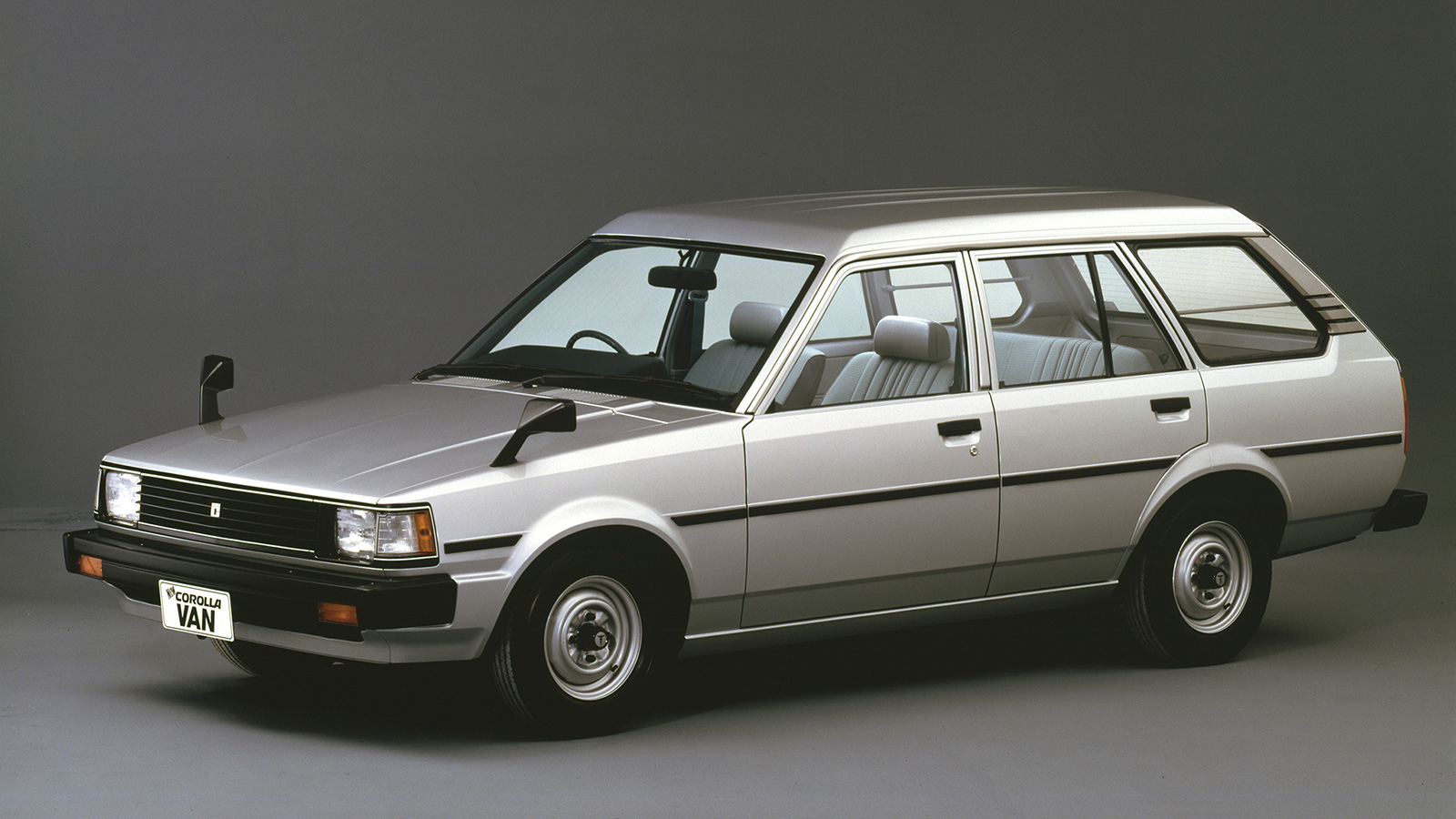
The E70 generation basis was also partially used for future Corollas, as the model line sort of split by the introduction of the E80 gen in 1983: sedans and hatchbacks went FWD, as Toyota accepted the transverse FWD layout that was becoming the standard in the segment, and the wagon and the coupes remained RWD – the wagon was still a lightly restyled E70 gen car when it ended production in 1987. The silver high-roof van above is just the kind of delivery wagon I’d love to drive. Look how simple it is!
Drift King

These cars here represent the duality of the Corolla heritage: basic transportation on steel wheels and a cool-looking coupe version with pop-up headlights.
Thanks to touge drift culture and the Initial D manga and anime series, the Corolla Levin AE86 and its Sprinter Trueno pop-up headlight sibling have become iconic ‘80s cars that are also immensely expensive in any good condition. In Europe, they have been used in rallying all this time, which has kept their values high, as rally garages have often needed straight shells for builds. Stock, they had as little as 70 hp in North American DX specification, and even the 4A-GEC engine in the North American pop-up-headlight Corolla GTS made just 112 horsepower. Most enthusiast AE86s are likely to have more poke these days. As well as building your own new Corolla AE86 out of a Chinese reproduction shell, you can also have a Japanese tuner build you a perfect restomod version for a lot of money.

The E70 generation Corolla’s platform and engines were also again used in the Daihatsu Charmant, a rebranding exercise whose modern-day equivalent was the Suzuki Swace, a Corolla wagon sold in Europe between 2020 and 2025.
Another rebranding was the Geo/Chevrolet Prizm, a Californian Corolla/Sprinter by way of General Motors joint venture, that was built for three generations at the NUMMI plant. The earlier E80 generation car was also sold as the Chevrolet Nova, built at the same factory.
Cool 4WD Wagons, Hot Engines

For the E90 generation, not only were RWD Corollas dropped from the model range, but four-wheel drive was introduced. Toyota’s Sprinter Carib, a model line that had spawned from the smaller Tercel, jumped up a model line and became the Corolla Sportswagon or the Corolla All-Trac Wagon. Toyota would offer these Sprinter Caribs and 4WD Corolla Wagons up until the 2000s, when the E110 generation was discontinued.
I have a late AE115L myself, and it’s certainly handy in the winter with its Full Time 4WD that transfers up to 50% of power to the rear without needing to select it with a lever, unlike in earlier cars. I can get it sideways at a moment’s notice in wintertime by just booting the throttle, but that is partly due to the good, but certainly not great, winter tires on it.
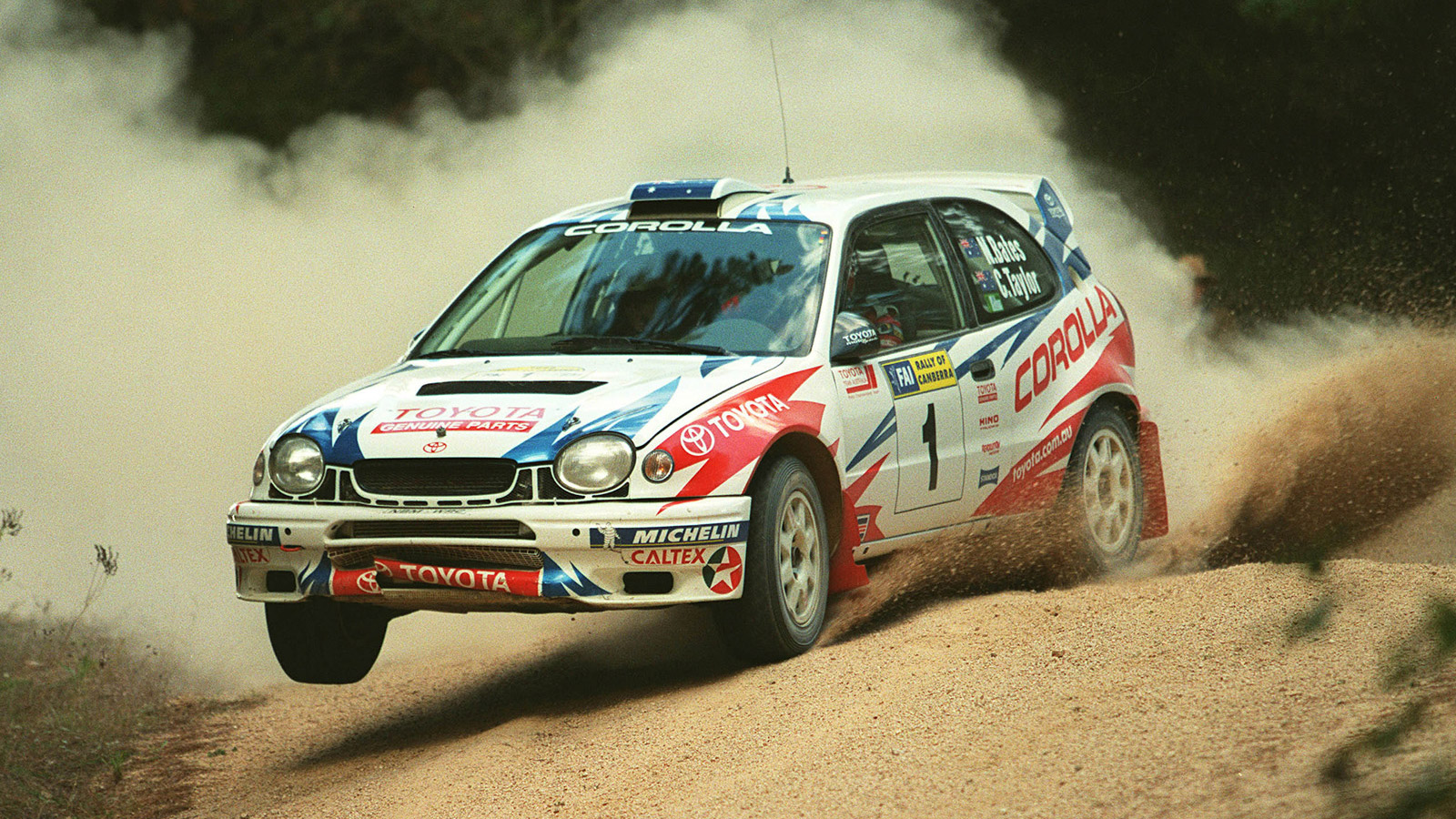
The E110 generation car also provided the base for Toyota’s WRC Corolla, and the G6 and G6R warm hatches were marketed with some of that rally-era magic, even if 110 horsepower was the best they could get. The G6 and G6R did get sports seats and a six- speed gearbox, and the G6R had an aluminum hood and a lower, stiffer suspension as well as a body kit.

As a concept, 2000s Corollas may sound boring from an enthusiast standpoint, but that’s not the whole story. Depending on the market, there have been some interesting powerplants available: the 2ZZ-GE, noteworthy for extracting as much as 192 horsepower from 1.8 liters without forced induction, was fit in the Corolla T-Sport and the Corolla XRS (above) as well as its Matrix/Pontiac Vibe cousins (170-180hp) and Lotus Elises and Exiges, plus Celicas. The tenth-generation E140 car got the 2.4-liter 2AZ-FE Camry engine, which is huge for a Corolla.
The eleventh-generation cars brought the sort of hybrid tech to Corollas that had been synonymous with Priuses; Toyota’s Hybrid Synergy Drive combined the everyday usability of a regular automatic car with very complicated hybrid technology that Toyota had managed to make as reliable as a Corolla would need to be.
At the time, sporty Corolla hatchbacks for the North American market were sold as the Scion iM, but those would not get as much power as the earlier hot Corollas. The current Corolla generation is the twelfth, and it’s been in production for quite a while already: it was introduced way back in 2018. With current fuel prices, the fuel economy of a hybrid Corolla is much appreciated: older Corollas could sip fuel, but that’s because they weighed nothing compared to the ones sold today.
Back To Basics

My granddad, a carpenter born in 1926, used to drive a white 1.3-liter, manual, four-speed E90 generation Corolla from around the time he retired but couldn’t put down his tools. The Corolla somehow embodied his ethos, as he simply needed a reliable car that would get him and his carpentry tools around when he needed to fix up something at the summer cottage.
The car was absolutely bare-bones, a black-bumper sedan with no rev counter, and it was indistinguishable from most of the other 1988-1992 Corollas that were sold here.
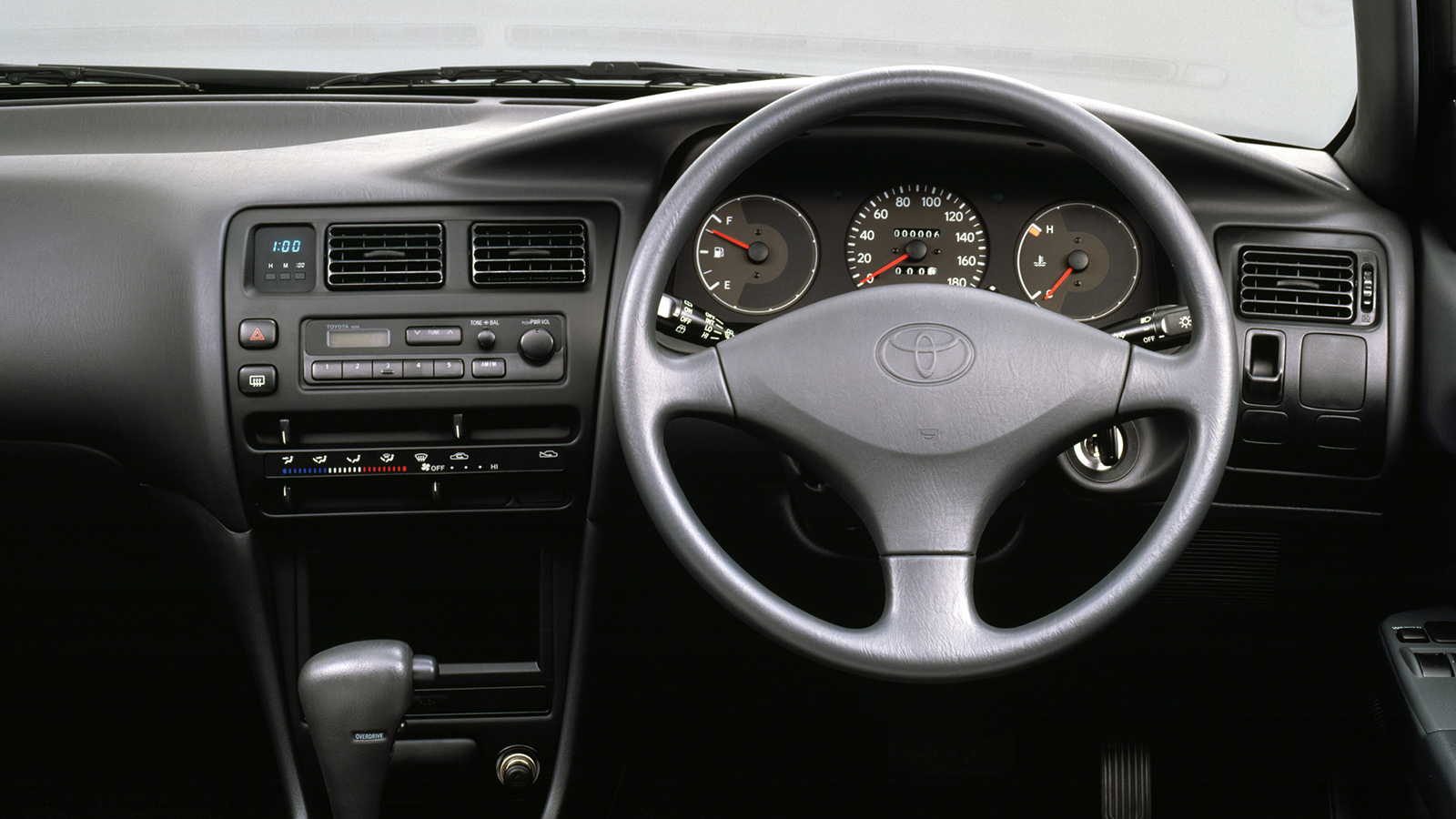
The following generation, the E100, has also proved very durable. They’re still a common sight here in Finland, and while you could spec them up, my idea of a ’90s Corolla is of one like this – especially since RHD ones were used as mail delivery cars. As well as having the steering wheel on the right, you could tell them apart from the orange Posti colour.
Few Corollas that Toyota makes today are as basic, as customers want automatic transmissions, hybrid assist, CarPlay, and a lot more power.
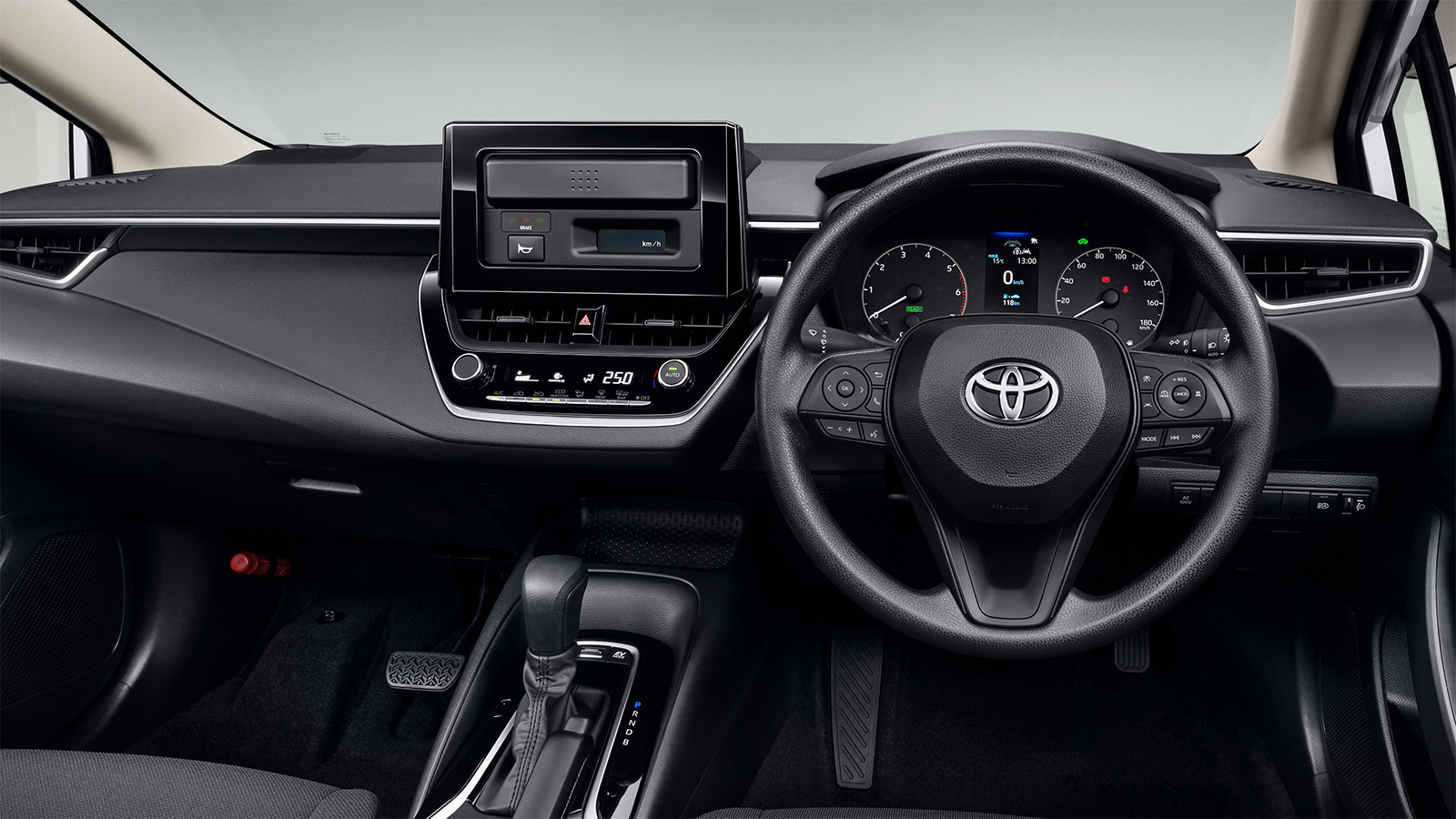
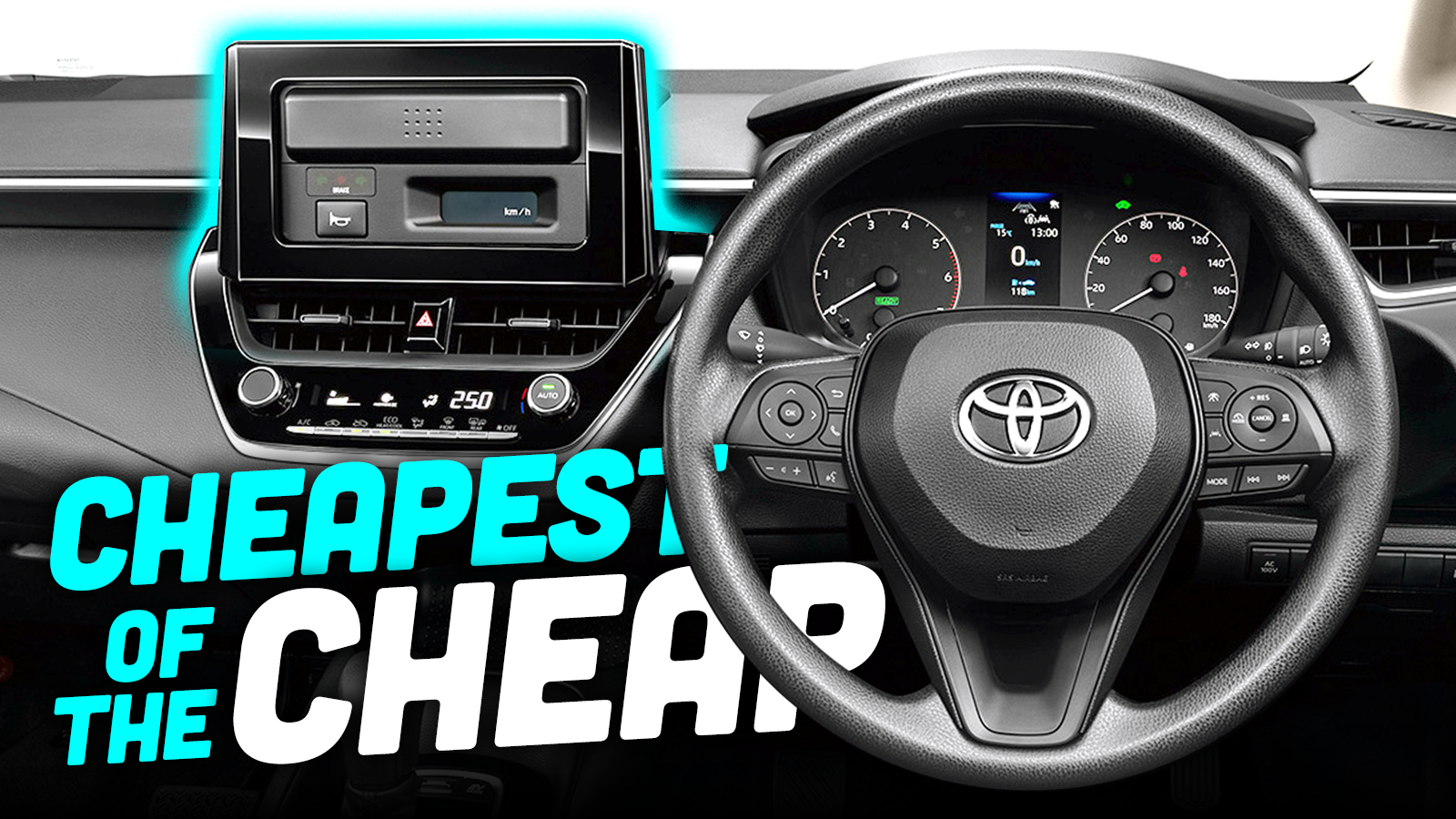
This brand-new, 2026 model year, Japanese-market driving school special, then, is the complete opposite – not only because the cabin layout is mirrored for right-hand-drive. Tailored for driving instructors, it’s available with the minimum necessary equipment, as it doesn’t even have a radio.
Compare it with the E100 generation dashboard above, and you can see it’s today’s equivalent of the Truly Basic Corolla.
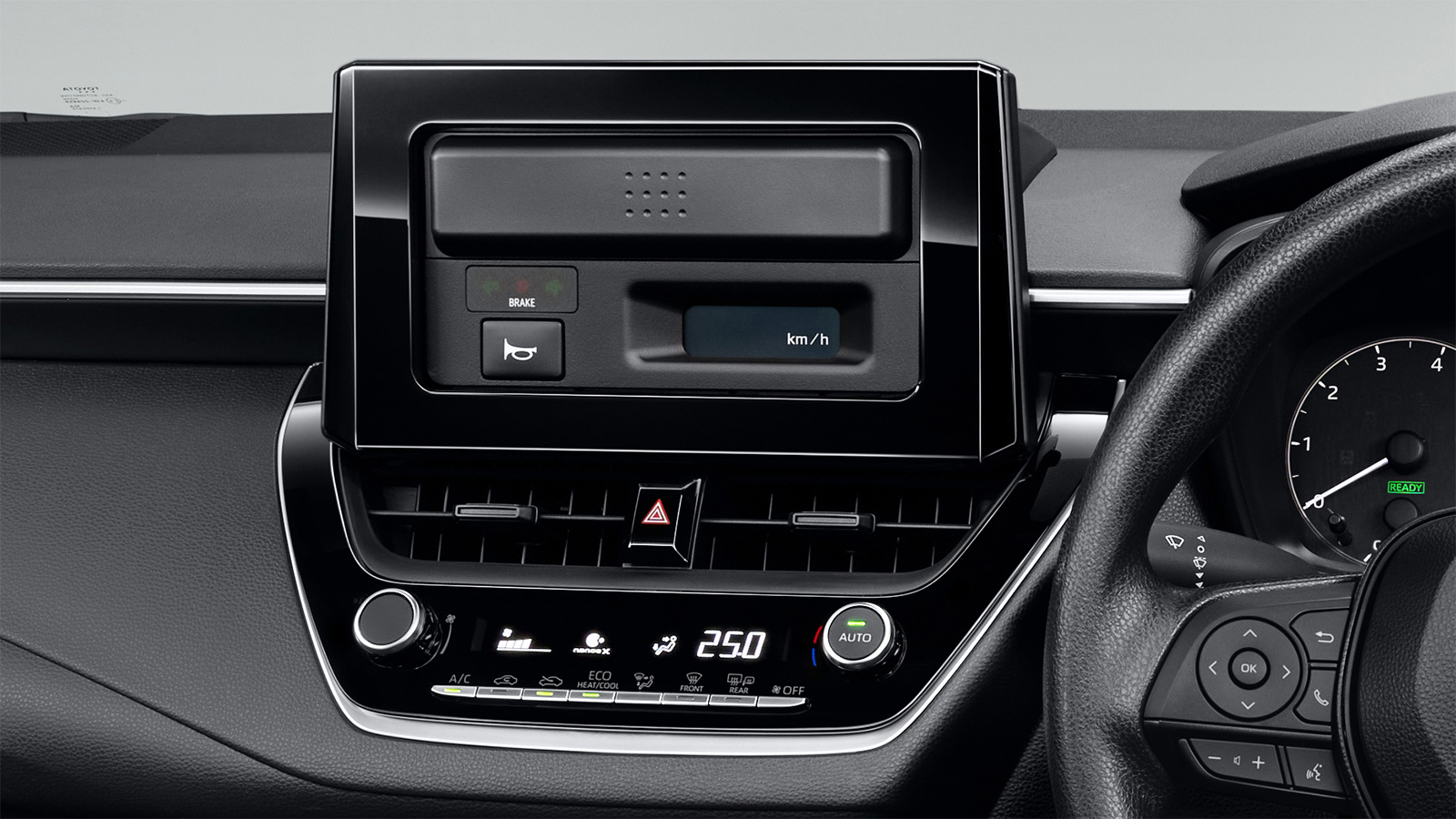
The usual dashboard touchscreen has been replaced with a single-DIN-sized placeholder, and what looks like the familiar Toyota digital clock is now a speedometer for the instructor. Next to that is an indicator for the blinkers and brake pedal use, and there’s a separate horn button as well.
As is usual for driving school vehicles, these Corollas come with a brake pedal for the instructor, and twice the number of mirrors compared to a regular sedan. Air conditioning is thankfully retained in case the atmosphere heats up during a lesson.
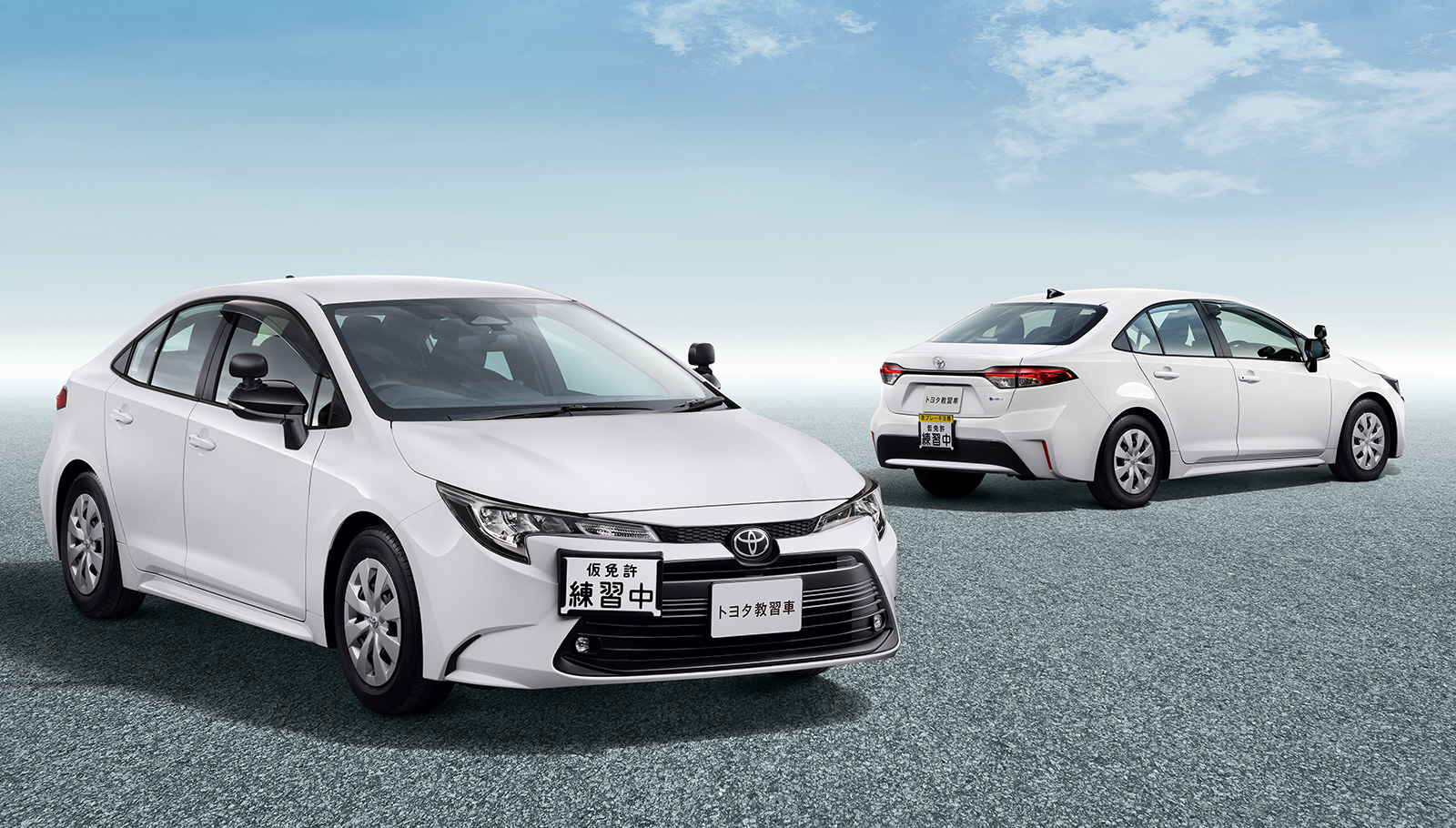
In the pictured Driving School Corolla with a CVT, the engine is the usual 1.8-litre with hybrid assist, but Toyota also offers a 1.5-liter paired with a six-speed manual. This is the only manual-gearshift Corolla sold in Japan except for the GR Corolla, which is a slightly different beast. Then again, the Morizo edition GR Corolla doesn’t have a rear seat, which is bare-bones in a different way.
In 2025, Toyota sold nearly 250,000 Corollas in the US and around 155,000 in Europe. It was the 11th best-selling car in the United States last year, and globally, after 60 years of continuous production, it’s the biggest-selling car there has ever been with 50 million built. The next best seller is the Ford F-150 (43 million) if you count trucks, and the Volkswagen Golf if you don’t (37 million). Rust is likely to be the Corolla’s only enemy, as they will continue to chug along, day after day, and even the rustiest ones in Northern Europe are eventually shipped to Africa, where they will continue to do the one thing they were built for: to get people where they want to go. Sometimes sideways.
All images: Toyota


Ha! My drivers’ education car was a ’74 Toyota Corolla with a two-speed automatic and a brake pedal on the instructor’s side (in the US, he was seated on the right).
I took my exam in my parents’ ’65 Oldsmobile Dynamic 18 on my 16th birthday. After that, it was mostly driving a ’56 Dodge pickup that had a transplanted 318 V8 and a 3-speed TorqueFlite transmission. With big fat Goodyear Polyglas tires and no power steering. Parking that thing was an upper body workout!
Going off to college, my grandfather gave me a $1500 ’68 Datsun 510 station wagon with a 4-speed manual transmission. I put a fair number of miles on it before handing it down to my brother. Who promptly wrecked it. He also wrecked the Olds and his own Ford F-100. He’s a much better driver now. We are both in our late 60s.
I have a friend in Denver, CO who DDs a 2001 Corolla with over 300,000 miles. It runs and drives fine. He keeps up with maintenance. A little rust here and there but nothing to worry about. And it’s not a bad place to spend a little time driving around. Decent materials for a budget car.
Same friend has a 2011 for a while, but it was taken out in an accident (no injuries). That car was the definition of a penalty box. Ugly interior, hard plastic everywhere, and not nearly as comfortable at the 10 year-older one.
I like a bit more power and luxury for my DDs, so the Corolla is not a car I would ever be interested in. I do, however, have a lot of respect for most of them.
Wish we got Corolla wagons in the U.S. I dig the hatchback, but am more of a wagon guy and want the cargo space. Plus, the Corolla wagon sold overseas is genuinely handsome.
We can get the JDM Touring Wagon and the smaller ‘Fielder’ Wagon (all hybrids) as grey market imports here in Australia. Unfortunately they are the short wheelbase – based on the hatch rather than the longer wheelbase that they build the wagon on European version wagon (that also gets the bigger engine that the Prius gets).
I think Fielder has also been the last Corolla wagon available with any sort of 4WD/AWD.
No, We can get the current model in a wagon with AWD as a used import from Japan as well. They are very rare and only on the base spec. The Fielders are really popular as Ubers here in Australia but the Corolla Fielder model (as opposed to the Corolla Touring) only has a 1.5 hybrid and is based on the Yaris platform.
I have the earliest a 1988 AE95 4wd Wagon. Has a proper diff lock switch and with a 2″ lift and 15″ ATs is a fun on tracks that take me to some great beaches nearby. It’s been the most reliable car I’ve ever owned 310,000 kms and still has original clutch and radiator.
I had an ’84 Tercel SR5 4×4 and it was a lot of fun. Probably would have been more fun if I had the carb rebuilt. I think the second barrel was dead or on life support because it felt like the engine ran pretty lean when I leaned on the go pedal. But it really did a good job in snow when you pulled the little lever that engaged the rear axle.
100% agreed. I’m trying to figure out what to replace my 2007 Prius with for when that time comes, and Toyota doesn’t have anything that excites me. Corolla Hatch is too low and lacks cargo space. Current Prius is too low and has horrible outward visibility. The Corolla Cross is too big. The Corolla wagon would be perfect.
The Prius also has a tiny trunk. I used to have a Hyundai Ioniq Electric (the old, Prius shaped one), and those have far more trunk space.
it still manages a pop-up dash.
In high school I had a 78 Corolla hatchback in 1980 that was banana yellow and all over hail damage (think golf ball, not whiffle ball). Manual trans, RWD. Loved that car.
Bought a 2020 Corolla 6 speed manual (new car). The Gulf States Toyota group didn’t have any at any dealership – I’m in Texas – so I flew to Florida (via Spirit, rip) and drove it back from Orlando. One of the best decisions I ever made.
make mine an old AE86
They totally nerfed owners from installing a double din AA/Car Play head unit by going with a single din set up. You can find head units that’ll fit in a single din, but you’re either setting up the screen crazy high or you have to cover the stuff below with the screen.
I always thought the E110 Corolla was the sharpest looking one.
Edit: missed the part of it being a driving school car. But the point still stands. How are students supposed to learn multitasking with their infotainment system that modern vehicles require lol.
My 1995 era drivers school car was a 1994 Corolla. Still see these things everywhere, usually with VVTi rocker panel stickers and rust
Now if someone could remind Nissan that a bare bones SR Sentra is not bad with a manual trans, that would be fine with me.
Daihatsu Charmant: had heretofore never seen such car. Obviously the styling template for the 1st Gen Camry.
About that 2ZZ engine: “… Corolla XRS (above) as well as its Matrix/Pontiac Vibe cousins (170-180hp) and Lotus Elises and Exiges, plus Celicas. ”
You missed out the Lotus 2-Eleven and the Toyota Yaris GRMN (supercharged up to 217ps).
We got the 2ZZ up to 270ps in the tri-fuel Exige. I have the drawing of the supercharger intake hanging on my wall at home.
These kind of comments are why I love it here!
The Chinese market base model Honda Odyssey has manual seats, manual sliding doors, and an empty centre console! No radio, no infotainment screen, just a bare smooth plastic panel on the dash. The car does come with two speakers though, I suspect the audio & Bluetooth functions are controlled through the gauge cluster screen.
It’s real cheap though, 26000USD for a hybrid Honda.
I was looking at some police pursuit, Fords a few days ago, and apparently even police cars come with am fm radio entertainment stacks.
A double din sized hole, prewired for speakers and a power drop would be the jam, literally!