


Porsche’s decision to become more mainstream by offering sedans and SUVs turned the nearly kaput automaker into a global powerhouse, and whatever complaints people made at the time have long been washed away by the huge tide of cash flowing into the company. That it was able to do so without losing its edge is impressive, and can be attributed both to the Porscheness of those new models, and the enduring and wonderful existence of the 911.
Curiously, this year the trend has reversed itself a bit. The company is grappling with fallout from its EV push and a reconsideration of what a future Porsche will be, and the brightest of bright spots in the United States is the Porsche 911. Even better news, Porsche tells me that on models where the manual was available the take-rate has been high. While selling new EVs has yielded mixed results for traditional OEMs, the used market is fairly robust according to the most recent data.


That’s about it for the good news in The Morning Dump. In the bad news category, one of our friends and colleagues was nearly arrested for the simple act of driving a press car. The reason? AI cameras inadvertently labeled the car stolen. That’s not ideal. You know what’s also not ideal? Car loans are getting longer, but warranties are not!
The Porsche 911 Almost Outsold The Cayenne Last Quarter

The best time to buy a Porsche 911 was 20/30/40 years ago, when prices for 911s were a lot lower. The second best time to buy a Porsche 911 is right now. And I mean any 911. New. Used. CPO. A 996 or a 997.2 GTS. An ’80s Targa or a ’90s Turbo. There may be a time when, like vintage muscle cars, 911s retreat in price, but it ain’t gonna be anytime soon.
I happen to be old enough to remember when Porsche introduced the Panamera and the Cayenne. There was, as there always is, the usual sturm und drang about what this meant for the brand. Would Porsche remain Porsche? Would the 911 fade into oblivion? With hindsight, it’s clear the answers are yes and no. As an enthusiast, I would happily buy either a first-gen Cayenne or Panamera. I’ve actually harbored a longstanding desire to turn a Panamera into a tow vehicle for a trailer.
As for sales, the 911 is about as popular as it’s ever been, and it’s the one true bright spot in the lineup for Porsche. Check out this chart:
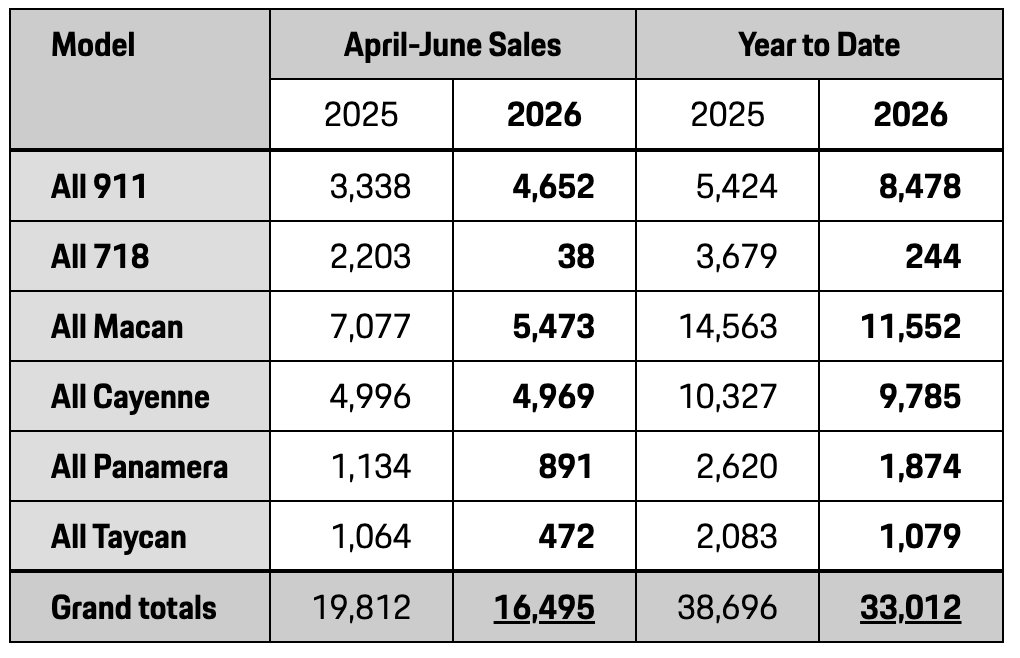
What do you notice there? For one, the 911 almost outsold the Cayenne last quarter and could, possibly, end up being the second best-selling model behind the Macan (I’ll get into that in a second). Overall, 911 sales were up nearly 60% this year, while everything else slumped.
Part of this is the enduring appeal of a 911 and part of this is Porsche’s approach to the model, which is to make a 911 for every imaginable buyer. There’s a new 911 Turbo S Coupe and Cabriolet, for instance, in addition to the new GTS-T Hybrid. Porsche also still sells a real manual (ahem, Ferrari). I spoke to a Porsche spokesperson this morning who, in addition to not complaining that I was pestering him before 8 am, provided some more details on manual take rates.
Obviously, the blissfully perfect Porsche 911 Carrera T only comes in manual form, so that’s 100%. What about the GT3? The overall manual take rate is, per this spokesperson, above 50%. If you want to drill down further, 83% of GT3 Touring owners chose the third-pedal option. The impending Porsche 911 GT3 S/C? Also manual-only.
To even ask why the Porsche 911 is popular is to admit that you’ve either never driven one or, if you have, to admit you’ve entirely lost your capacity for joy.
So what about the rest of the lineup? Here’s where it gets a little squidgier. The 718 is out of production, so that’s an easy one. With the general flatlining of the EV market, and the loss of tax credits, Taycan sales dropped by nearly half through the first half of 2026. The Panamera continues to slowly decline as we go deeper into the third generation.
The Cayenne and Macan is where numbers are even stranger. The Cayenne is going electric-only, maybe, but the only Cayennes being delivered right now appear to be the gas or hybrid version. The Macan is ending production of the gas-powered model this month, but the vast majority currently on dealer lots are of the gas variety.
Porsche has recognized that this push to EVs only doesn’t match reality, at least here, so the company is changing course. As Edmunds reports:
Porsche will pivot away from its previous EV-forward strategy for key models by breathing new life into combustion versions of the Macan compact SUV and Cayenne midsizer. Plus, a three-row model, internally known as the “K1,” which was already in development as an EV, will ditch electric power in favor of launching with more palatable gas and plug-in hybrid options.
The move is a departure from Porsche’s earlier Strategy 2030, which would have seen the company transition core models toward fully electric powertrains. The previous approach was based on bullish EV growth expectations that predicted demand would continue to surge for fully electric vehicles, as it had in the late 2010s and early 2020s, and held that over 80% of Porsche sales should be all-electric by the end of the decade. But softening EV demand means this won’t be the case.
Now, Porsche is rapidly preparing a new gas-powered compact SUV for launch “not later than 2028,” according to chief executive Oliver Blume.
Will there be enough gas-powered Macans to satiate demand? Will Cayenne sales dip below 911 sales? I assume we’ll have at least one quarter where the Porsche 911 is the best-selling car the company has in the US, which would be quite the outcome, although I doubt that’ll last for long.
Also, as for the headline, assuming the average Porsche 911 weighs 3,500 pounds, that’s how many metric tons of 911s the company sold.
Used EV Growth Is Outperforming Used Gas-Powered Cars
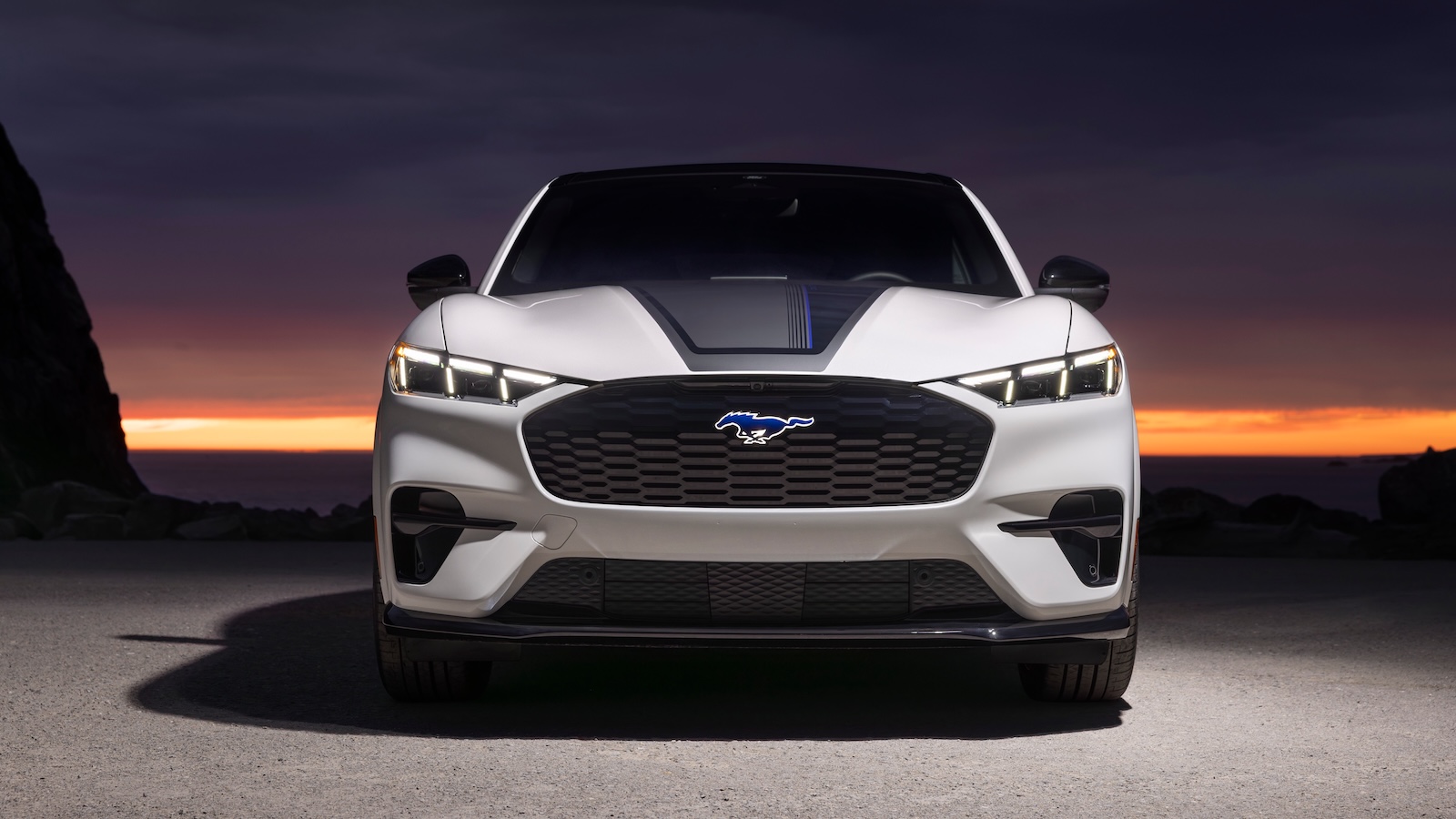
EV adoption is hamstrung by a mix of cost and choice; the used EV market is a sign that there are buyers there for the right car at the right price. Manheim released its half-year report on the used car market, and while the overall used car market remains strong, the used EV market remains stronger:
Used electric vehicles remained one of the strongest segments in the wholesale market during the second quarter. The EV Index increased 12% year over year and 1.7% month over month in June, significantly outperforming the Non-EV Index, which rose 1.7% year over year and 0.2% from May.
Growing model variety, improving consumer familiarity with EV technology and elevated fuel costs have all contributed to stronger demand. At the same time, increasing off-lease EV volume at wholesale has not overwhelmed the market.
“Used EVs continue to outperform the broader market,” Gregory said. “We’re seeing a wider variety of EVs return from lease, helping provide dealers and retail shoppers more options than they had just a few years ago. That broader availability is helping demand remain resilient even as supply grows.”
If the only gap between people buying EVs and not buying EVs was cost, then you’d assume that the Chevy Bolt and Equinox EV would absolutely dominate the market. While the re-introduced Bolt is selling well, the continued dominance of the Model Y is a sign that buyers are still cognizant of the value trade-off electric vehicles offer in the current market. A reasonably equipped Equinox FWD costs more than a better-equipped RAV4 Hybrid XLE Premium or Woodland Edition, so you have to really want an EV, and if you really want an EV you have a lot of choices.
The depreciation/tax credit aid you get on a used EV seems to be addressing both issues at the same time, allowing customers to get a well-equipped off-lease EV at a price that’s as good, or better, as an equivalent gas vehicle. With fuel prices growing higher and the conflict in Iran seemingly never going to end, there’s a logic to this if you can charge at home.
Flock AI Cameras Misidentified A Press Car As Stolen
The science fiction film Minority Report proposed a world wherein clairvoyants and mass surveillance combine to stop premeditated murders from occurring. The reality of today is that mass surveillance exists, aided not by oracles but by AI. Unfortunately, the AI doesn’t always work as expected, as Joel Feder wrote in The Drive:
“Are you armed?!” the police officer screamed. “Get out of the car!”
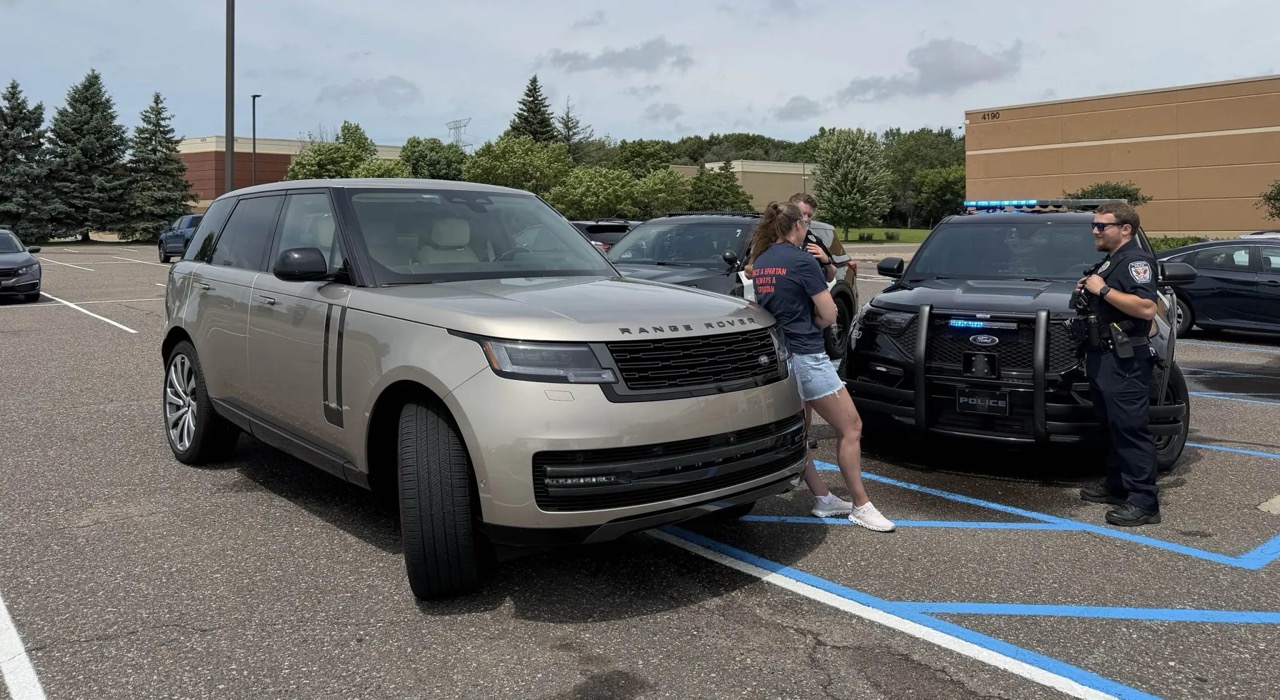
On an otherwise normal Sunday afternoon in late June, I’d decided to take the $155,000 Range Rover I was testing that week out to run some errands with my wife. Little did I know that choice would complete a technological chain linking surveillance cameras, AI, and law enforcement that led to me and my wife being surrounded by police, hands on their guns, in a Kohl’s parking lot in suburban Minnesota.
After dropping off our Amazon returns, we’d just gotten back in the Range Rover and reversed maybe two feet out of the spot when four cop cars came flying out of nowhere and boxed us in. The officers jumped out and started shouting. It’s a situation that can quickly and frequently turn bad, so as unprepared as I was, I followed their orders, got out with my hands up, and tried to figure out what the hell was happening.
This article has multiple layers of WTF, and most of it comes from a data error, with cameras following Joel and his wife around assuming the car he was in was stolen (it obviously wasn’t). I’m glad Joel is alright.
New Cars Should Come With Longer Warranties

Car loans are getting longer and longer, though warranties are not, which I know causes consternation with some buyers. As the industry looks for ways to get more buyers into cars, Automotive News makes the point that warranties should be longer:
That negative equity puts the salesperson in a tough spot: trying to sell a trade-in customer another new car when they’re already underwater. Rolling that negative equity into the financing of a new purchase may work as a short-term bandage, but it can put the customer further in the hole over the long term — creating buyer’s remorse and resentment, not loyalty.
Longer loan terms are a serious threat to dealers’ business — dealers and automakers together should identify ways to help customers avoid financial trouble that could temporarily remove them from the new-car market. The service bay is a good start.
I’d be remiss if I didn’t mention that our partners at Galpin are offering a 10-year/100k-mile limited powertrain warranty on most of the cars they sell.
What I’m Listening To While Writing TMD
There are so many good Bonnie Tyler songs to pick out to remember the great Welsh Singer, who passed yesterday. I think “It’s a Heartache” is appropriate. RIP.
The Big Question
What’s your favorite 911?
Top photo: Porsche


So, no EV sports cars coming from Porsche? Letting the chinese eat their lunch! Sad.
I can’t keep track of all the varieties of 911. I’ll never be able to afford one and will likely never even drive one, so I don’t care.
I have owned a lot of 911s and driven more over the years. For me it would be my 997.2 GT3RS, pretty close to the 4 litre which was way too expensive.
Next would be the 964RS which was raw as Hell, but perfectly communicative.
None of them was close to the Carrera GT though, the best car I have ever driven but out of my price range at the time.
What’s your favorite 911? Well, it wasn’t exactly a 911, but when I was in college in the late ’70s I would house-sit for my older brother when he was out of town. He’d leave the keys for his cocoa brown ’68 912 and let me drive it when he was gone. We should all have a brother like that. It took another 40 years before I had my own Porsche…
A couple of years ago I was driving through the California desert and I saw a Porsche Cayenne towing a camper trailer on some twisty roads. The Cayenne had a bit of a lift and some bigger tires, and looked like it was handling the trailer just fine.
QOTD: I’ve never driven one. I got an exciting ride from a neighbor in a ’68 912 when I was 12. He had traded someone straight across for his ’67 Buick Riviera. I had ridden in that as well, but he drove the 912 with a lot more verve. He asked me if he had a mistake. I said, after that ride, I told him he had made the right call. Asking a 12-year-old about his choice in cars was curious.
The early 911s (and his 912) appealed to my aesthetics. The Riviera didn’t. A couple of years later, an S2 Lotus Europa Twin Cam joined the neighborhood. I never rode in it nor introduced myself to its owner, but loved riding my bicycle past it and admiring its looks. I was hooked on European cars after that until owning a couple of BMWs that absolutely drained my wallet. My Peugeot 504 and Saab 9000 Turbo treated me kindly. So, I am not totally anti-European. Rental Peugeots and Fiats were really fun.
Not ever actually being behind the wheel of one, my favorite Porsches are early 911s and then the Le Mans 917. The movie in 1971 is still one of my favorites.
I had a colleague who owned a 944 Turbo, and it was a beautiful car to look at, but I never got a ride in it either.
Approaching 70, years, not mph, I appreciate the reliable engineering of Japanese products. A (second) injection pump failure in my ’01 Jetta TDI stranding me at the airport soured me a little further on German brands. But I ended up putting 160+K on it before selling it off. Peugeots and Fiats became unobtainable in the US. But my ’71 504 was a reliably fun car.
My ’17 Accord V6 that just turned over 80K is really the best car I’ve ever owned and will probably outlive me. So competent. Optimist that I am, I just had the TB and H2O pump redone a few weeks ago. It will make a great used car for someone.
Neither have I and maybe because of that I don’t understand. The current brand overexposure ain’t helping and what I would probably enjoy is a wheezy unrestored 912 but nothing more than that.
It’s probably just as well I didn’t get the chance when I was younger. My reflexes would have made me a prime candidate for lift-off oversteer. I’ve gone into corners a bit hot on a few occasions but have never left the roadway.
Can’t wait to go shopping in 15 years for one of the infinite 25/26 911 inundating the market today
hmmm… a ’94 Turbo 3.6 in Amazon Green… if nobody will part with one reasonably (nobody will!), a new GT3 Touring (manual) in Amazon Green! 😉 Either is a daily driver – no garage trophies here!
991.2 basic coupe with a manual.
“The best time to buy a Porsche 911 was 20/30/40 years ago, when prices for 911s were a lot lower. The second best time to buy a Porsche 911 is right now.”
Hate to be that guy but yes, no, no when it comes to 911’s being cheaper in the past. Prices were lower but so were wages.
Looking at how many weeks of income it took the median household to buy a base 911:
1985 – 71.6 weeks
1995 – 92.5 weeks
2005 – 82.3 weeks
2015 – 77.6 weeks
2025 – 74.6 weeks
What are today’s prices for each of those model years?
Not going to take the time to do it by hand again. Gemini says:
$ 32,500 in 1985 = $101,100 today
$ 60,500 in 1995 = $133,100 today
$ 71,500 in 2005 = $123,000 today
$ 84,800 in 2015 = $119,600 today
$121,000 in 2025 = $125,800 today
The highest was the 993 era. That tracks.
I can’t decide between a base coupe or Targa, which is okay since I can’t imagine spending that much money on a car.
So at current sizes and weights, a crapton of 911s is a few dozen?
My favorite 911s are the early ones. When they weighed a full half-ton less than the current Schweinchen Dick.