


One of the most important aspects of modern semi-tractor design is aerodynamics. A tractor-trailer that slips through the air more easily has a better shot at improved fuel economy. A truck that gets better fuel economy can be cheaper to run, which means that a fleet or owner-operator can keep more of their cash when it matters the most, such as during periods of historically high diesel prices. Trailer aero is also important, and today’s operators can get various fairings and attachments to make their trailers a bit less of a brick in the wind. Back in the 1970s, and even some time before, engineers planted the seeds for the trailer aero technologies of today, and they did it by borrowing the shape of boats.
Aerodynamics didn’t really matter throughout most of trucking history. For decades, the enemy of the trucker was wildly varying state-based length and weight restrictions, not necessarily the cost of fuel. The cabover truck — where the engine and cab sit atop the front axle — had reigned supreme for its short bumper to back of cab length. But cabovers were often rather blocky, with flat, vertical “faces.” Even conventional tractors — a design where the cab sits aft of the engine and axle — were giants with hard angles.


When gasoline-powered semi-tractors were a thing, getting just three miles per gallon was common. Diesels did better, but still averaged only about five miles per gallon. Fuel was so cheap, however, that getting only five miles per gallon wasn’t a big deal. While some engineers experimented with aerodynamic designs, most trucks were unapologetic about doing little to slip through the wind more easily.

The trucking industry was forced into a period of change by the same multiple oil crises of the 1970s that upended the car industry. The U.S. Energy Information Administration does not have data on diesel prices in the early 1970s, but in 1978, diesel averaged $0.36 per gallon. It rose to $0.97 per gallon by 1981. This meant that fleets and owner-operators felt pain at the pump. Truck engineers and NASA began to take 18-wheeler aerodynamics seriously. If truckers were going to pay more at the pump, engineers believed that the solution was to keep them away from the pump for longer.
Much of this development focused on the semi-tractor itself. I have now spent well over a year telling you about the fascinating engineering projects that led to better semi-tractor aerodynamics. I told you the stories of the Paymaster, the Peterbilt Model 372, the Kenworth T600, the Performance Cab, and others. Yet, the efforts to make trailers more aerodynamic deserve the spotlight, too. Research has shown that the most slippery trucks don’t just have an aerodynamic tractor, but an aero trailer, too.

Engineers have spent decades designing ways to make trailers more aerodynamic without compromising their load-carrying capability, and many efforts can be traced back to one program at NASA.
When Trucks Were Aerodynamic, But Not For Fuel Economy
Technically, the story of aerodynamic trucking begins before any of my previous stories have.

Back in the 1930s, as much of the world suffered through the Great Depression, a new styling trend emerged from the dust. The opulence and optimism of the Art Deco era started getting smoother and sleeker. As the National Air and Space Museum writes, one way Streamline Moderne started life was as a practical form of design. Aircraft that were designed with streamlined surfaces performed better than the planes of old. They also had a look that stunned. Technically, streamlining started even earlier with railcars in the late 1890s.
It didn’t take long for streamlining to be found elsewhere, from the Chrysler Airflow to the Union Pacific M-10000 train. Advancing science in aerodynamics and wind-tunnel testing had shown that streamlining worked to reduce drag. Eventually, streamlining pretty much captured the imaginations of the entire nation and gave people something futuristic and exciting to look forward to.

Just about everything became streamlined, even objects that weren’t vehicles. Someone living in the 1930s could have witnessed streamlined ships, flat irons, radios, cameras, fans, and even a toaster. The trucks of the era adopted the look, too.
Perhaps the grandest streamliner trucks of the 1930s were the Labatt Brewing Company of Ontario streamliner beer trucks. Penned by French-Polish industrial designer Count Alexis de Sakhnoffsky and built by the White Motor Co. of Canada and the Smith Bros. Motor Body Works of Toronto, the Labatt streamliners had nothing to do with saving fuel.
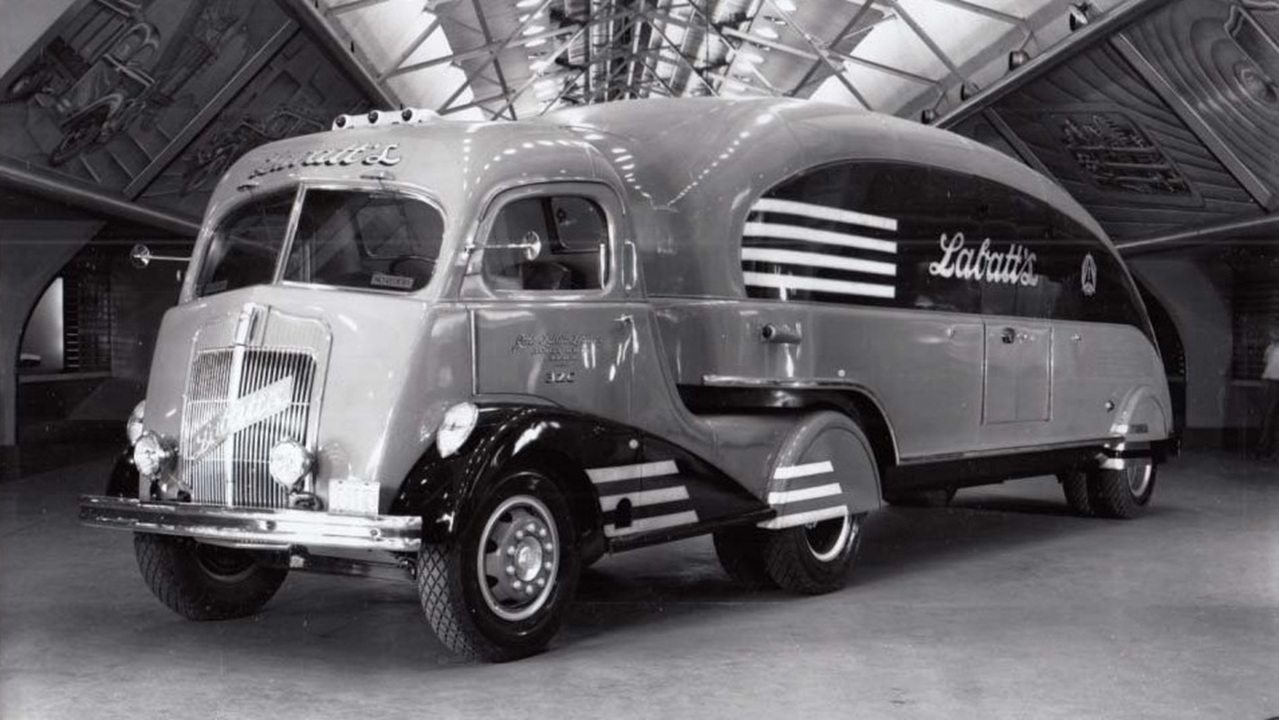
As Heavy Duty Trucking magazine reported in 2012, Labatt’s trucks looked so distinctive purely in the name of advertising. From the magazine:
“I don’t believe aerodynamics played a big role in the design of these trucks,” says Bill Johnston, executive director of the American Truck Historical Society. “While they are very streamlined in appearance, given the engines of the day and speed limits in many areas of 45-50 mph, reduced drag wouldn’t make much difference. These trucks were designed during the Art Deco period and were more of an advertisement than anything else.”
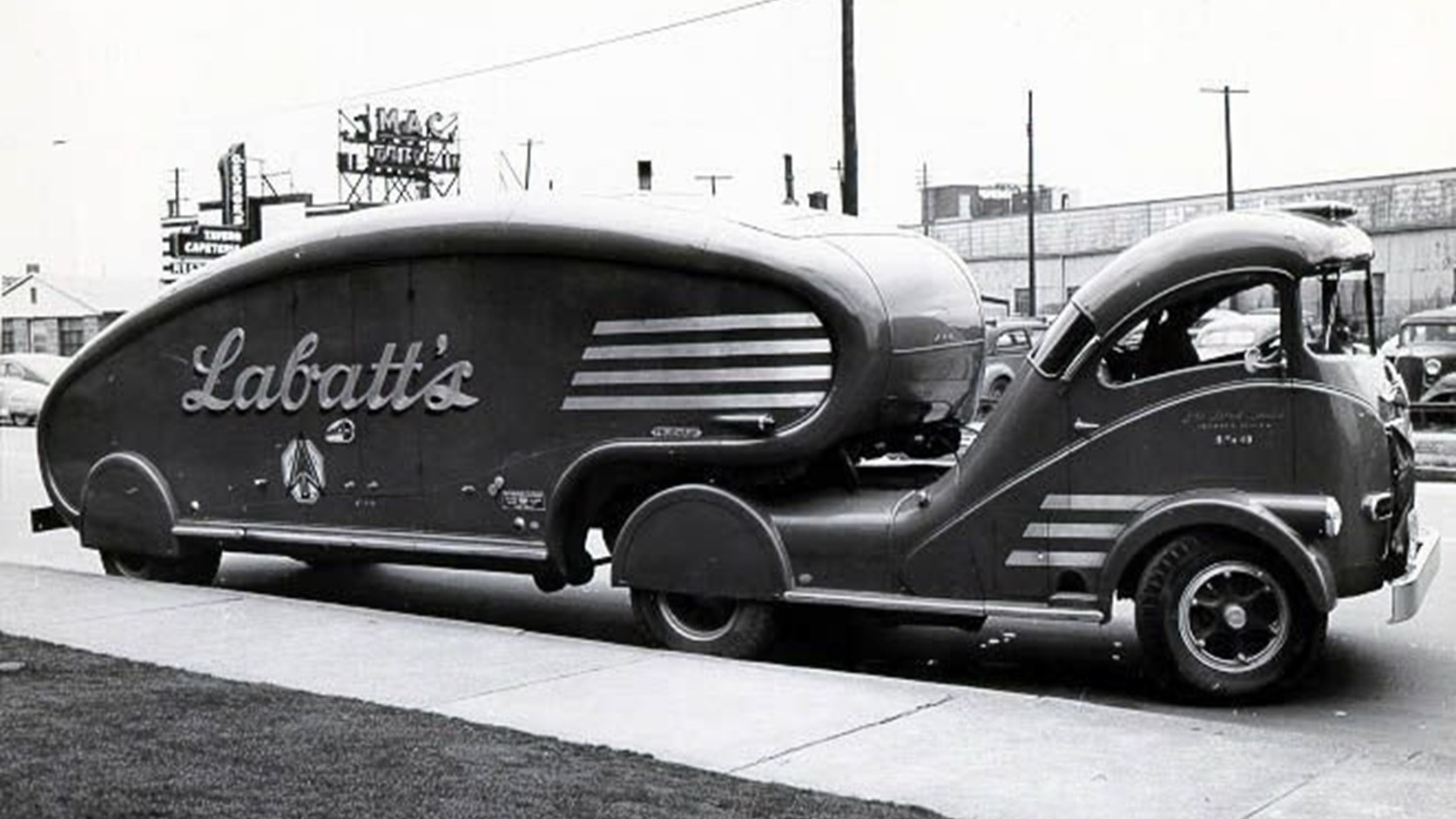
The Labatt trucks weren’t the only ones, as other rigs throughout the 1930s and 1940s adopted tractors with steeply-raked windshields and teardrop-shaped trailers. There was a practical benefit to this streamlining, but it wasn’t really aerodynamics. From Heavy Duty Trucking:
The reason was tight clearance between trailers and tractors, something required to meet strict length limits at the time. Close coupling reduced overall length, and a round nose allowed sharp turns without the trailer corners hitting the cab. Short overall length limits were set by states in the East and Midwest, and short, tightly coupled rigs were all fleets could run.
In the West, where highways weren’t so crowded, limits were far longer. “Everybody liked the looks of California trucks,” Johnston recalls. “They had a 70-foot overall limit and were stretched out. But there was a trailer limit of 45 feet. That’s why there was so much space between tractor and trailer.”
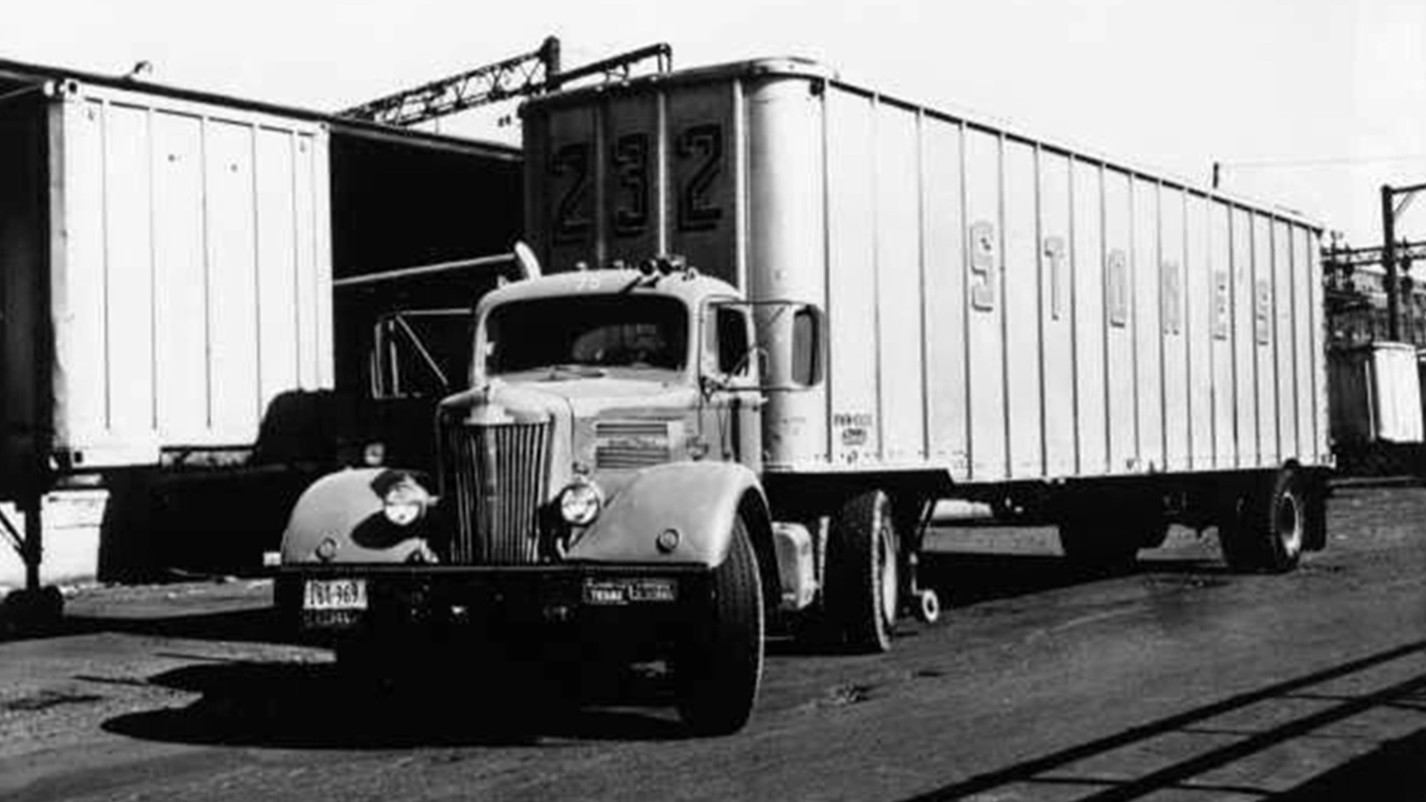
Eventually, states eased restrictions enough to allow for bigger trailers. As trucking industry competition heated up, some companies could no longer sacrifice valuable trailer space to accommodate smooth curves and swooping roofs. Streamliner trucks faded into the pages of history, replaced by brutalist tractors pulling equally square trailers. Sure, the aero was worse, but the trucks more than made up for it with much engines that put out greater power numbers than they did in the past. Diesel engines were the primary way to save fuel back then.
Early Aero Experiments
Most historians point to the oil crises of the 1970s as being the catalyst for getting truck designers to focus on aero, but that wasn’t universally the case. The aerodynamic Paymaster semi-truck, for example, was invented by Dean Hobbensiefken in 1969, years before the oil embargoes torpedoed diesel prices. But few were ever built.
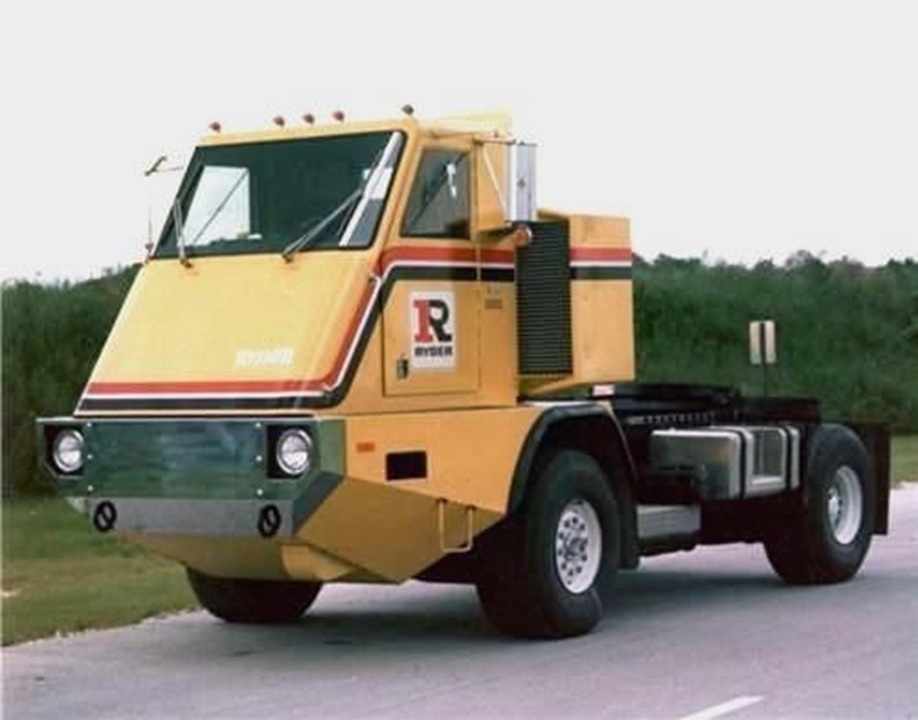
Aerodynamic trailer designs also existed prior to the 1970s. I searched the United States Patent and Trademark Office for designs made specifically to improve the aerodynamics of a commercial vehicle and found some interesting patents.
The earliest design I found was a patent from 1952 by engineer Ralph B. Potter. His idea was sort of wacky. In his patent, Potter noted that poor aerodynamics reduced vehicle performance, but traditional streamlining was unfeasible in the 1950s due to truck length restrictions.

His solution? An inflatable aerodynamic cone placed on the back of a straight truck or semi-trailer. Potter thought it was the best of both worlds, making trucks slicker while on the highway, while returning them to normal size for other situations.
A particularly ambitious idea came in 1966 from inventor Marshall S. De Vaughn. He had an idea to make everything from camper trailers to semi-trucks towing double trailers more aerodynamic. Vaughn’s creation was three fairings. At the front of a camper trailer or semi-trailer was a fairing that would close the gap between the tow vehicle and trailer, while also transforming the square front wall of the trailer into a streamlined shape.

At the back of the trailer was a fairing that was shaped like half of a sphere. Finally, for semi-trucks pulling double trailers, there was an additional middle fairing that closed the gap between the two trailers. I found this design fascinating because something like it will show up very soon in this article.
One last example I’ll give you is a patent filed by G. Madzsar and O. Kozma of the Volvo White Truck Corporation in 1970. What made this one stand out was how similar it was to today’s aerodynamic measures. The engineers noted that tractor and trailer design was functional, but left some places that induced drag at speed. Namely, the gap between the truck cab and the trailer, and the giant space of open air under the trailer.

Their solution was to place an extendable air shield on the sides of the truck that, when pushed out, closes the gap between the back of the tractor and the front of the trailer. But the shield doesn’t actually touch the trailer, so the trailer can still articulate without hitting the shield. The other idea was the addition of side skirts to the trailer to reduce undercarriage drag.
Both of these are predecessors to today’s truck air shields and trailer skirts, but done over 50 years ago. There was more, too. In 1953, Trailmobile and the University of Maryland developed an air deflector that mounts to the top of the tractor and redirects air smoothly over the trailer for better aerodynamics. This wasn’t the only development, as the Rudkin-Wiley Corporation and the Air-Flo Company also marketed roof fairings in that era. Rudkin-Wiley even took Air-Flo to court, alleging the latter infringed on its patent. Here are more details about what Maryland did, from the case:
The University of Maryland conducted over 7,000 wind tunnel tests of Trailmobile trailers in 1953 to determine whether various devices or design changes would reduce air drag. The tests were of “trailer bodies with rounded front corners, rounded rear corners, various tractor-trailer gaps, streamlined tail fairing for trailer, deflecting vanes and the removal of underneath accessories and cross members.”
The tests were all concerned with methods of streamlining, so as to keep the air passing the trailer attached to it in order to avoid areas of air turbulence and reduce air drag. One of the methods used was attaching a full fairing7 from the tractor to the trailer so that the air hitting the tractor cab and fairing would remain attached and flow along the fairing until it reached the top front of the trailer, from which point the air would then proceed along the top of the trailer to the rear, remaining attached. The fairing eliminated the gap between the tractor and the trailer, enclosing it entirely. The UM study recognized that such a fairing would be impractical because it would prevent the tractor from turning independently of the trailer, but concluded that “a fairing approaching this type that does not attach to the trailer may not be unreasonable.”
Yet, while these products saw some adoption, the overall trucking industry ignored them. Even back in 1970, the trucking industry wasn’t too concerned about drag or fuel economy. But the oil embargo of 1973 and research from NASA would change the game for truck and trailer design.
NASA Supercharged Truck Aero Research
Back in March, I wrote about how NASA got involved in the development of semi-tractor and semi-trailer aero. In 1973, Edwin J. Saltzman, an engineer at NASA’s Dryden Flight Research Center in California (now the Neil A. Armstrong Flight Research Center), rode his bicycle to work one morning. A truck blew by, and the bow wave created by its blunt face and trailer first blew Saltzman to the side of the road. Then, the wake following the truck sucked Saltzman into the road.

Saltzman and the team at Dryden decided to use their expertise in aerospace aerodynamics to design trucks that would be safer for cyclists while also getting better fuel economy. Click here to read my full story; otherwise, I’ll quote only the important parts.
NASA found that streamlining both the tractor and the trailer could make trucks 25 percent more efficient. From NASA:
Mechanics attached an external frame which was then covered with sheet aluminum to give the van flat sides all around and 90-degree angles at all corners. The vehicle looked like an aluminum shoebox on wheels, simulating the cruder motor homes of the period. The Dryden engineers measured the vehicle’s baseline drag and then set about modifying the shape of the van: First rounding the front vertical corners, then the bottom and top edges of the front, then the edges of the aft end, and finally sealing the entire underbody of the van including the wheel wells, with tests run after each modification. Rounding all four front edges yielded a 52-percent drag reduction, while sealing the bottom of the vehicle gained another 7 percent. The engineers estimated the potential gain in fuel economy to be between 15 and 25 percent at highway speeds.
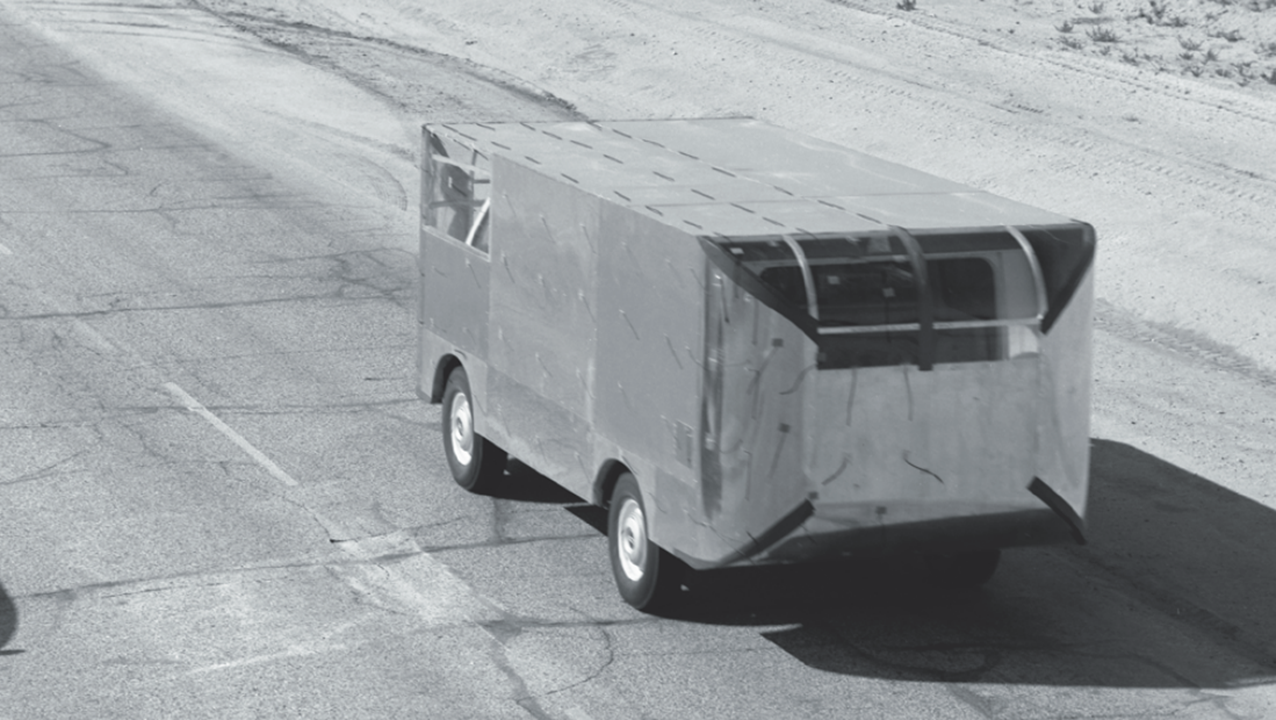
Further, NASA found benefits in adding a boat tail shape to the back of a truck or trailer. From NASA:
Rounding the vertical corners on the front and rear of the cab reduced drag by 40 percent while decreasing internal volume by only 1.3 percent. Likewise, rounding the vertical and horizontal corners cut drag by 54 percent, with a 3-percent loss of internal volume. Closing the gap between the cab and the trailer realized a significant reduction in drag and 20 to 25 percent less fuel consumption. A second group of tests added a faired underbody and a boat tail, the latter feature resulting in drag reduction of about 15 percent. Assuming annual mileage of 100,000 driven by an independent trucker, these drag reductions would translate to fuel savings of as much as 6,829 gallons per year.
The timing of this research could not have been better, given the multiple oil crises of the 1970s. NASA claims some credit for doing the research behind the aerodynamics that led to the streamlined truck designs and aero fairings of the 1980s to today. While NASA wasn’t first, it validated the experiments of earlier engineers and companies.

However, NASA admits that its research failed to revolutionize trailer design, and for a good reason:
Today’s trailers, on the other hand, are little changed from the last few decades. For livestock haulers, a key factor is that individual farmers have been the predominant owners of trailers, and these owners are difficult to convince about the costs of redesign versus the savings of superior aerodynamics. However, more and more livestock trailers are sporting boat-tail designs that ease the flow of air past the end of the trailer and minimize the low-pressure wake. Conventional trailer manufacturers have resisted change more so than others, in part because the aft end of such a trailer needs to be easy to manipulate at loading docks, where the optimal shape for superior aerodynamics—the boat tail—is impractical.
Likewise, the gap between the cab and the trailer can create a significant amount of drag as air swirls in the space between. Two conventional means to address this issue are problematic: Adding side extenders (to decrease the exposed gap) is expensive and might impede maneuverability; moving the fifth wheel forward (to shorten the gap) places more weight on the steering axle—which is legally regulated and limited—and reduces maneuverability while increasing driver effort and wear on steering tires and steering gear.
Other inventors picked up where NASA left off, and you can click here to read NASA’s story (beginning on Page 37) on how its research was adopted by various companies.

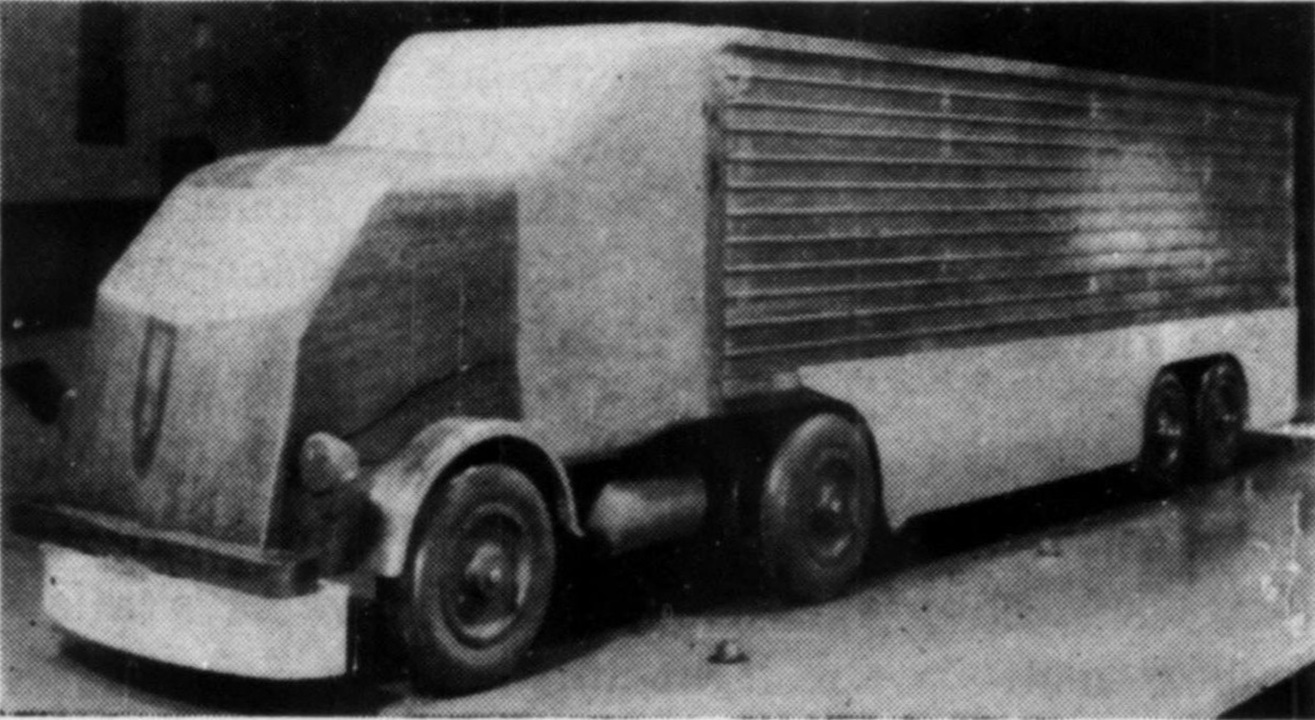
NASA’s findings had shown that aerodynamic fairings made a measurable impact on trailers; now the fairings just had to be designed to work in a practical manner. Many inventors have tried various ways of making practical trailer boat tails. In 1977, for example, Edgar L. Keedy filed for a patent (above) on a boat tail-style device that made truck trailers rounded when traveling, and then peeled out of the way during loading and unloading.
Featuring all of the trailer aero inventions of the 1970s through the 1990s would be difficult, as there were, as far as I could see, several dozen ideas patented. Who knows how many others never reached the patent office.
Modern Ways To Improve Trailer Aero

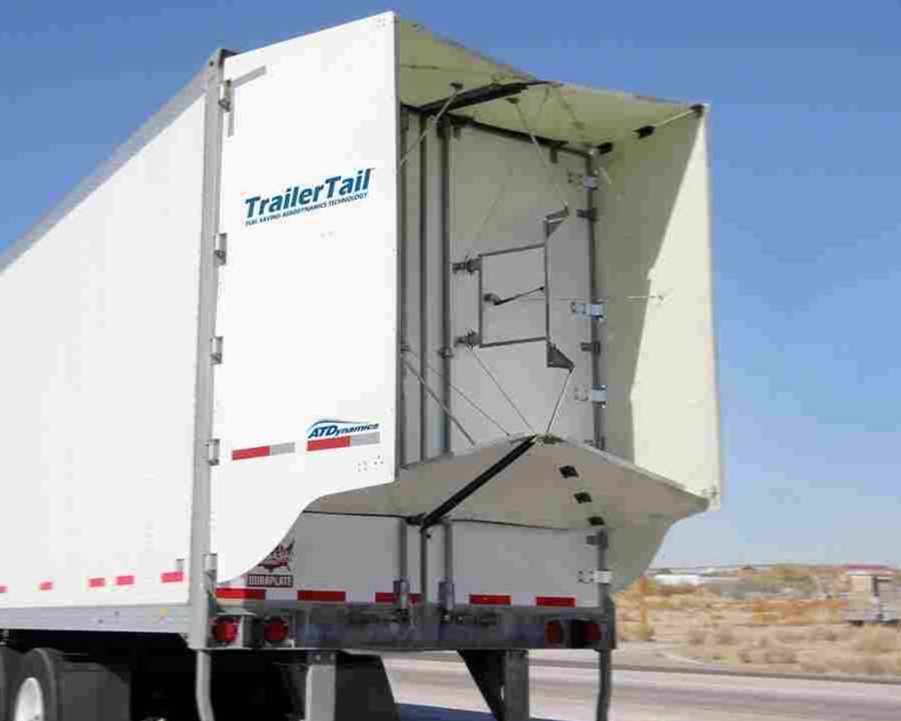
But for modern trucking, one design stands out in the pack. Back in 2006, Thomas Scott Breidenbach followed in the footsteps of so many other inventors in trying to design a way to clean up the rear end of a trailer without making cargo access impractical. Breidenbach’s invention was a set of panels that give the tail of the trailer an aerodynamic shape. This tail could be extended during drives down the open highway. But for navigating city traffic or during loading operations, the tail’s panels would easily and quickly fold in, allowing for easy, unrestricted access to the cargo.
Breidenbach tested a 6.5-foot-long prototype on the back of his Ford Expedition, and claimed that the tail improved the SUV’s fuel economy by 40 percent at 75 mph. He filed for a patent in 2006, which was granted in 2008. That year, Breidenbach sold his patent to ATDynamics of California, which quickly put the idea into production as the TrailerTail.
The TrailerTail, which was made out of thermoplastic and sticks out four feet behind the trailer, was promising. ATDynamics said that installation took only 30 minutes and required only two people. Allegedly, just the TrailerTail alone could improve fuel economy by six percent at 65 mph. According to the U.S. Environmental Protection Agency, a trailer with side skirts and a TrailerTail could increase fuel economy by as much as nine percent. This video shows how to open and close a TrailerTail:
The TrailerTail would go on to be a sensation of sorts. When the U.S. Department of Energy launched the SuperTruck program in 2009 to develop ways to dramatically increase semi-truck fuel economy, Peterbilt/Cummins, Daimler, Volvo, and Navistar each built a prototype super-aerodynamic truck. All four trucks used a TrailerTail to exceed 10 mpg. As Commercial Carrier Journal wrote, the truck manufacturers used TrailerTails because Breidenbach’s design, which folded like origami, was hard to improve on.
TrailerTail would get all sorts of positive news coverage and glowing testimonials from drivers and fleets. According to the St. Cloud Times, Scott Grenerth of the Owner-Operator Independent Drivers Association said that he heard nothing but praise for the TrailerTail and similar products, and that the devices had the additional benefit of helping trailers fight crosswinds. Stemco, a Texas-based producer of truck seals, bearings, and hupcaps, acquired ATDynamics and the TrailerTail design in 2015.
TrailerTail seemed to have been on track for double-digit market share. As the Commercial Carrier Journal reported, by 2014, more than 50 fleets and more than 40,000 truck trailers across America had TrailerTails, and another 50,000 were on order. It was estimated that there would be more than 200,000 TrailerTails in operation by 2017.
But then, things fell apart. One problem was that, as diesel prices fell in the recovery after the Great Recession, drivers stopped deploying their TrailerTails. Stemco responded to this by creating the TrailerTail Covered, which covered the lockrod handles on the trailer so that a trucker had to open the TrailerTail just to open or close the doors on the trailer. In 2018, Stemco introduced an automatic version of the TrailerTail that used a speed-sensing radar to open the TrailerTail at 35 mph, and automatically shut it when stopping or reversing.

Stemco eventually pulled the TrailerTail from the market in 2020, stating that the product didn’t really fit with the rest of its portfolio. Commercial Carrier Journal had another theory:
A fleet manager once summed it up to me that the kiss of death for a technology starts with a designer saying, “All the driver has to do is…” His experience was that any additional steps required of the driver were challenging to implement with 100% reliability. Not a reflection on drivers, but on the need to automate. The manual nature of stowing and deploying the tails clearly impacted driver acceptance and use. The inability of the driver to see the TrailerTail when deployed also led to at least a few damaged light poles at truck stops and other yard issues. Mike Roeth, NACFE’s executive director, and I both drive a lot of highway miles. A game we developed was to spot how many TrailerTrails were not deployed.
Improvements were made to the design, but TrailerTails were also fighting an unexpected extended drop in fuel prices. Beginning in January 2015, national diesel fuel prices dropped and stayed below $3 per gallon for three full years, crossing back above $3 in January 2018, according to DOE’s Energy Information Agency. It then dropped again below $3 per gallon in January 2020 and stayed there through March 2021. TrailerTails were interesting to the market with fuel hovering near $4 per gallon and projected to increase in the future. When it fell and stayed below $3 fleets prioritized investments elsewhere, namely other efficiency opportunities like better tractors.
While there are other trailer tail-end products out there, adoption is far from universal. Often, I can count the number of trucks I see with rear-end devices on a drive on one hand.
Side Skirts And Cab Extensions Are Used Today, Too

What has seen more widespread adoption is side skirts, aero wheel covers, trailer cap extenders, and cab extenders. Side skirts have been commercially available since at least the mid-2000s. Several products are on the market covering all of these ideas, and many of them are modern interpretations of the patents I’ve shown you earlier. Like the TrailerTail, these are often made of lightweight composites. Trailer side skirts sometimes also have crash structures under them to protect cars in side crashes.

The U.S. EPA runs what it calls the SmartWay program. A trailer that uses one or more aerodynamic devices to increase fuel economy by five percent is considered to be a “SmartWay Trailer,” while trailers using two or more devices to increase fuel economy by nine percent are “SmartWay Elite Trailers.” Both types of trailers use low rolling resistance tires for another one percent fuel economy gain and, currently, the EPA says nine brands make SmartWay-designed trailers.
All of these devices can point to the work of the inventors and engineers of decades past. Today’s fuel-efficient trucks can surpass seven miles per gallon and sometimes over eight miles per gallon. Under very ideal conditions, a driver today might even see nine mpg. This wouldn’t have been possible without decades of advancements in aerodynamics, powertrain design, materials science, and more.

It’s fascinating to think that so many of the things that are just normal today can trace some of their influence to the events of the 1970s. I have told countless stories that somehow frequently involve the 1970s at some point. But that just goes to show how much a couple of oil shocks could change the trajectory of an industry.
So, the next time you’re a passenger in a car and roll next to a semi-truck on the highway, see what aerodynamic devices it has on it. You’ll probably find that both the tractor and the trailer employ a couple of tricks. Now, you’ll be able to appreciate that it took decades of development and countless engineers to reach the product that’s helping a driver squeeze a little more out of a gallon of fuel.
Top graphic images: NASA; ATDynamics


Labatt isn’t based in Ohio, it was still based in London (edit: Ontario) back in the 1930’s and then Toronto until 1995 when it was purchased by InBev (which, then, merged with Anheuser-Busch)
Hagerty did an article about the Labatt Streamliners, there’s a whole range of streamliners, not just that one shown in the article. They’re really really really cool. This was a cross-border collaboration with White in their offices in both Cleveland OH, and London ON involved.
I think I know how I made myself confused. I saw the mention of White in Ohio and forgot that the Labatt was in Ontario. Thank you for your keen eyes! I made an update.
Interesting to see this article, following yesterday’s feature on the Pleasure Way travel trailer. While I liked that trailer, the completely squared-off tail was a deal-breaker for me.
I always liked the Trailer Tail as a surrogate aero device and was sad to see drivers that were too lazy to bother with them. I would love to see them come back.
The Trailer Tail fell out of use but I still see pizza pans – the wheel covers – and side skirts on lots of rigs. Those don’t require any extra action on the drivers’ part so adopting them and keeping them in use is not a big ask.
If I were a fleet owner I’d be extremely interested in Trailer Tails, especially right now when $6/gallon is the going rate. Anything that makes that go farther is probably worth it.