

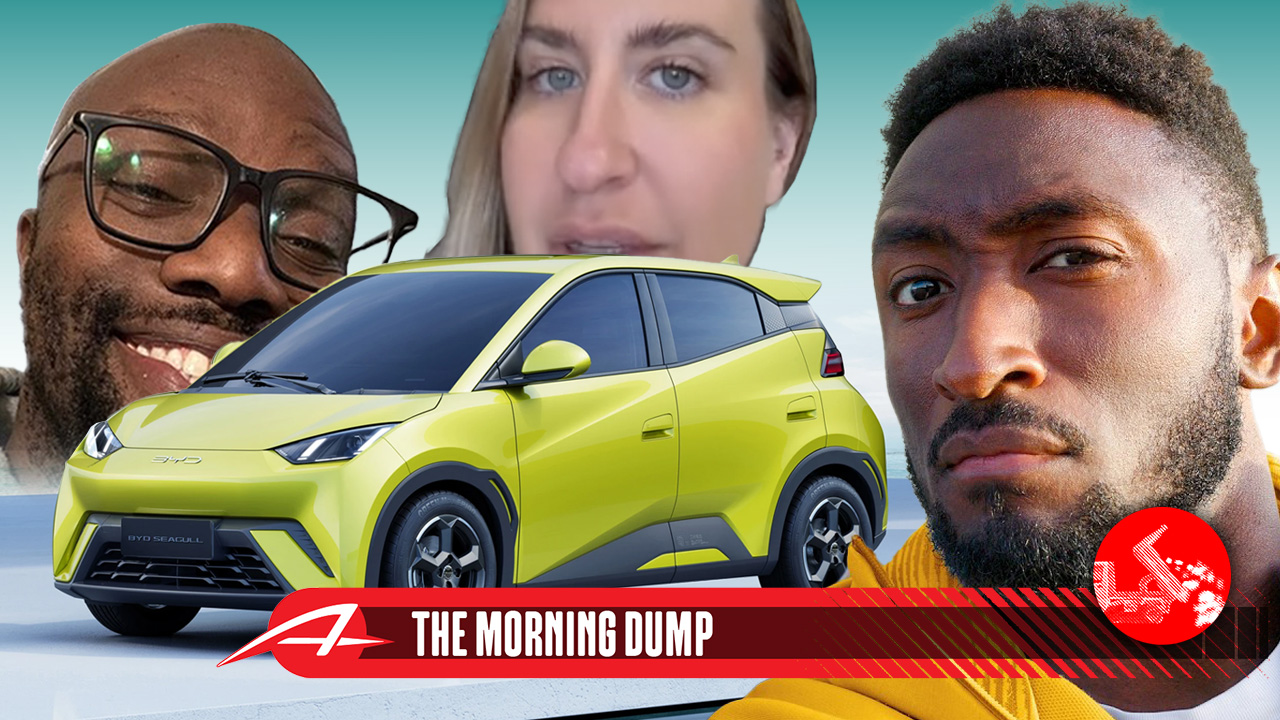
In The Manchurian Candidate, an American soldier is brainwashed by Chinese intelligence and becomes a sleeper agent for that country’s communist government. If only they’d have known then that the less lethal and more profitable path would be to start a social network and fly cars to influencers.
There’s a big feature out that talks about how American consumers are being persuaded to desire cheap Chinese cars by American influencers, and on a platform created by China no-less. Is that weird? I’ve been using The Morning Dump to influence you to believe that it’s the “Decade of the Hybrid.” You know who also agrees? Chinese automakers.


General Motors CEO Mary Barra is the highest paid automotive exec in Detroit, which makes sense when you look at the stock price and the company’s overall performance. She can’t have the job forever, and GM left a big hint as to who is going to replace her. Don’t worry, it’s not me.
Across town, Ford makes a lot of hybrids, but it can’t make trucks fast enough to keep up with demand. In fact, it can barely make trucks at all.
‘The Second I Mention A Chinese Car, The Videos Skyrocket’
Every automaker is trying to use influencers to convince people to buy their cars. This is nothing new. Six years ago, a typical launch for a car in the United States was 90% journalists and maybe 10% influencers. Many of the launches today have whole days just devoted to influencers, and the split is closer to 50/50.
It’s a good strategy. I find the traditional journalists at launches are the first to the bar, the last to the briefing, and produce nothing more than a mostly replaceable bit of copy published with manufacturer photos. The influencers grind. They produce reels! They post to Instagram stories! It’s far more interactive. I have way more respect for that kind of hustle than I do for sclerotic modern automotive journalism. I also think it often creates more value for the automaker that forked over the money to bring people on a trip.
In that context, this Bloomberg Businessweek feature titled “TikTok Makes Americans Want Chinese EVs They Can’t Have” shouldn’t be that surprising or controversial. Isn’t that what everyone does? Just by virtue of being younger and newer, these companies are embracing social media.
The Beijing Motor Show is going on right now, and there are a bunch of influencers (and journalists) there on various automaker trips. We were invited by a Chinese automaker to go, but couldn’t make it work because of timing [Ed Note: Yes, we were invited by a Chinese automaker to go to China to cover Chinese cars that we cannot buy in the U.S. -DT]. Also, they were suddenly more interested in bringing Canadians because Canada is getting Chinese EVs first.
There’s nothing outrageous in this piece, but it’s interesting to see it laid out this way:
Richard Benoit flew to Alaska a little more than a year ago to test-drive a slate of China’s newest electric vehicles, shipped onto US soil to dazzle online car influencers like him. Sitting in the driver’s seat of a sky-blue Chery iCar 03, Benoit marveled at the SUV’s roomy interior, widescreen digital display with built-in karaoke and jaw-dropping price tag: $24,000. “Now I understand why they don’t want these to come to America,” he said in a video he posted on YouTube. “This is insane.”
Titled “I drove the cheap Chinese cars that are illegal in the USA. Now I know why,” the video has since racked up nearly 2 million views. Benoit says his American subscribers can’t get enough of the sleek, affordable vehicles from Chinese brands including BYD, Xiaomi and Zeekr that flood their social media feeds—yet aren’t for sale in the US. “The second I mention a Chinese car, the videos skyrocket,” he says, when reached by phone from his home in Massachusetts. “Americans want these cars—they just do.”
Obviously, we recently drove a bunch of Chinese cars in America at a press event and the takeaway was that they’re familiar and pretty good. The market is young and Chinese consumers are very tech-forward, so there’s a lot of fun ideas in these cars that look interesting to Americans. Ford’s CEO famously didn’t want to give his borrowed Chinese car back.
Additionally, China has heavily subsidized battery development and has massive overcapacity issues and differing standards that makes Chinese cars appear cheaper than they really are, or ought to be (to say nothing of credible reports of problematic labor practices). A $10,000 Chinese car could easily be a $20,000 Chinese car here. Plus, these companies usually aren’t under the same pressure to be profitable as other automakers.
It feels strange, though. The fact that a lot of this is happening on TikTok, which is a platform created by Chinese company ByteDance, is strange. Even if influencers aren’t being paid directly by carmakers to talk about their products (which, if disclosed, is totally legal and fine), there’s a sort of secondary payment to these influencers as they get compensated by the platforms themselves for engagement. I haven’t seen any evidence that Chinese automakers are forking over cash to boost this content, but I wouldn’t be surprised, either. One of the companies doing this is DCar, which is itself a spinoff of ByteDance, the company that created TikTok.
The oddest bit is that, due to tariffs that go back to the Biden Administration, bringing Chinese-built cars here seems remote, no matter what the appeal might be. Americans don’t so much crave cheap cars as they crave nice cars that happen to be affordable. Some of the interest in Chinese cars is probably due to the fantasy of having their nian gao and eating it, too. It’s possible that Chinese automakers are planning for a future where those rules are relaxed following the planned meeting between President Trump and Chinese President Xi Jinping.
Either way, I do think that Forrest Jones, who often features Chinese cars, makes a good point in the kicker of that piece:
He knows showcasing them in America is controversial but thinks competition is healthy for the industry. “Even if we don’t get them here,” Jones says, “I would like consumers to know what’s out there and have that ammunition to demand more from the brands we do have access to.”
This is absolutely correct. American brands aren’t going to get better until they acknowledge what makes Chinese cars appealing that isn’t related just to cost.
China Is Excited About Hybrids, Too!

It’s the “Decade of the Hybrid” y’all! Even China, which builds all those fancy EVs all those influencers seem to love, has a strong yearning for hybrid cars. What’s happening here?
Nikkei Asia explains that hybrids got overlooked by Chinese automakers due to the lack of subsidies, which gave an advantage to Japanese carmakers with more hybrid experience:
“The cost of our HEV solution is nearly the same as our plug-in EV solution,” Wu Jian, an executive at GAC, said in a 2021 interview. “But when the price tags are similar, consumers are more willing to buy plug-in cars that are not only eligible for a green license plate but also exempt from purchase taxes,” he added, referring to the registration plate that offers perks such as exemptions from certain traffic restrictions.
All of a sudden, though, Chinese automakers are showing new hybrids. What’s going on?
The shift has been driven by reduced state tax incentives for EVs and plug-in hybrids starting 2026, as well as a regulatory change requiring automakers in China to reach an average fuel economy of 3.3 liters per 100 km in 2030, said Yale Zhang, managing director of Shanghai-based consultancy Automotive Foresight.
“If there are still fuel-powered cars in China in the future, they will largely be HEVs,” Zhang said. “I forecast that carmakers will stop launching traditional internal combustion engine models, starting next year.”
Electric cars for some, hybrids for others, and tiny Chinese flags for everyone else.
Sterling Anderson’s 40 Million Reasons To Stay At GM
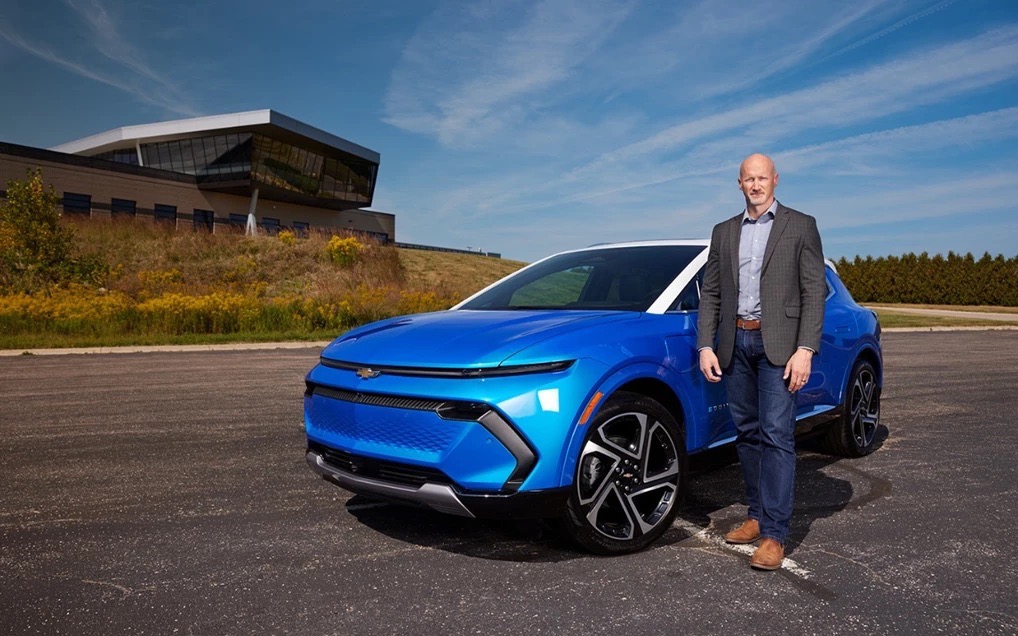
It’s been a while since America had a big and tall automotive exec. Was the last one Lutz? It might have been Lutz. Or that one guy, Reid Landman. Either way, the next one might be Sterling Anderson. Why?
The Detroit Free Press noticed something interesting in the company’s executive compensation filings:
GM’s board also approved an elaborate, one-time-only new hire award package for an executive that media reports have said is on a short list to replace Barra ― Sterling Anderson.
Anderson’s hiring package totaled $40 million, a one-time deal that would be paid out through 2027. After the deal’s terms conclude on July 29, 2027, Anderson will receive a regular compensation more in line with other GM executives, according to GM.
Basically, Anderson has to meet certain goals and stick around at GM to keep the money. This could be meaningful or it could just be something normal. Maybe he’s just doing a great job. Or, maybe, they don’t want him to get poached. Last time I suggested this a GM spokesperson, unprompted, emailed to let me know this was all speculation. Let’s see if that happens again!
‘It’s A Heap Of A Mess’ Says Ford Dealer

As a Texan, the first two signs of spring were the arrival of fields of bluebonnets and Truck Month. I think this Truck Month might have been ruined, as a dealer points out to Automotive News:
Chuck Anderson Ford, less than 20 miles from Ford’s F-150 plant in Kansas City, Mo., usually starts Truck Month with about 70 of the pickups. This year, it had only nine.
“It’s a heap of a mess,” Nick Anderson, the dealership’s general manager, told Automotive News. “Outside of COVID, I’ve never seen an F-150 shortage like this.”
Ford dealers around the U.S. are grappling with an undersupply of a vehicle that’s a reliable profit pillar and the leader in an intensely competitive segment. The automaker is scrambling to boost production but has signaled that inventory levels may not stabilize until the second half of the year.
None of this is a secret. Ford has said in filings that the two fires at its aluminum provider in New York is going to slow down supply until later this year. Still, the extent of it seems to be profound.
What I’m Listening To While Writing TMD
Coachella sounds like it was a party this year, and there’s no one I’d have rather seen than the immeasurably great Kacey Musgraves. Watch her as she sings “Uncertain, TX” and sways along to a Tejano accordion. I love Tejano accordion.
The Big Question
Have you been exposed to influencers peddling Chinese cars? Has it worked? [Ed Note: I also want to ask: Are you convinced that Chinese cars are, as a whole, better than U.S. ones? -DT].
Top graphic images: TikTok; YouTube; BYD


Wait, Matt’s from Texas??
I don’t really trust the Chinese cars too much but that’s more due to the newness of them to us. Chinese manufacturers CAN build quality products to compete with the best of em, but I don’t have enough long-term data on how they hold up. I know CFMOTO seems to come out with a new bike every few months, and older ones don’t hold their value well at all. Parts availability worries me, especially when models constantly get replaced with the next shiny thing. It all feels too disposable to me.
Agreed on all points. The extra worry about human rights violations in the labor pool for products, components, and materials is also an issue (for me personally).
Yeah definitely concur there. That’s a bigger concern for those of us who care, but my other points should worry your average consumer as well.
Sadly, there never seems to be a shortage of stuff worth worrying about. 😉
The only influencing I’ve been getting is reading articles about Chinese unobtanium on this site.
It’s interesting to read about the shortage of trucks for “Truck Month.” I understand the circumstances. Earlier this decade, I remember driving past Ford dealerships in rural SE Texas and seeing what seemed like acres of F-#50s for sale and feeling a bit sorry for them. But my, how things have changed.
And Kacey is a sweetheart.
TBQ: no, nope, no
I’ll take “Influencers shilling for whichever company’s check cleared” for 400. This sort of thing has infected every interest to peddle consumer slop and I personally take all claims by obvious shills with a giant bag of salt. That being said, this rant has been sponsored by RAID: Shadow Legends 😛
I just feel like they already make so much of what we buy that if we let them have our cars there won’t really be much left. We’d just be giving the CCP more money to use against us and strengthen their military than we already do. I’m not gonna help an authoritarian government take over the world, I’ve already got one of those at home.
Part of the cost of developing a car is procuring more parts than necessary for the production line to be used as spare parts.
I don’t know why, but western countries seem to not care much about servicing costs and spare parts availability after buying a car.
In Thailand, certain brands sell well not because their cars are cheap or well-made, but because the aftersales service at a dealer is so efficient that it becomes the brand’s USP.
For example, you can walk right into a Toyota dealership’s service deparment, tell them the part number of a 1998 Corolla you have in your backyard, and they’ll ship it to you three days later.
This is not possible with Chinese cars still in production, let alone decade-old ones.
There will also be no such thing as going to Autozone and buying parts for your Jaecoo 7, because the parts take 3 months to be sourced.
That’s a problem for the next owner when it’s off lease 😉
You may not be able to get a Chinese car here, but they are available in the UK. And reviews there suggest that they’re generally not very good.
https://www.carmagazine.co.uk/car-reviews/zeekr/x-suv/
https://www.carmagazine.co.uk/car-reviews/skywell/be11-suv/
https://www.carmagazine.co.uk/car-reviews/dacia/spring-electric/
https://www.autocar.co.uk/car-review/byd/seal-6
https://www.autocar.co.uk/car-review/geely/ex5
https://www.autocar.co.uk/car-review/jaecoo/5
Eh I’d take this with a grain of salt. A lot of it reads as a country with barely a trickle of car manufacturing left being a bit envious that another country’s auto manufacturing industry is prospering. You saw a lot of the similar sentimemts when the Japanese OEMs first landed in the US.
Many US publications were big fans of the early Honda Accord’s, Civic’s, Toyota Cressida’s, Datsun 240Z’s, etc…
Of course they are paying influencers to praise their products, just like they threaten journalists who speak bad about their products, or throw their own Journalists in prison to die for being critical of the CCP.
At least the influencers are being mostly open about it. We should be more worried about what they are doing in shadows. 100% guaranteed they are influencing politics around the world online, and they have a whole portion of their government dedicated to hacking.
Chinese cars are not better than the ones available here. They don’t even look good!
Australian here – Each month we seemingly have another Chinese brand (or sub-brand thereof) launching here. Several brands have established themselves well and a few have even displaced some of the legacy manufactures on the sales charts – BYD Shark 6 pick up for example.
While I can’t recall ever thinking that I’ve seen an influencer that I believe has been using their platform as a “cash for comment” exercise to help sell Chinese vehicles, I can definitively say that Chinese vehicle market share in Australia is definitely on the rise, predominately in the EV and hybrid sectors.
As for the quality of Chinese built vehicles – that’s also on a big positive trajectory – fit and finish, tech integration all seem to be getting better and better. A friend of mine has leased 2 Tesla 3’s over the last few years, the first one was an American build, the second was built in China. He couldn’t get over how much better the newer 3 was in terms of build quality.
I would be rather hesitant to buy a Chinese owned and built vehicle. In Australia LDV, a popular Chinese brand here, has many cases against it for faulty vehicles. Sounds like a lot of it has to do with rust, these days in OZ, rust is not a problem for the majority of vehicles, but the quality of the LDV’s has some rusting out in a year or two. The company has been ordered to repay some customers their full purchase price. This is not the only Chinese lot I have heard negative reports about, apparently some of them are quite reluctant to honour their warranties.
I’ll agree the LDV rust issue wasn’t a good look but I wouldn’t write off all Chinese makes because of it. It would be a bit like swearing off American cars because of Stellantis’ appalling build quality and after sales support in Australia.
I will agree that outside MG the Chinese makes are still a bit of an unknown quantity for long-term ownership. Even BYD haven’t really been in-country long enough and Chery’s already bailed once before.
on f150’s a lot of businesses / fleets are on a 5-6 year cycle on replacing vehicles and we are seeing an aftershock wave of covid as all those vehicles are due to be replaced.
I’m definitely not a country music fan, I can do bluegrass like Billy Strings but not twangy ballads like Kacey.
The Coachella must see for me would have been
I humbly submit two of her decidedly nontwangy songs for you to consider form her Deeper Well album
https://youtu.be/3lMxL0nAELE?si=wCNMKTFhZTWI_Phr
https://youtu.be/dHI7wnv58ws?si=EjmPAsKVfgFrxxwT
First one doesn’t do anything for me, just neutral. The second one has a well crafted hook.
Thank you for giving them a chance. 🙂
I actively avoid influencers.
As to the the quality of Chinese cars, they make a wide range of vehicles, so I assume they are of varying quality and I’ve never seen any of them of any category in person, so I can’t say. Nothing I’ve seen of them is appealing to me nor is the likely slave labor that builds them something I can excuse, but that’s unrelated to quality (in theory, though slave labor tends to produce poor results). I do not, however, have much trust in the positive reviews knowing how they harass people who have even the mildest criticisms, and any company or person who would behave in such a way tells me there’s a high likelihood that they’re peddling garbage and I’ll disregard anything from them. Even Farley saying he didn’t want to give up his Bigwang Lungfun or whatever it was is suspicious since Ford builds cars in China and the Chinese companies are supported by the government. Still, they could have some great products and maybe they’d even make one that would appeal to me at some point, but that behavior makes them a non-entity to me, so I’d never know or care either way.
US automakers know everyplace you have driven and every call and text you have made or sent from you car. How fast you drive, how aggressively you brake….
I’m interested in Chinese cars because I’m interested in cars. They’re doing interesting things with EV tech which will be increasingly relevant. And I’m curious to see how the wider car industry responds.
Having said that, it doesn’t seem like Chinese cars prioritize the things I look for in a car. The few times good Chinese cars have been reviewed by journalists and people I trust, with a focus on driving dynamics, they seem to fall short.
Ideally I’d want the carmakers that do driving dynamics right to catch up on battery/charging speed specs and that would be the sweet spot. BMW seems close with their latest stuff, as does Porsche.
Yeah, the Chinese market puts a premium on features I actively avoid. Voice control being the biggest offender- some of the Chinese cars I’ve gotten as rentals don’t even have manual controls for things anymore, but that’s what their market wants.
Unlike some, I’m not very doomer on Chinese entry into the US market, their cheap cars will fail for the same reason cheap cars fail in the US, and their high-end models cost the same as high-end Japanese, US, and Euro models while being dramatically misaligned for the market.
I hate voice control with a passion. I don’t want to have to ask for things to be done. I don’t want my music interrupted. And I don’t want my car talking back to me.
A $10,000 Chinese car could easily be a $20,000 Chinese car here.
Any Chinese vehicle being sold in the U.S. will be a minimum of $25-30K base to avoid giving up more profit margin than necessary in a market where few vehicles below $30K are viewed by mainstream American auto buyers as anything more than basic transportation.
Just like Chinese motorcycles here. They’re priced to just a few hundred dollars cheaper than their Japanese competitors.
In general, I think the Chinese E revs like the Mazda 6e and 60 are way ahead in the market compared to any upcoming US options. There’s no good reason we can have decent, affordable ERevs (sedans and CUVs) with all electric drive, and a plug in battery with 80 miles of range plus range extender. $70000+ AWD Scouts and full size pickups aren’t for everyone.
I actively avoid influencers. I have a very low tolerance for self indulgent hosts spouting into a camera for 20 minutes just to make a point that only takes 20 seconds to explain.
Chinese cars have been expanding their presence in our market (Australia) for about ten years now. The entry-level models from the likes of MG (no longer a British brand) and GWM are common in rental fleets so I’ve driven a few. Interior quality has skyrocketed over the years. The early MG3s and ZSs were very basic inside, indicative of their bargain basement price. The cars overall drove in a fairly ordinary fashion, slow, noisy under load and over coarse surfaces. They weren’t awful though, just a bit penalty-box.
Jump ahead a few years and I drove a GWM Haval H6. A big step up interior-wise with a big infotainment screen and instrument cluster and fairly nice-feeling materials. They felt much more expensive than their AU$30k asking price. Driving dynamics were still off the pace though, the 7-speed dual clutch gearbox was extremely jerky at low speeds, tyre roar was noticeable and the car was still a bit underpowered. I walked away impressed at their improvement but still firmly of the opinion that I wouldn’t buy one.
Recently we’ve been test driving EVs with plans take advantage of a government tax break that may or may not disappear soon. It’s here, where the petrol drivetrains are removed, that the Chinese cars are really shining. We’ve decided to order a Jaecoo J5 EV, the mini Range Rover-looking one shown in one of the images for this article. Without a badly calibrated gearbox to mess things up power delivery is punchy but smooth if you want it to be. The ride is good and it corners suprisingly well. It’s also kitted out with stuff that would be considered luxury just a few years ago: panoramic glass roof (with sunshade), heated and ventilated seats, adaptive LED headlights, 360-degree camera, and on and on. All for around AU$33k (US$23k) after a decent discount organised by my leasing agency. It’s not perfect, the regen braking is jerky (but can be dialled down) and I’ve heard the smart key can be a bit flaky, but we just couldn’t go past the price even though we were looking at cars a few brackets above.
I still wouldn’t buy an ICE or PHEV one though, at least not until their reliability in this department improves. But they’re world-leaders in low-cost BEV tech right now.
Time will tell if the cars are reliable. The Jaecoo we ordered comes with a comprehensive 8-year warranty as standard, though we plan to ditch it after our 3-year lease ends if we decide we don’t like how it’s aging.
I also think the extreme price competitiveness of Chinese cars won’t last forever. They have a huge oversupply problem in China and I think the bubble will burst soon and a whole heap of the smaller manufacturers will go out of business. This will ultimately bring prices back up to a more sustainable level.
That’s why I actually think it’s a good time to buy a Chinese car – from a reputable brand that should survive the bubble burst – because I don’t think we’ll see this sort of value for money in a few years’ time.
That facotr about buying from a brand that will survive the bubble bursting is a huge factor in Chinese car sales for the past couple years. It’s caused some startups to struggle a bit against bigger legacy SOE brands.
I think Australia is a really great case study for the penetration of Chinese cars in an affluent, western society with few artificial barriers. The next 5-10 years will be very interesting and can inform a lot.
Given their price advantage, you’d assume Chinese cars would already dominate market share, but that hasn’t happened. The cars need to be cheap and good, which as you point out, has only happened recently. The early Chinese efforts imported in Australia were dreadful.
As EV growth continues here in Aus, it’ll be interesting to see how much of the EV share will go to Chinese companies, and how that will reflect in overall share.
The pace that the Chinese EVs launched in Australia has been astounding too. I took advantage of the lease deals in 2023, and back then the BYD ATTO 3 was the only “new generation” EV on the market, and the only reason I didn’t buy that was due to the suspension tuning not being up to Aussie standards and making me carsick.
When my lease ends next year there’s a good chance I’m trading in the Cupra Born we ended up with (great car if slightly flawed, but too small for our growing family) into one of the various Chinese SUV offerings that will be more affordable and more feature filled than the Cupra was!
I’m not sure what your budget is but take a look at the Zeekr 7X. I was amazed at the features it was offering, including family stuff like an internal camera in the B-pillar which allows you to monitor your back seat passengers from the front infotainment screen and automatic opening and closing doors (theoretically means your little passengers will no longer be throwing doors open into the car parked next to you – though I’m a bit iffy on how reliable the mechanisms will be!). Plus it basically had every creature comfort you’d expect in a high-end luxury car but at a premium car price. They’re also bringing out a lower-riding wagon version (7GT) later this year too.
We decided it was a bit too expensive for our current situation but if they’ve held up well in three years’ time we might look at picking one up (perhaps the GT) after our current lease ends!
the 7X is very high on the list, as is the 7GT, and both sticker for slightly lower than the Cupra did! But i suppose I also have to see what will launch between now and September next year!
The only Chinese vehicle I have the slightest interest in is the brand-new Toyota AE86 bodies they are making. A perfect basis for the sort of lovely “tech-completely-backward” car that appeals to me. If it has a screen significantly bigger than that of my phone, I have no interest in buying it at all.
Most Ubers in Paris and London are Chinese EVs. In the dark they can all pass for Tesla Model 3s.
Maybe the answer is a special US import category for $15K and under cars that meet a global safety standard. Possibly speed or highway restricted. Right now the Koreans can’t even hit that price point let alone the big three.
The prices are essentially bullshit, and every single gee whiz post starts out talking about the price, so it’s hard to take any of it seriously.
I don’t mean that they’re Potemkin vehicles—they’re real, some of them have impressive tech, their battery tech is obviously world class—but that it’s impossible to have a balanced discussion when the prices are completely unbalanced.
Also, they’re loaded to the gills with flashy tech that is bullshit-adjacent, whether it’s charging speeds that would require inch-thick copper cables, self-driving that makes Uber look safety-minded (remember when The Autopian writer talked about how well it worked while also mentioning that it was trying to pass cars on the right in an exit-only lane?), or AI “features” that are beneath contempt. Which, PS, is stuff that influencers are utterly defenseless against, to bring it back to the article itself.
As I’ve mentioned before, unlike almost every one partaking in this discourse, I spent all day driving a Chinese EV. It was about as impressive as something from the Stellantis aisle at Avis, and its price in Germany was (shocker) also comparable. Americans have been told they could have $30k Lucids if only the tariffs were dropped, and it’s, yes, bullshit.
Yup – all of this. Yugos were really cheap too.
IDF figured Chery and other Chinese cars were dangerous enough to ban them shortly after leasing some for officers. I believe before that they claimed they were safe because they had disabled systems and modems. I did find it interesting how they said Israels small size was a big reason and the us being large it would be harder for the Chinese. The remote control aspect is also concerning.
Service members have been banned from tiktok, everyone else informed of the risk. When they banned tiktok a subset rushed out to find the Chinese market apps. Then started calling everyone a Chinese spy in a ironic way. They ate it up. They are the type that put their whole life out there letting the Chinese spy on them would just take up bandwidth with little results. Banning service members from Chinese cars with a warning to all they might not be safe platforms, sure. Banning them from government buildings, sure. The Chinese already layed the framework banning Tesla from their government buildings.
The same reasons the cold war never really turned hot. They do it to us we do it them. Thats why we have cybercom. So many PLCs and various other electronics in critical roles are made in China. Nothing from stopping them using a backdoor implanted during manufacturing other then the US has backdoors and zero days too. They know if they do it we do it to them.
This whole foreign router thing is just going to turn into a preferred vendor program Netgear already has a license or exemption however you want to look at it. I had hoped that it would push vendors to open source. Many openwrt or similar forked firmware routers and devices out there. A simple solution might be for Chinese vendors to switch to an open source firmware that is certified by cisa or mitre or whoever the FCC tags to run a program.
A similar approach to that could be taken for vehicle systems. Though when the Chinese launches their LEO constellation that could change things. But teardowns and firmware certifications could work to help ensure compliance.
KGB used to run people off the road quite often. My grandmother was killed in such a fashion and my mom was severely injured as a small child.
LOL you don’t need “influencers” to hawk Chinese cars when their lower prices speak for themselves.
FUCK Detroit for gouging and getting rid of their small cars and treating them as an afterthought. They left a hole wide open for the Chinese to enter. Most non-American car companies see small cars as a core part of their lineup, not an afterthought.
Fun fact, when we still got small cars, Canada also got the Nissan Micra that started out under 10k in *Canadian* dollars, while the cheapest car down here was at least 12-13k in *US* dollars. That’s almost double! Nissan’s competitors quickly started offering 4-digit cars up there but not down here. Competition is good.
The Mirage was the last small car sold here, and its prices doubled as the competition went poof. Although MSRP was higher like I said before, you could actually get a new Mirage under 10k the first few years it was out, when competition was at its peak. But as the Spark and others went away, Mirage prices went up to like 20k. WTF?
Small cars disappeared in the US because nobody bought them. If there was money to be made on them, the automakers would still be pumping them out. There’s nothing malicious here.
The Chinese cars Americans would like are the bigger ones anyway, and they wouldn’t be nearly as cheap when the costs of entering the American market are passed on (even if tariffs magically disappeared).
This is why we never should’ve added the footprint rule to CAFE. In its original form it forced automakers to actively stock and market small cars, not just theoretically catalog them with no more than one or two at a time at any dealership, no advertising and any purchase attempts getting an upsell, only to drop it at the end of the design cycle saying “Americans don’t want small cars.”
Americans’ disdain for small cars predates the footprint rule. Every time people ran to small cars in a panic during gas crisis or whatever, they immediately jump back to road hogs when the prices drop again. You can call it stupid (I do), but that’s the market they sell in. Nobody forced people into CUVs, they wanted them. Yes, the footprint rule made it easier for the manufacturers (they get what they pay for with their pocket politicians), but people were buying SUVs in larger numbers as cars downsized, but they complained the SUVs were, well, SUVs, so they took what people liked and made them more car like (or the cars more SUV-like). Unibody for better NVH with a car-like suspension for better ride and handling, smaller size, lighter weight, and better aero for tolerable mileage, but the seat and ride height they liked, the AWD assuredness (true or not, it sells), practicality (even if it’s often a bit of a step back in terms of space efficiency), and portraying the image of some interesting lifestyle one would need a butch offroader for*.
*Lifestyle and offroad ability simulated, don’t try this at home! Eh, we know you won’t, but the lawyers make us add this.
Small cars also disappeared because the manufacturers have done absolutely everything in their power to make them undesirable – as in CAFE and safety regulations that push large cars and trucks, as well as by not making them available in dealerships. Combine that with a status-hungry, short sighted and easily duped populace and a vanishing middle class, as well as cheap gasoline (by global standards).
One big difference now: the K-shaped economy
Fewer people buy them than more expensive models when they need to sell a lot more of them than other models to be profitable. They’re also usually a bad deal, because the volumes are lower, they are really cheaped out on vs even the next size up, a vehicle that is often not that much more expensive, but is a large step ahead in every way and shares a platform with more models that can go for over twice the price of the cheapest one. They can’t often share the low end car platform with anything because it would be too expensive at that price and a platform engineered to be that cheap wouldn’t sell under a higher priced model, which doesn’t help profitability (or longevity). The manufacturers built those cars and people didn’t buy enough of them, so they stopped. Even Honda still makes a Fit (a rare good subcompact), they just don’t sell it in the US because it wasn’t worth it. If Chinese cars could be free to come here tomorrow, they wouldn’t be sold for $10k even with government manipulation and they won’t be impressive. A good used car is a better deal and that’s what most people would choose.
This topic comes up all the time, and it’s the same thing with a “basic car” or cheap sports car—everyone says they want one, then one actually comes out and far too few people buy it, including the ones who said they would—all of a sudden, they have 50 reasons a basic cheap car that’s basic and cheap isn’t good enough for them and maybe some reasons are legit, but the excuses are non-sales and the issues people might find unacceptable are inherent to trying to sell something basic at a low price when the volumes don’t exist and that squeeze to build down to a price reduces the pool of buyers even further. The floor on the cost to build a car that meets modern safety expectations (not just basic NHTSA), emissions (if applicable), NVH, durability, etc. is just really high and people say, “oh, I don’t need all that,” until it comes to actually buying. Why don’t we see Miatas and GR/BRZs everywhere? Why do compacts historically handily outsell subcompacts? People might talk a lot about them, but it’s not what people actually buy (except me, I bought a GR86, but I probably see more Lamborghinis than I do other ones).