

When I first started in this industry, China was looked at as a golden goose. A huge source of profits that would seemingly never go away and partially paper over whatever shortcoming Japanese, American, or German automakers faced at home. Now that the last finger of the monkey’s paw has curled, everyone views the rise of the Chinese auto industry as an enormous threat.
The Morning Dump will be another global tour in the style of Phileas Fogg and, like that country-hopping figure, we won’t be staying in any one place too long. Our final destination is China, as China is the source of all this consternation, and in true Verne-style, we’ll be heading from east to west (though we won’t gain a day, sorry). The first stop is Japan, and the Japanese car industry’s main industrial group sees standardization as the key, but whose standard should be used?


Canadian auto dealers were intrigued by the idea of having affordable Chinese cars to sell, as the market has previously hosted cheap Russian and French cars, though some are beginning to have cold feet. Volkswagen’s leadership, facing the risk of Chinese cars, isn’t backing down, and we may see a shareholder vote soon.
You know who also hates competing with Chinese automakers? Chinese automakers. For all the disruptions these companies cause, a brutal price war has obliterated profitability for most of them.
‘Unless Things Change, We Will Not Survive’

When Koji Sato was sidelined as CEO of Toyota and put in a new role within the company, he got the additional responsibility of becoming the national car czar for Japan and head of the Japanese Automobile Manufacturers Association. Out of the konro into the fire, right?
As the Toyota Times reported back in April, JAMA sees the threat of China as an existential one and has a seven-point plan for reorganizing the country’s future that looks at balancing cooperation with competition:
Reflecting on the traditional role of industry associations, Chairman Sato noted that past efforts had been largely reactive, built around the initiatives of individual companies. He emphasized the need to identify and advance areas for collaboration, while maintaining competition among companies.
While the Honda-Nissan-Mitsubishi panic of 2024 was technically precipitated by a Taiwanese company (ROC v PRC), it was indicative of the musical chairs problem at the heart of the global automotive industry. While China was content to only occupy a couple of seats via joint ventures, it provided dozens of open chairs in the form of customers. Now that China wants to fill more seats it’s forced everyone else to fight for what’s left.
Cooperation makes sense, and one of the most interesting parts of the JAMA proposal is the idea of a standard for major parts. While there are still only a handful of companies making, say, an ECU (Bosch, Denso, ZF, MMC, et cetera), these suppliers cover a huge range of specs created for different companies. This is different from how the Chinese car industry operates, where a more centralized set of suppliers make parts to narrower specs. For this reason, a lot of Chinese cars feel similar because a lot of them essentially share similar (or identical) brakes, control arms, struts, et cetera.
Hans Greimel got to ask Sato about this in a recent interview, and learned a little about this “Japanese standard” that would include steel, plastics, wiring harnesses, and a lot of the stuff that goes into a car:
“Right now, the most important theme facing the Japanese auto industry is improving ‘international competitiveness,’” Sato said in a July 7 interview, his first with international media since kicking off the initiative in January. “We aim to strategically create ‘areas of cooperation’ to improve efficiency, thereby accelerating coexistence in the essential ‘areas of competition.’”
[…]
At Toyota’s annual supplier meeting in March, Sato told parts makers to double down on cost control, cooperate on innovative technologies and look outside the traditional auto industry for new partners.
“Unless things change, we will not survive,” Sato said.
Nissan’s new CEO Ivan Espinosa agrees that there should be a lot more cooperation and generally supports this move, but there’s a fun quote later on in the article I think is important to address:
“Given Toyota’s size, I have a feeling that what ends up being the JAMA specification will really be the Toyota spec,” said Christopher Richter, head Asia auto analyst at CLSA in Tokyo. “I wonder how successful they will be in getting everyone to fall in line.”
In addition to Lexus, Toyota wholly owns Daihatsu and is a partial owner of Subaru and Mazda via an equity sharing agreement that has paved the way for those automakers to use Toyota’s hybrid systems (and Toyota to use Mazda’s red paint). With Toyota the most successful automaker in the world, and with much of the Japanese auto industry using Toyota components, it seems obvious that many of these standards will follow what Toyota wants and everyone will have to adapt.
That’s not a bad thing, necessarily, as the cost savings for companies like Nissan and Honda could be enormous, but the centralization of technology and production can lead to some less fun outcomes (remember what happened when just about everyone used Takata airbags?) and might reduce the number of suppliers, which leads to less competition.
A potential end of this is just that every automaker in Japan either becomes Toyota directly (via shared ownership) or at least Toyota-like indirectly via shared standards.
The Reward Of Chinese Cars Runs Into The Risk For Canadian Dealers

If you’re a Canadian Lotus dealer, for instance, bringing in a Chinese-built Lotus Eletre isn’t that big of a deal. Plenty of carmakers have brought in Chinese-built cars in the past, under the banner of existing OEMs. What about Chinese brands? With the opening up of the Canadian market to a medium number of Chinese cars, dealers were first excited about these cars, but are now starting to express doubts.
Six months after Ottawa lifted its 100-per-cent tariff on 49,000 EV imports from China in 2026, dealers in Canada have discovered steep challenges to offset their initial exuberance, said Samir Akhavan, managing director of buys-sell brokerage Templeton Marsh.
“The bloom is off the rose.”
While China EVs are “exceptional,” the product is only one piece of the puzzle, Akhavan said.
“What about OEM relations? What about getting your warranty paid? What about service? What about a business plan? There are so many things that are even today undefined that I just can’t see this being a worthwhile proposition — not now.”
This issue isn’t new, and it comes up basically every time a new country enters the market. The difference is that most countries are not China, which can choose to flout international norms whenever it wants to, and the Canadian market is more a test case for entering the US Market than the goal in-and-of-itself. Someone is going to take the risk, though, and to them might come a big reward.
If It Goes To A Shareholder Meeting, You Know Ish Just Got Real

The last few TMDs have included the frantic goings on in Wolfsburg, as CEO Oliver Blume makes big proposals and faces big opposition. Why is Blume doing this? As Manager Magazin explains, China is coming and VW isn’t competitive enough:
Blume and CFO Arno Antlitz (56), the driving forces behind the transformation project, fear that the impending export surge from China will jeopardize their future business in Europe as well. Over the next ten years, Volkswagen could, at best, maintain its current production level of nine million vehicles per year. A decline to seven or eight million is considered more likely by the company’s strategists, according to sources close to its top management, and preparations are underway.
Both VW’s union and the government of Lower Saxony essentially have a veto over any major change Volkswagen wants to make, and neither want massive job cuts. There is a way to get around that, though:
When a company’s survival is threatened, the board of directors is permitted to convene an unscheduled shareholders meeting and hold a vote on proposals such as the transformation package. This option has been under discussion in Wolfsburg for some time. Now, sources within the company are expressing at least partial support, stating that the board must always be prepared for various scenarios. It is practically an obligation to examine this possibility.
If that happens it means that the scheiße has truly hit der ventilator.
Chinese Car Companies Profits Go Missing
Chinese car companies are indirectly subsidized by the government, and while those subsidies are starting to go away, a big chunk of why Chinese cars are cheaper is because they have to be. There’s been a brutal price war in China, which has caused a lot of problems.
As Nikkei Asia reports, a big one is that the automakers largely aren’t making money:
Rising materials costs are denting the bottom lines of price war-plagued Chinese electric vehicle makers while their suppliers are reaping big gains, the latest earnings guidance filings show.
BAIC BluePark New Energy Technology, a unit of state-owned Beijing Auto focused on what China calls new energy vehicles, said Monday night that its net loss for the first six months will be in the range of 1.77 billion yuan to 1.97 billion yuan ($261 million to $291 million). This is only marginally better than the 2.33 billion yuan net loss for the same period a year ago, even though production rose nearly 38%, to 93,670 vehicles, and sales rose 7.3%, to 98,895 cars.
The Shanghai-listed automaker attributed the continued losses to “the influence of price movements in upstream raw materials and the cost pressures that the sector universally faces.”
This follows similar announcements by peers such as Seres Group, the EV partner of telecommunications company Huawei. The Hong Kong- and Shanghai-listed automaker said Sunday that it expects to record a net loss of 1.5 billion yuan to 1.8 billion yuan for the first half, reversing from a net profit of 2.94 billion yuan a year earlier.
What the Chinese auto industry has accomplished is incredible and I don’t wish to shortchange the work the country has done advancing EV technology, but Chinese automakers aren’t magic. They’ve had a huge advantage in the form of government support and now they need Western markets for exports to help rationalize all of this. The negotiation of this inherent tension between what China needs and wants versus the rest of the world is the central concept that will define the future of the industry for the next 20 years.
What I’m Listening To While Writing TMD
Wet Leg’s ‘Moisturizer’ was one of my most listened to albums last year, and the recently released deluxe edition includes a horsegiirL remix of “CPR,” one of my favorite tracks off that album. Please enjoy.
The Big Question
Which Japanese automaker do you most want to survive?
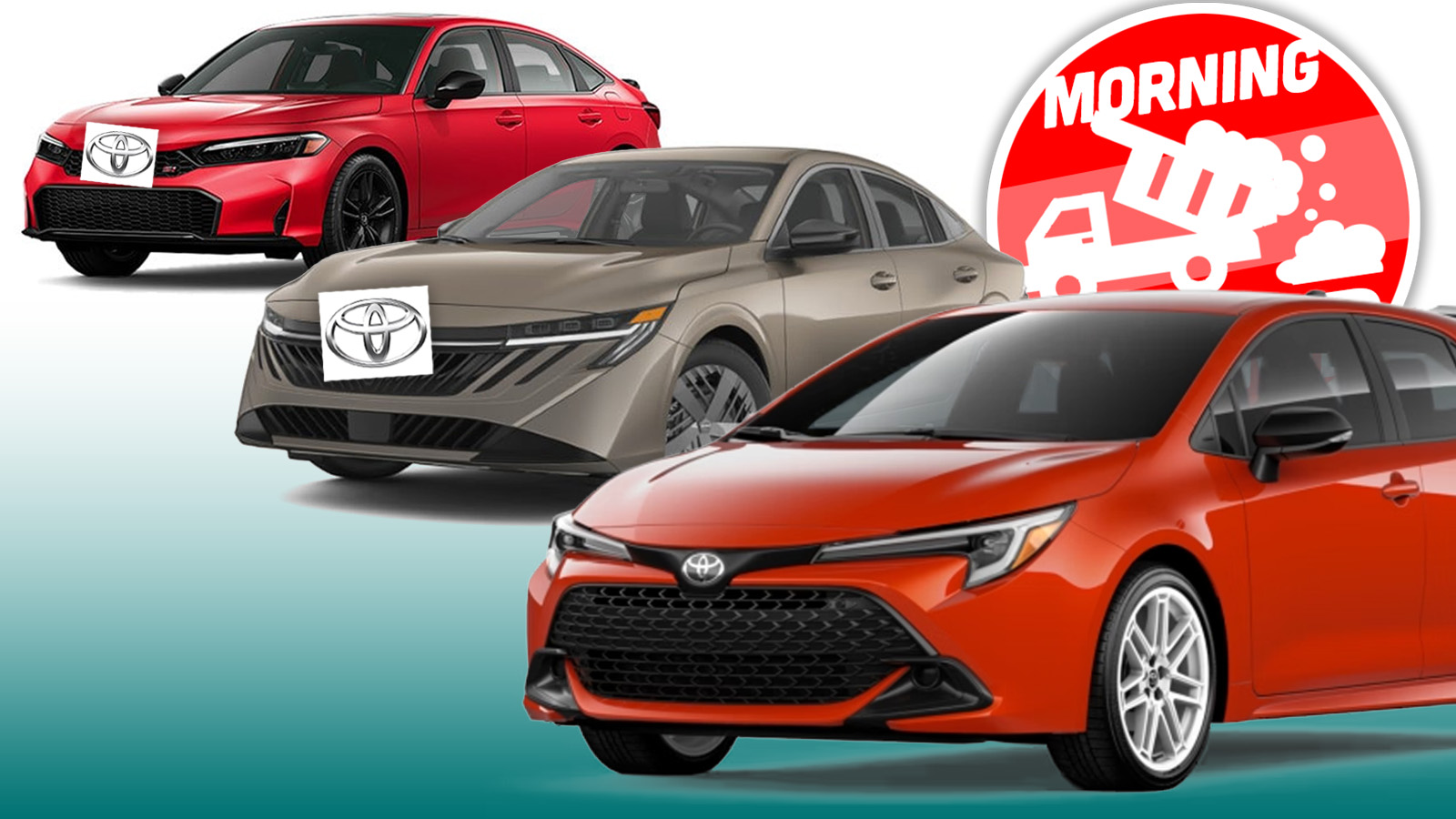
Top photo: Toyota, Honda, Nissan


I’m ok with just Toyota surviving as long as they bring daihutsu along and hopefully make it a global brand again. It would be nice if Suzuki could come along for the ride too.
I wouldn’t care much if let Subaru or Mazda die. I suspect they would bring both further in the fold though.
Honda I’m mixed about the Honda of a decade or two ago I would he be upset the Honda of today I don’t really care all that much.
Nissan had been dead man walking so long I’m almost ready for it.
Isuzu is sort of similar for me. I like their class 5 stuff the dmax is a force in many markets if it all turned into hino would most people care maybe in Thailand?
What’s interesting about China is in almost all industries there are multiple suppliers building the same or almost exact the same part. But some suppliers do it a little better then others. Things like using a little better materials a little tighter tolerances or finishing. Some have improved design but are still compatible with the other parts.
You have an interesting point with China production, when you don’t constrain development by enforcing Intellectual Property, you get a different result of cooperative improvement.
Maybe that’s the big lesson in China’s automotive (and other areas) ascent?
There is definitely something there the cooperative environment it’s how China works. It’s how many countries work in war and China treats everything like a war.
Intellectual property theft is how they got there but its turned to something else. Most of the time they standardized a part they copied. Then various factories improved upon it. No one in China could claim the design as their own as it was probably a copy of a foreign design. The improvements eventually are copied if they were found to benificial. It has gotten to the point that the improved Chinese design is better then what ever the original one they copied is.
The semi open source environment of some that is common in Chinese electronics is often how the businesses run too. We in the West look at it like this like some sort of semi open source model but in China it’s just how they do business. Now they do attempt to have some trade secrets but 10 years ago that didn’t really exist in China.
Japan used to be like this as well. During their war and post war years. A famous example from just after WWII is they copied a British engine casting that had a common field fix of plate with screws where the original casting was weak and would break. The Japanese castings were better then original British because of the field fix. They used to copy all sorts of other things, tools, electronics, machinery. Just like the Chinese have been.
Interesting thoughts, you can draw parallels to wartime US production as well, for instance; the Jeep’s collaborative history across multiple manufacturers being the one that comes to mind.
It’s almost like we can accomplish more through collaboration than isolation and open hostility.
For sure, almost every country in wwii industries collaborated for a common cause doing things quicker and more effectively then if alone just for a profit that might never come. Sometimes that was eating crow and going with someone else’s better design on your better production system.The Chinese treating everything like a war brings their industries together. It’s easy to forget that “made in China” label is a source of pride for a billion people.
I have examples of this at home with a cheap injected foam kid’s toy plane. Some of them are actually good fliers. They have nicely airfoiled wings and tight tolerances. Some are plane-shaped pieces of foam with decidedly slab-like wings that fly not that well unless there’s a breeze outside.
Japanese cars becoming more standardized is a huge win imo. After owning a number of cars, it’s infinitely easier and cheaper to work on vehicles that were global products and shared parts across an OEM. I’m glad that this article mentioned that it’s just going to end up being the Toyota standard, and I think that’s ok. Japan is weird because, unlike the US, they don’t have a Big Three. They have a Toyota and a few others.
TBQ: Toyota is the obvious answer; they’re 1st or 2nd in almost every category they compete in, and they compete in almost every category. Honda makes some good stuff, but they really only have 4 compelling products. I do not like Subaru because of their flawed engine design and CVTs across the board. Mazda makes nice stuff, but they’re just too small of an OEM. Nissan.
I’ve owned 9 Honda products and they have all been pretty great.
But I’ll go Mazda.
I want Honda to survive the most, with Toyota second and Mazda third. No real justification for that except that I have had good luck with all three of the brands over the years, but liked the Hondas the most overall. I loved my Subarus too, so I guess they can be fourth on my survivors list.
TBQ: Mazda
It’s a shame Ford spun them off.
Godsend that Ford spun them off. Ford had no freaking clue how to leverage Mazda and Volvo (remember that short-lived shotgun wedding).
I’d love to read a long in-depth article about the history of this collaboration. To me it seemed like one of the few times that it was beneficial when they started, and was also beneficial when it stopped, and both companies parted on good terms stronger than they were before. Mazda got a financial life-line they needed and scale, and Ford learned how to make good small cars and got a lot of great platforms.
“Ford had no freaking clue how to leverage Mazda and Volvo”
Ford had rebadged Mazdas in the lineup for ages (Courier, Ford Laser/Mercury Tracer, Ford Telstar) – and a couple Fords as Mazdas (B2300/3000/4000 and Navajo) before going all in on platform sharing (Ford Escort/Mercury Tracer & Capri/Mazda 323/Protege – and later Mazda 323/Volvo C30/S40/V50/Ford Focus – plus Mazda 626/MX6/Ford Probe, Ford Contour/Mercury Mystique/Ford Edge/Ford Escape/Mercury Mariner/Lincoln MKX)
Then there were the Ford D4s built on the Volvo P2 platform – Taurus, Sable, Freestyle/Ford Flex/Ford Explorer etc
So Ford knew exactly what they were doing with Mazda and Volvo – and it worked well until Ford needed cash and decided to throw Mazda and Volvo out with the bathwater.
Ford owning Jaguar and LR/RR aka JLR, was even more weird.
Whenever I think about it Tatra owning JLR, given Tatra is Indian is hilarious with the two countries history
The automaker I most want to survive is Honda. I suspect that Toyota and Honda will be the only ones that do survive as independent companies.
Honda is helped by being the largest motorcycle manufacturer in the world and they bikes are what pays most of the bills. The cars are a side hustle.
Power equipment too is big driver for Honda sales.
My friends and I have joked that Honda is an Engine Manufacturer that also happens to build cars to put them into.
It is the “Honda Motor Company Ltd.” after all…
Get ready for BIG CAMRY ENERGY!
You joke, but I’ve been noticing that 3-4 year old Camries have started to take the Altima’s place as the new vehicle of choice for random traffic stupidity.
Well, when your
off-leasenew-to-you ride is just like the one you saw on the NASCAR track….Optima/K5 is the heir to that throne in my area. I fear them.
But Camry is rising. Recently saw Hybrid Synergy Energy in full force with some kid who kitted his new hybrid Camry in full TRD attire and was hammering it through freeway traffic. Those things can move pretty damn well, watch your mirrors.
In my area they seem to fall more into the wannabe Audi a$$hole drivers who either couldn’t afford a used Audi or knew enough to be scared of an out of warranty one…
There have been pockets of that for decades. Sometimes even new Camry. Avalon has been coming up in that world too. It used to be just the older ones that I saw. But the newer style has attracted some of them. In those pockets it was mainly people used to driving in places where traffic stupidity is the way of life. Egypt for instance.
And Teslas did the same for Bimmers.
Infiniti was the new BMW long before Tesla became the new Infiniti.
Grounded to the ground…
Brother, this is the CURRENT reality with the car market in North America.
“The same shitty service, but on cheaper cars” is more of a sales pitch than they think.
I understood that point in the article to be a reference to a dealer owners interactions with the OEM, as opposed to the vehicle owners interaction with the Dealer. I don’t think dealers have quite the issues with the OEM typically, especially here in the US where the franchise laws are so strong.
Having worked at a dealership, and now a fleet so large that we do our own warranty repairs, OEMs are not…great to deal with most of the time.
Ironically, we get better support from BAE and ZF out of the UK than we do from Cummins and Allison here in North America.
I swear in the 80s every Japanese car used the same interior door release.
In the 70s, every Japanese car used the same interior door…
…and in some cases – the entire door was the same
(Mazda GLC & Mazda 626)
I’ll probably get roasted for this, but I thought there was already a lot of this for smaller parts. When I went from wrenching on big three to Japanese cars I was shocked at how much commonality there was in things like filters, bulbs, wheel bolt patterns, accessory belts, minor interior parts, etc. I just kind of assumed it was a byproduct of limited space to warehouse this stuff so they worked together to limit the variety of things to stock.
TBQ, I probably would have said Subaru before the ugly new Outback, but I’ll go with Mazda since they at least try to be interesting despite being a small company.
What Japan needs though is to entirely gut their excessively slow and conservative, grey-haired leadership, and bring in new people who will actually get something done, and bring back some innovation. After the hybrid pioneering work close to 30 years ago, they’ve mostly just been recycling the same old stuff.
You can only polish the same old TuRD for so long before it’s just a super shiny coprolite.
How do you contrast that take on Japanese leadership with Toyota’s leading success, being the only company properly positioned for the post Covid, post-EV push world?
Well, that makes a lot of assumptions, that they have sales success. I don’t think the “most sales in the world” automatically equals success. The “post ev push world” only exists in the US and some other minor places, the rest of the world not so much.
The sales numbers I see is a plateau for the last decade at ~10-11 million vehicles a year, which is treading water, not continuing their success and growth up to ~2015 (which is when it seems they stopped innovating).
They have missed lots of opportunities, whether underproducing things like the RAV4 prime and losing sales, to basically completely missing the early EV sales. They were likely the best positioned of the big automakers to steal Tesla’s success- if the Mirai from 2014 had been reworked into a BEV a few years later (say, with help from Panasonic, another Japanese company that partnered with Tesla), they probably would be selling more than a few hundred a year.
Places like SE Asia, like Thailand, or Australia, where they have historically dominated, they are losing market share. That is not a success. Places like Thailand and Vietnam are quickly approaching 50% EV market share, and I’d guess the Iran/Hormuz debacle will only accelerate that.
Their largest market, the US, they just posted an annual loss. Sure, there is the tariff impact, but I believe GM and Ford still posted profits. Again, that is not a success.
Second largest market, China, their sales are describes as anywhere from “down” to “in collapse”. I’m guessing the home market of Japan is safe.
Personally, I think they should have ditched old Toyoda years ago, and brought in new people. New CEOs 3 years apart (and both are saying they are in trouble) does not bode well.
I used to like Toyota, but the last decade as far as I’m concerned they have just been coasting off their reputation.
I’d argue the exact opposite. It may seem foolish to enthusiasts, but Toyota’s slow, careful leadership made it the #1 automaker in the world. Toyota’s products may seem bland to us, but to a vast majority of Americans, a Rav4 or Grand Highlander is an aspirational vehicle.
Or, Toyota used to have more innovative leadership, pioneering things like fuel efficient FWD cars, Prius, manufacturing processes, etc that led to their success up to ~2015 when they plateaued, and now they are treading water and starting to lose market share in many areas of the world since they have stopped innovating the past decade, and instead coasted off their reputation.
Hey Japan: if you standardize everything then your cars will be actual appliances. Where will any creative differentiation occur? As to China, if they accomplished across the board standardization and have done so using other country’s origin materials, where will innovation occur? Maybe you end up with the best copper wiring in an electric motor, but what if the future is actually hydrogen? As much as I bark about 4th stage capitalism, it still does push intellectual boundaries, and that means innovation and invention.
Mazda by the way as they had the balls/ovaries to attempt the rotary.
“Which Japanese automaker do you most want to survive?”
Currently, in the NA market? Mazda. They’re underdogs, I like the semi-premium aspirations, but they’re struggling to effectively implement it in things like the CX-90 and new CX-5 so I’m worried for them. The answer is always Mazdiata.
Beyond our shores? Suzuki. Anyone that makes the Swift and the Jimny deserves a future.
I have a new Toyota with the Mazda red paint. Corolla XSE. The color is glorious…though it does pick up dings and stuff and scratches very easily.
There’s no reason not to become like Toyota. I’ve been a fanboi for a very long time, because they’re exceptional. And yes, the current engine problems are a huge black mark and an embarrassment for Toyota.
I’m pretty confident that standardization won’t kill anyone unless they were already half dead.
This isn’t surprising at all. Cars have been getting more and more standardised across mechanical layout (and this will only increase with BEV, which does away with one of the main differentiators, the engine).
Odd engineering choices by manufacturers such as Saab, Lancia or Citroën have either been replaced by conventional solutions or died altogether.
Simply put they couldn’t compete on margin per unit. And they started to fall behind. Which made them less competitive, volumes diminished which made them fall further behind and so on and so forth. Once they entered this vicious circle, it was very difficult to break it.
Standardisation in the car industry is the future.
As an enthusiast not concerned with the business side, I think we’ll miss oddball stuff of the past. It’s what gives cars character.
Flip side, modularity helps with ease of service and could maybe give hobbyists more control over maintenance/modifications.
It also has given us the safest, most advanced, efficient and reliable cars ever.
So I guess there’s that too.
Standardization leading to improved sales, Assuming the company Can still make compelling differentiation in styling, interior, support network etc….
Can give a company breathing room to take chances on a low volume product enthusiasts will like, using as many standardized parts as possible
Remember while the exterior styling wasn’t the best the last Toyota MR2 Spyder was largely a Toyota corolla which is a good thing when it comes to reliability, dependability, fixability, etc…
I wouldn’t mind more shared parts. When I had my Eagle Talon I regularly shopped the Mitz part counter instead of Eagle because they usually had the parts in stock. Also if a part was shared with a more common car, like the Mirage, I’d order that because it was cheaper due to not having the “sports car tax markup” even though it was the same part. Then I found that Hyundai licensed certain designs from Mitz and their parts were compatible too and waayyyyy cheaper. If all the automakers used more modular and interchangeable designs it would make repairs much easier.
Brian Scotto did this on his Ferrari 360, the AC Compressor is shared with a Ford Transit (I think) and he bought the Ford part to save hundreds of dollars off of the Ferrari Tax.
If the unions and Lower Saxony have their way, VW will simply die rather than having some limbs amputated and living a longer (albeit less dynamic) life. Current workers can only see their own livelihoods in the crosshairs (that’s not a judgement on them, it’s human nature) and the regional government officials need to please the current voting populous to stay in office – they also need the economic engine of factories employing citizens.
The shareholder end-around is desperate option, but one that needs to happen.
So true. VW is where GM was in the 90’s: Too many brands, too many models, too many factories, and too many workers. The longer it takes to actually fix the problem the worse it gets and the more chance of failure.
When I first started out in the business in the mid-90’s we were making automated assembly machines for GM. They would have UAW workers just watch the machine run or sometimes run it in manual mode because they simply could not get rid of the worker because of job banks. At one point GM was paying 7,500 workers to not work.
(*The jobs bank started in the 80’s as a result of automation and plant closures. It required GM to pay UAW workers they didn’t need 90% of salary to show up and not work.)
If you want to see an example of this playing out to conclusion, look at Hostess the purveyor of Twinkies.
They went out of business due to the union refusing to budge (right or wrong) on things like pension and workforce size. Only to return two years later free of all the previous financial burden to be reborn under private equity that bought the brand name and IP for pennies post collapse.
…and this is why I won’t buy Hostess products. F those union-busters. Product quality has taken a big hit, too.
New Hostess has nothing to do with old Hostess, other than the name which was purchased at auction. But you still shouldn’t buy them because they are terrible products.
Whether it’s union busting or company busting is entirely dependent on which side of the bankruptcy table you’re sitting on. And at the end of the day, the issue is both sides are at the same table.
“Ha, ha. Your side of the ship is sinking” tends to wipe out everybody.
Stella Doro Cookies and Drakes had the same fate as they all shared the same Union
I would drive by the Stella Doro factory in Illinois from time to time in the 1990’s.
I’m thinking of parallels with British Leyland. Labor and management, both intractable, led to the worst possible outcome for all parties.
TBQ: Suzuki
damnit!
Is Toyota implying that China is ahead because all the brands share common parts?
And, reading between the lines, there was resistance not to?
A common part number that I can get anywhere for any brand would be far more than ideal – it’s a wet dream for a business like Rock Auto, or NAPA. Chinese companies are certainly doing good things for the consumer, here.
It’s probably a combo of many things. Yeah, Toyota can make a business case that standardization is a rising tide that will lift all ships . . . but it’s also a power play within the Japanese auto manufacturing eco-system that will give them more say in the direction of their industry.
I’ve traditionally been a Honda guy. From scooters to business jets, they make interesting stuff and usually do it very well. Accordingly (sorry), I currently have a ’17 Accord in my garage. It may well outlast me. My son and his wife have a Mazda CX-5 and a Subaru Outback. Both are relatively new. Time will tell how well those hold up.
Toyota has gone through a phase where the front styling is just too ugly to contemplate. If the newish Prius is signaling a change of direction, style wise, maybe one of their products will interest me. A Nissan Sentra I rented last year surprised me by how much I liked it.
So, that’s all to say I don’t really have a favorite anymore. Maybe Honda if I have to pick one. I was sad to see Suzuki leave the US market. And I hope Mitsubishi manages to hold on somehow.
The Gen5 Prius was released in 2023 and is in it’s fourth year. Other than the rectangular lump for the front license plate and the choice of silver for the lower air intake, it looks great. They then proceeded to mutate this design to many of their other vehicles with varying levels of failure. I don’t hold out much hope for their overall design language.
I guess it has been that long. I saw some signs of that design in the Crown, but you’re right. Its front is a failure.
The front end of the Prius is excellent. I’d like the Bishop to photoshop onto the current Camry. I don’t understand why Toyota continued with the baleen whale and cheese grater grille for that car when the Prius is wearing the design language correctly
Toyota is a big customer for us, and we have Nissan, Honda, Mazda/Subaru too. I agree with the article that the others have to align to what Toyota do, they are the most successful business in our organization. It would be easier for us as suppliers to deal with common designs and parts usage, and Toyota is very good doing validations and following processes in general. As long each brand keeps their own touch like Mazda focused on driving, Subaru in the outdoors vibe, etc.
Having worked with the US-three, some of the Euro brands, and some of the Japanese brands:
The Worst: Stellantis/FCA and is quickly followed by GM for completely different reasons.
Euro brands have their issues, sure, but leaps and bounds ahead of the American-three.
The Japanese brands are, however, simply a breath of fresh air.
The only problem I have with working with Japanese car companies is that, since the company I work for is also Japanese, we’re not allowed to tell them no.
Toyota makes great cars. That’s all they need 🙂
Are they great tho?
Or are they just acceptable with a whiff of reliability?
This. They are appliance cars skating by on a reputation for reliability that’s about a decade out of date. I’ve driven pretty much their entire lineup, and none of them I would consider owning vs their competition.
Though to be fair, their competition is mostly Mazda which is just like Toyota’s gifted class.
The number of Japanese automakers is completely out of whack for their market size because those automakers hugely rely on global export markets to prop up their operations.
The Chinese automakers have gobbled up market share in countries that have no domestic automakers to protect. Favouring one foreign import manufacturer over another essentially confers no benefit to the local economy, especially when the Chinese automakers can produce at such low cost. Might as well get ‘the cheapest’ in that case, even if ‘the cheapest’ is subsidized by someone else (itself another can of worms).
Smaller Japanese automakers will find life increasingly difficult. The good news: They’re all kind of moving to generic pablum mobiles already, so the actual differences between Honda/Toyota/Mazda/Subaru/Nissan/Mitsubishi are just vague nostalgia pangs in the minds of old-timers.
The days of screaming Honda engines, Mazda rotaries, Nissan Skylines, rally-inspired Mitsubishi Lancers and Subaru WRXs have come and gone. They all peddle blob-mobiles of various blandness. Ironically, Toyota is probably the last ‘enthusiast’ holdout with its GR line.
The reckoning cometh for Japan and right soon.
And why are the Japanese exports so successful? Because they’re just great cars (except Subaru LOL)
That is not only true for Japanese car manufacturers but actually everywhere. The days of individual Rovers, Lancias, Alfa Romeos, Citroëns or Saabs are long gone too.
Insecure suburbanites have proven to be the only reliable source of income for the automotive industry, so why should they consider anyone else’s tastes?
Maybe if more automotive enthusiasts put their money where their mouth is, we’d see more interesting vehicles in the new car market again; but why should anyone have to take a hit on depreciation when used examples will be available in a few years?
Well I have been one of this new owners of Alfa Romeos, two door sportscars, rear wheel drive straight six engined hatchbacks, the lot.
I “made” my family buy Lancias, V8-engined Jag sports saloons, two door sporty coupes and more rear wheel drive hatchbacks.
None of this seemed to work though.
“the scheiße has truly hit der ventilator”….or as we said at my last job, when the defection hits the rotary oscillator.
Or when the excrement hits the air conditioning, as Vonnegut wrote.
Thanks for the update Matt.
My first thought regarding consolidation of parts for the Japanese automotive industry is having the manufacturers all move to a common 48v architecture. Share development and production cost for electronics, lights, motors, switches, can bus modules, etc. high end stereos would get a huge boost by going to 48v as well.
We’re long past time to get away from 12v and go to the efficiency higher voltage / lower amps route. If they all (Toyota) did it, the R and D could be shared and would also be a nice differentiator in the global market.
…. Oh, and they could all share Mazdas spinning Dorito range extender for the next gen EREVs too.
Can’t wait to check out the new Toyondasans!
Hoping they’re as good or better than the Thundercougarfalconbird!
Try Stellantis first.
This is the template for what Sato is talking about, CATARC.
https://www.china-certification.com/en/glossary/china-automotive-technology-research-center-catarc/
Looks like legacy automakers will have to create some version of CATARC to drive down component costs and compete with the Chinese.