

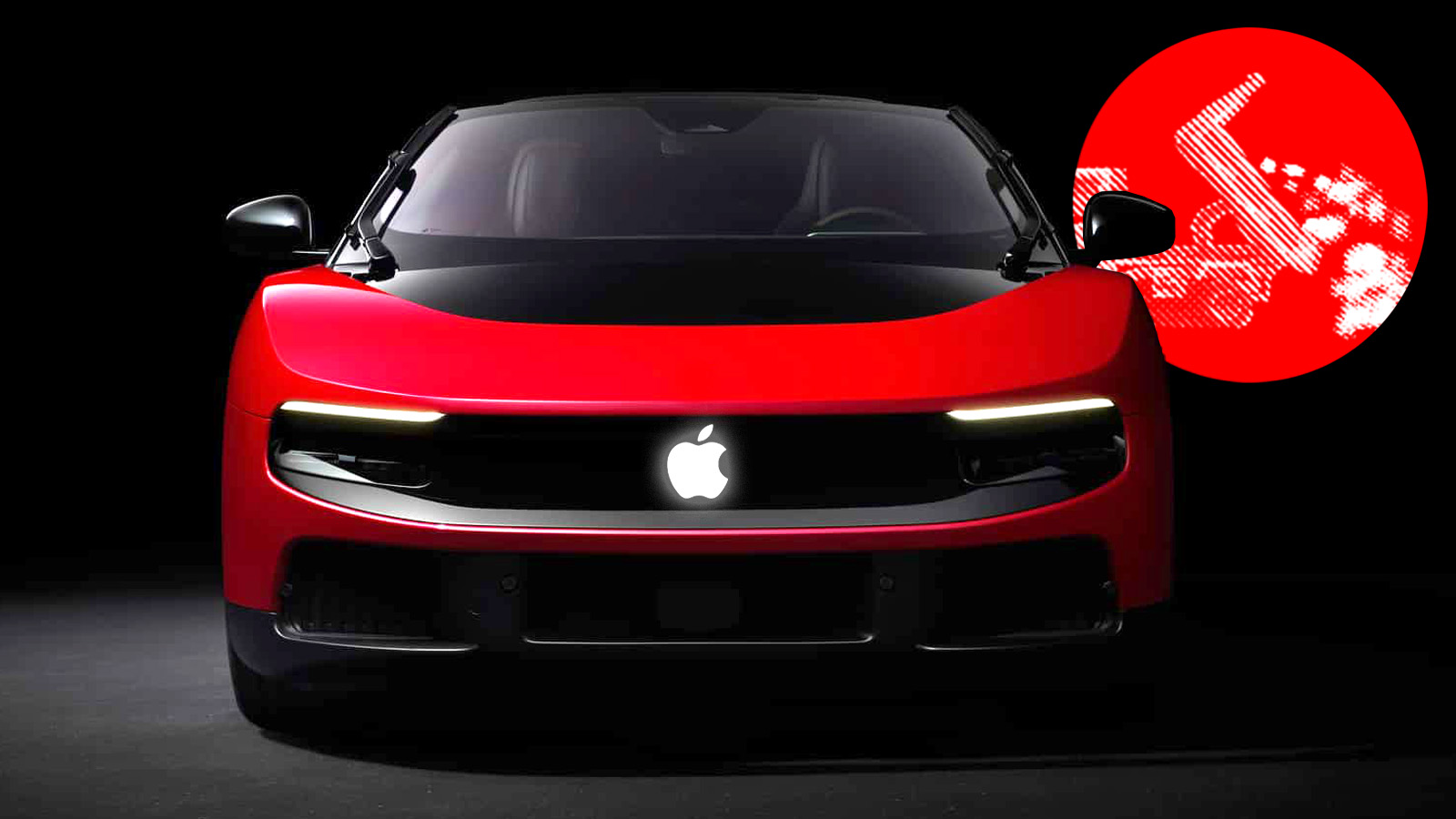
It sure feels this morning like there was no way to design the electric Ferrari Luce that wouldn’t have made people mad. The company’s stock fell today in Milan as the online reaction was, if not universally negative, at least mostly grumpy. I think there was a way, though, and it’s if literally anyone else built it.
The Morning Dump doesn’t traffic in rumors, but the chatter overnight was that this design was an evolved version of the abandoned Apple Car. This rumor comes via the car design community and, as should be clear by now, car designers are all caustic, incurable gossips. I have my doubts about this, yet it does make me wonder if all this negativity would persist if any other brand in the world debuted the exact same car.


Branding is important! This is something Mazda is thinking about as it tries to reach for 500,000 annual sales. What is the Mazda brand? To that end, what is the Honda brand if it completely abandons electric cars? At least some of the original EV work might live on in the company’s hybrids.
Today seems to be about questions, and I schlepped down to the Council on Foreign Relations last week to watch a debate about the government owning shares in companies–a thing that really happened to the car industry–to see if anyone could convince me it’s a good idea.
The Ferrari Luce Is The Latest Victim Of Expectation

Like all good people of taste, I’m a big fan of the Ford 021C concept, penned by the same Marc Newsom who is partially responsible for the Ferrari Luce. While the two cars are approaching very different problems, there are aesthetic similarities and overlapping vibes. So why is it that I like the former and am bothered by the latter?
Ferrari is a luxury brand first, and carmaker second, so what a car represents is just as important as how it drives (which is probably great, since it’s a Ferrari). I shot a documentary about a prominent Ferrari owner and met a lot of other Ferrari collectors while doing work for the brand in a previous life, and I feel qualified to say that I’m not qualified to say what they’ll end up buying or liking.
I am only really capable of knowing what I like, and as a $64,000 Nissan I really like the Luce. As a $640,000 Ferrari it’s a lot harder to swallow a car that looks nothing like any other Ferrari.
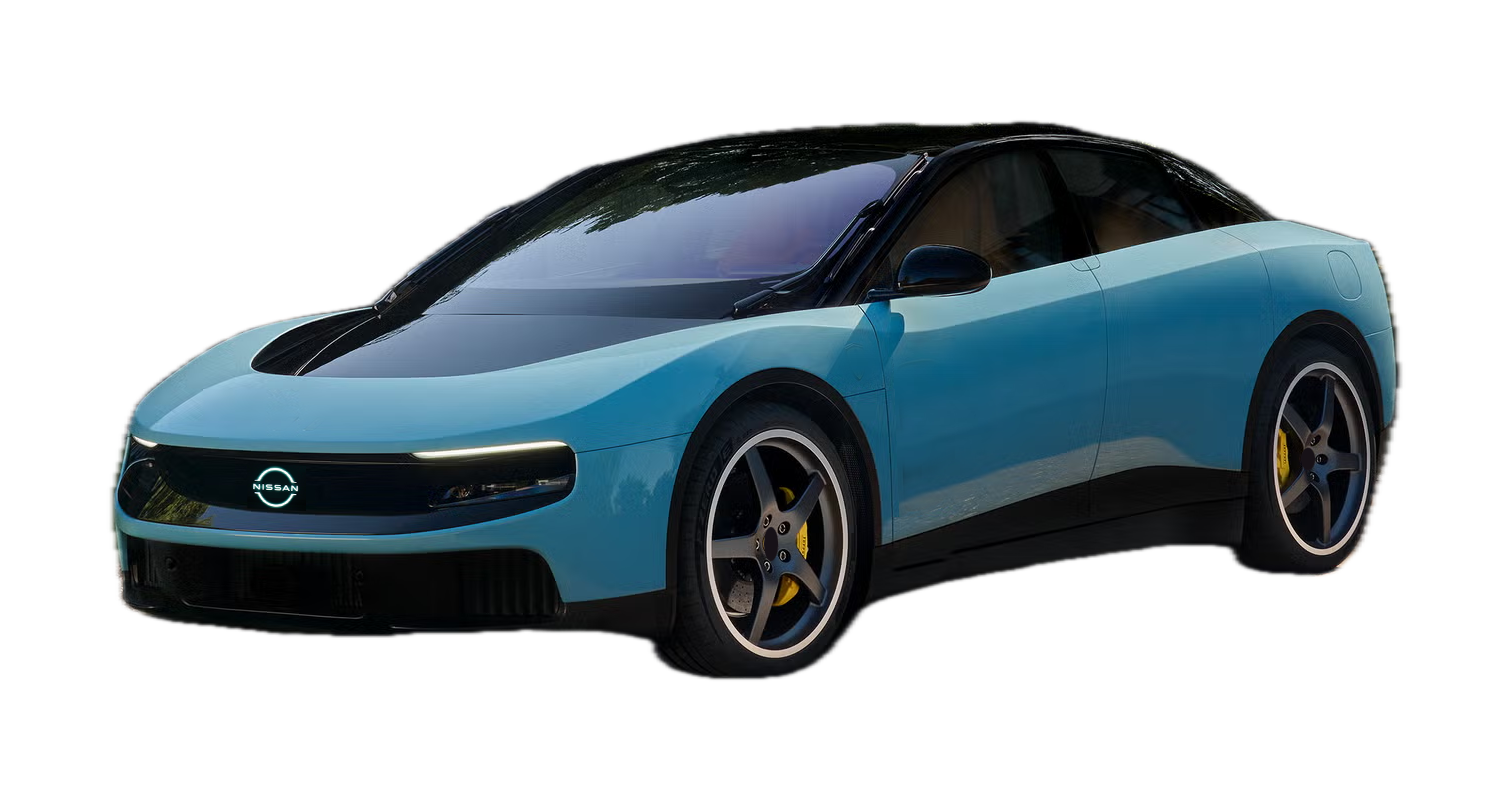 The Bishop sent that to me last night, and there are versions of it all over social media with various badges. Honda. Tesla. Whatever. They all work. Now do the opposite and imagine a Nissan logo on an Amalfi. It doesn’t work, right?
What about the Apple Car? This new project is the first car from the mega design duo of iPhone designer Jony Ive and Marc Newsom. You can clearly see this in the interior, which I like, and think does a successful job of updating the Ferrari aesthetic for an EV future. While there may be some crossover with the planned Apple Car, I think most of the interior feels Italian GT in the best sort of way. The Apple Car was also reportedly supposed to be taller and more van-like, which this clearly isn’t.
Designers recycle. This is the way of the world. The guy who did the PT Cruiser went to GM and made the HHR. If someone didn’t buy Giugiaro’s design, he pretty much always peddled it somewhere else. The modern Genesis sedans and SUVs sure do look Bentley-ish, don’t they? I’m sure some ideas made it from the Apple Car to Ferrari.
The challenge is that the design is so blank slate that even the Ferrari touches are hard to separate from whatever else is going on here. This seems to be impacting the perception of the company, as Bloomberg notes:
The car looks like a “mix between a Honda Accord EV and Tesla 3,” Pierre-Olivier Essig, head of research at AIR Capital wrote in a note. “We are lost in translation with Ferrari’s new strategy.”
The launch also comes as demand for high-end electric vehicles has become harder to predict and some rivals like Lamborghini and Porsche AG have slowed their electrification plans, citing a lack of buying interest.
The share price plunge followed a presentation in Rome on Sunday that marked the final stage of a three-step reveal of the EV that began last year with the car’s core technology and later showed its interior.
The Milan-traded shares are at about 7.0% down as of writing this, while the company’s NYSE-traded shares are down about 3-4% this morning. It seems like other people are having a hard time understanding this, as well.
I think if you had Jony Ive and Marc Newsom unveiling this as a Honda people would have loved it.
What Is The Mazda Brand?
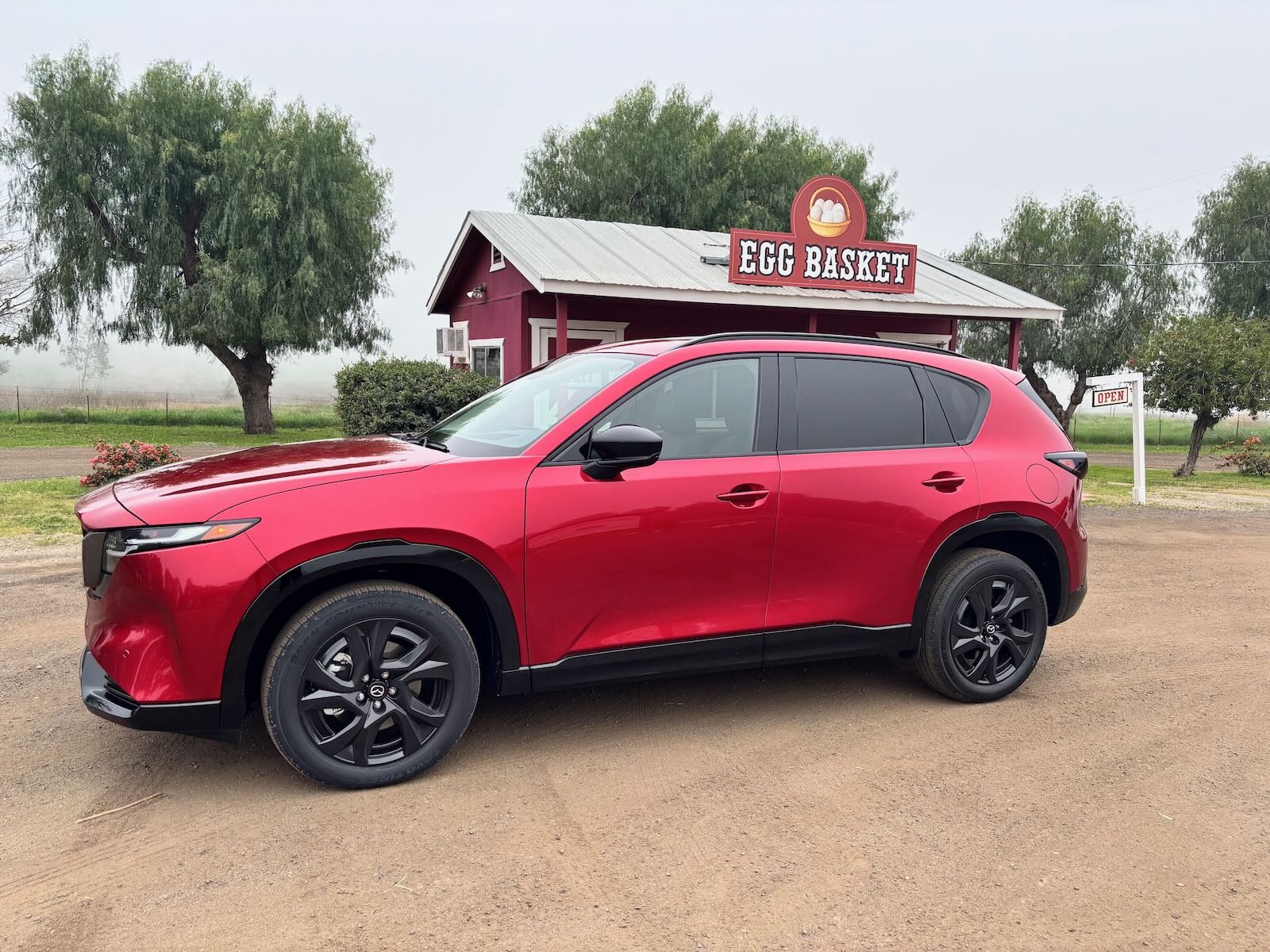
Larry Vellequette from Automotive News did a sit down with Mazda’s North American CEO Tom Donnelly, and a lot of talk was about branding. What is the Mazda brand? Is the idea of the Mazda brand in my head the same as the Mazda brand in your head? This is Donnelly’s concern:
What keeps me up at night is if you walked out of this hotel or this building and you asked 10 people, “What does Mazda stand for?” you’d get 10 different answers. That is my “keeps me up at night” thing. [At our meeting], we proceeded to try to lay out how we fix that, how we improve that situation so that we achieve the 500,000 sales, so that our dealers become more profitable, that we develop long-term, lasting, lifetime relationships with our customers. Just be a stronger, better brand.
The big thing that is at the heart of your question is that very thing: The products are the products, the people are the people, the dealers are the dealers. But if you don’t have a strong brand that people desire, you’re going to keep sliding backwards in this environment.
It’s tough. I’m a Mazda fan and have often steered people towards getting one. To me Mazda represents something that’s a little more distinct, a little better handling, and slightly more premium than what you can get from other Japanese automakers. That’s a bit diffuse, though, right?
I think the Mazda3 nicely fits in that, as does the Mazda CX-50. The new CX-5 is a bit more safety-forward and tech-forward. The CX-90 is a bit more luxury-forward. The Miata is like my Old Spice deodorant: Pure Sport.
How does one square all of that?
Honda Will Recycle Some Of The 0 Cars Into New Hybrids

People are upset we’re not getting the Honda 0 electric cars. I am not one of those people, although I recognize the wastefulness. That’s a lot of work, and I feel for the people who did that work. I also kind of like the 0 Saloon. It’s a bummer that won’t get made.
According to Hans Greimel, not all of it is going to waste:
Hybrids ”will be included across all models” with a few exceptions, such as the performance-oriented gasoline-powered Civic Type R, Managing Executive Officer Kazuhiro Takizawa said.
The hybrid focus provides political cover, offering electrification without full dependence on large-scale battery supply chains or charging infrastructure that could face policy headwinds.
Honda plans to introduce 15 hybrid models globally by fiscal 2029, separate from whatever emerges from the flexible next-generation EV-hybrid platform.
Some of the 15 upcoming hybrids will be updates to existing nameplates, while others will be new. Honda will also repurpose some of its next-generation 0 Series EV architectures and components in the upcoming gasoline-electric lineup, [CEO Toshihiro] Mibe said.
I wonder what that’ll look like.
Should The Government Own Shares In Private Companies?
I get invited to a lot of events, though this is the first time I’ve been invited to one at the Council on Foreign Relations, which is one of those think-tanks that either promotes an informed and much needed bipartisan view of America’s role in the world or upholds a deeply corporate, uncomfortably neoliberal status quote among policymakers depending on your own personal politics. I think of it as a place that was quite liberal with drinks and tacos.
Honestly, when I walked up to the gates it felt like maybe someone was playing a joke on me. The young man with the iPad greeting people didn’t have my name and I was just about ready to walk back out onto Park Avenue when a media person for CFR goes “Matt Hardigree?” and escorted me to the press section.
The reason I think I was invited was because the topic of the ongoing series “Open to Debate” was about government investment in private companies via shareholding. Obviously, governments pour huge amounts of money to corporations, albeit rarely by holding shares. The most obvious example of this happening was the government acquiring equity in both banks and automakers during the Global Financial Crisis in order to keep the economy from collapsing.
That was an emergency, and I think the government did a reasonable job of accomplishing the end goal of saving Chrysler and General Motors, albeit with mixed results for both automakers. GM was forced to cut brands somewhat randomly, and many of the valuable parts of Chrysler got sold off at what feels like unreasonably low amounts.
“Open to Debate” is actually a debate, and has two sides wrangled expertly by host John Donvan, which is refreshing. In this case, the pro-side was represented by a pair of longtime government insiders (Laura Taylor-Kale from the Biden admin and Richard Falkenrath from the second Bush Admin), and the con-side being former Fidelity President Bob Pozen and academic Yasheng Huan. It’s a little more CX than LD if you were a nerd like me in high school.
As you can see in the video above (or linked here), it was a good time. It was also an almost impossible job for the pro-side in light of the current White House, which seems extremely open to the idea of owning corporations. The pro-side tried to have the conversations outside of the bounds of whatever President Trump is doing, which is essentially impossible. It was like trying to debate the infield fly rule during a t-ball game–there are 13 infielders, the rules don’t matter!
I think Prof. Huan summed up the con-side quite clearly:
“Government, for better or worse, is a much more complex entity as compared to a company. VC has a very straightfowrard objective function, we may criticize it, but they are going in for profits and profits alone. Government cannot focus on just one objective function, they have to take care of many many other things. When you have such complex objective goals, it’s difficult to judge on a single metric. Once you have multiple metrics, you dilute the management.”
Either way, the pro-side got spanked. At one point, Taylor-Kale tried to make the point that Congressional oversight lags too late for key industries and that in certain areas, like AI, there needs to be a way for the government to get involved early enough to protect national interests. I’d buy that, but there seem to be plenty of other ways to do it that are not specifically ownership, which, as Pozen pointed out, means the government is going to pick winners and that “government bureaucrats do not have the skills necessary to pick economic winners.”
It’s a fun series and Prof. Huan had the best line in the post-debate wrap up about the direct back-and-forth when he joked “I’m used to being treated badly, I’m an academic.”
If they do one of these on the Chinese car industry maybe I can get invited to debate.
What I’m Listening To While Writing TMD
I was introduced to the idea of “Millennial Hopecore” as a musical sub-genre that takes a lot of the enveloping sound of stomp-clamp, but either in an electronic or indie rock-adjacent direction as opposed to something more rooted in folk and bluegrass. For instance, M83’s “Midnight City” is distinctly not stomp-clamp, but it’s also not purely indie either.
The Big Qusetion
What is Mazda’s brand to you?
Top photo: Apple/Ferrari


Wow. That Ford is hideous, at least on the outside. Put some googly eyeballs on it and it could be in the next Pixar Cars movie.
No. not a single person would care.