

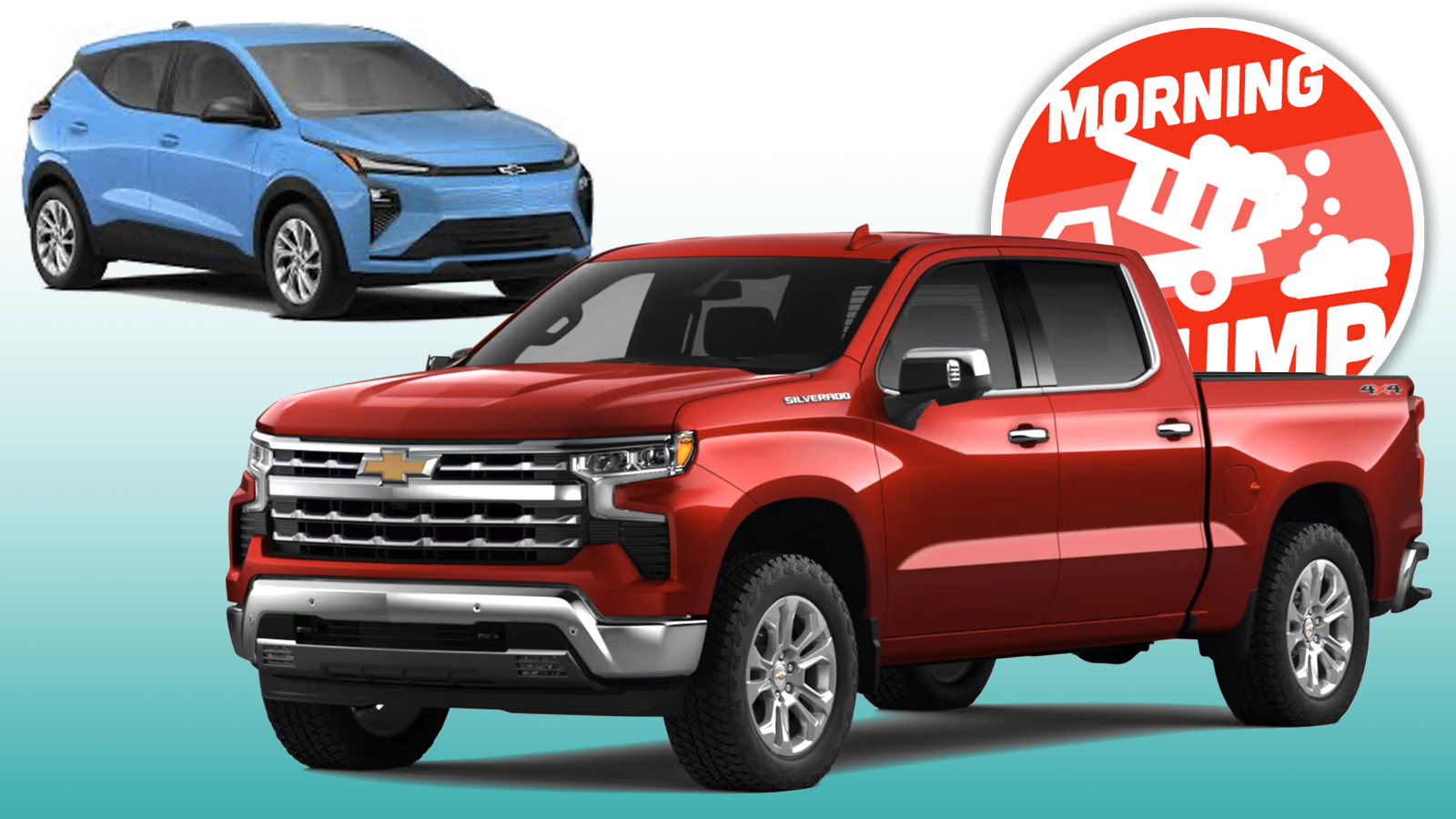
General Motors is the most EV-forward brand in America that isn’t an EV-only brand, which has earned them the second place spot behind Tesla… a distant second. GM is also in the unique position of offering a lot of gas-powered cars and trucks alongside its EVs, without the middle step of offering hybrids. At the moment, this seems not great, but maybe it’ll all work out?
The theme of The Morning Dump today will be the idea that everything will resolve itself in the end, however tortured a journey it might take to get there. It’s like the end of The Shawshank Redemption. Maybe you can crawl through 500 yards of crap and somehow end up clean on the other side.


It was announced today that the European Union might look to add Canada as an ‘associate member,’ whatever that means, which could work out for enthusiasts 25 years hence. Britain is in a unique position in that it’s no longer in the EU, which has given it access to Chinese cars, though the EU may have found a way to avoid turning the UK into a backdoor for those cars. Here in the United States, the last Stellantis CEO shifted truck production to Mexico to avoid paying the UAW, but the UAW might win the war.
The Decade Of The Hybrid Can’t Last Forever, Right?
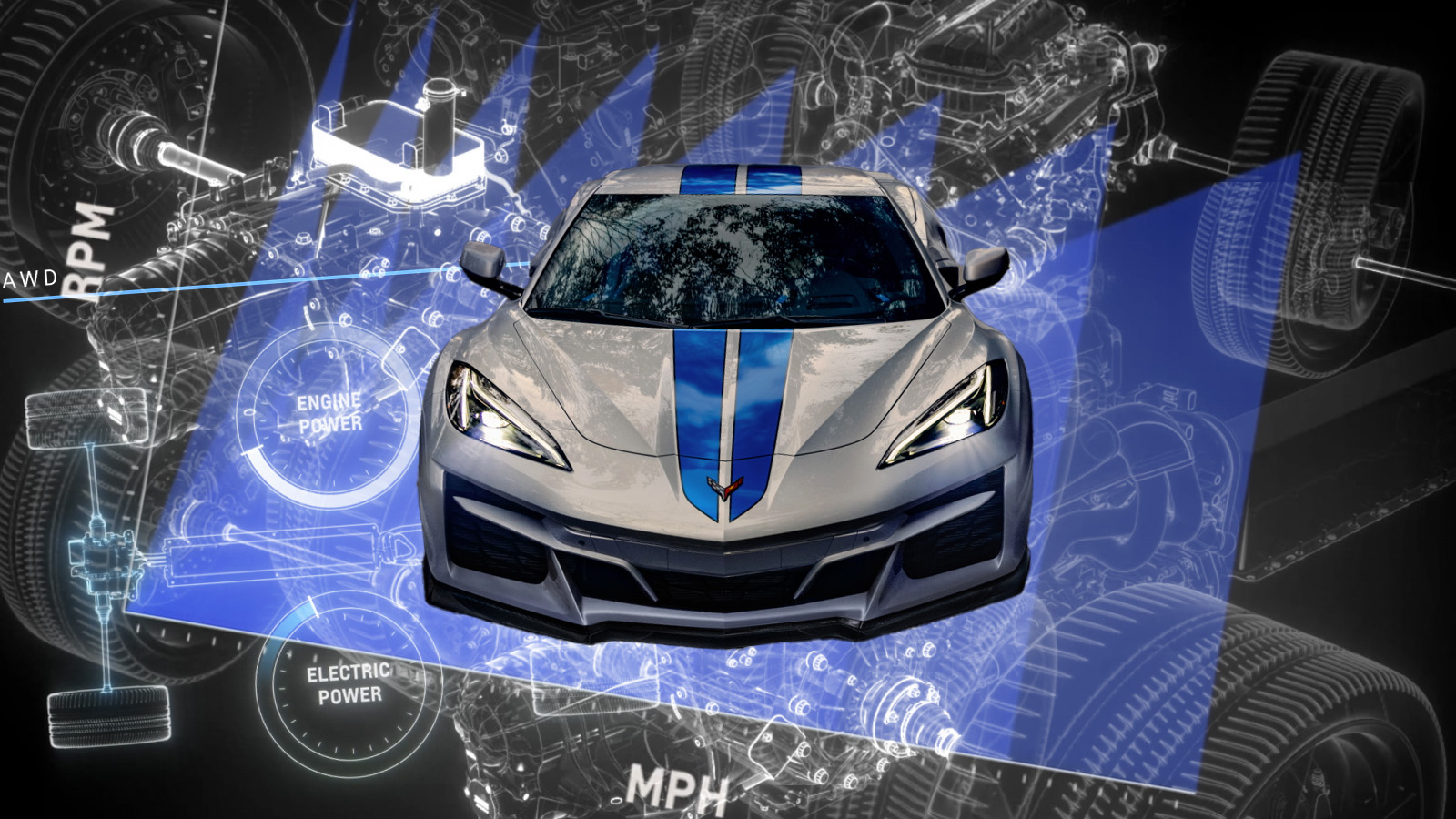
The Corvette E-Ray is the only hybrid currently sold in the United States by General Motors. That’s odd. GM, as it often is, was early to develop hybrids and even beat everyone to the market with a hybrid truck. Investing early and heavily into electric cars, GM is now a brand that offers a lot of ultimately money-losing EVs next to a lot of big, profitable gas-powered trucks.
GM guessed the future wrong, but the future is now the present, so maybe it has the future future right? There’s a story from Reuters today about how dealers are cranky that GM doesn’t have hybrids on offer at its Chevy or Buick dealers, with quotes like this:
New Jersey GM dealer David Ferraez said dealers would be hesitant to add more EVs to their lots, because they have been a tough sell.
“I’m hoping that GM can adapt and come up with a way to build hybrids,” he said.
It’s going to be a while. The original position from GM was that hybrids were an interim solution, which is not how it’s going. Back in 2024, GM CEO Mary Barra said the company would look into having plugins by 2027, but even then she said hybrid technology was “not the end game because it’s not zero emission.” [Ed Note: As much as I’m a fan of Barra, this is one of the silliest things I’ve ever heard a CEO say. To refuse to offer what people want today because ultimately we’re going to EVs in the future is just bizarre logic. But who knows; maybe regulatory changes will mean the decision was only kinda silly. -DT]
Were the leadership able to predict the future, I’m sure GM would have changed some things, but it’s also still a profitable company in the face of tariffs, regulatory shifts, consumer shifts, and all the rest that’s come with our current political moment.
There’s another quote, from John Murphy (this guy), and it made me pause:
Automotive analyst John Murphy of Murphy Automotive Partners expects hybrid sales to hit 34% of U.S. sales in 2031. Still, he said it makes sense for GM to emphasize its highly profitable gas-only trucks and SUVs, while its EV lineup could position the company well if regulations tighten in coming years.
GM’s strategy “is not as clear a major mistake as I think some people believe,” Murphy said.
I think he might be right. Nothing happens in a straight line these days. I mean, look at this chart of hybrid sales:
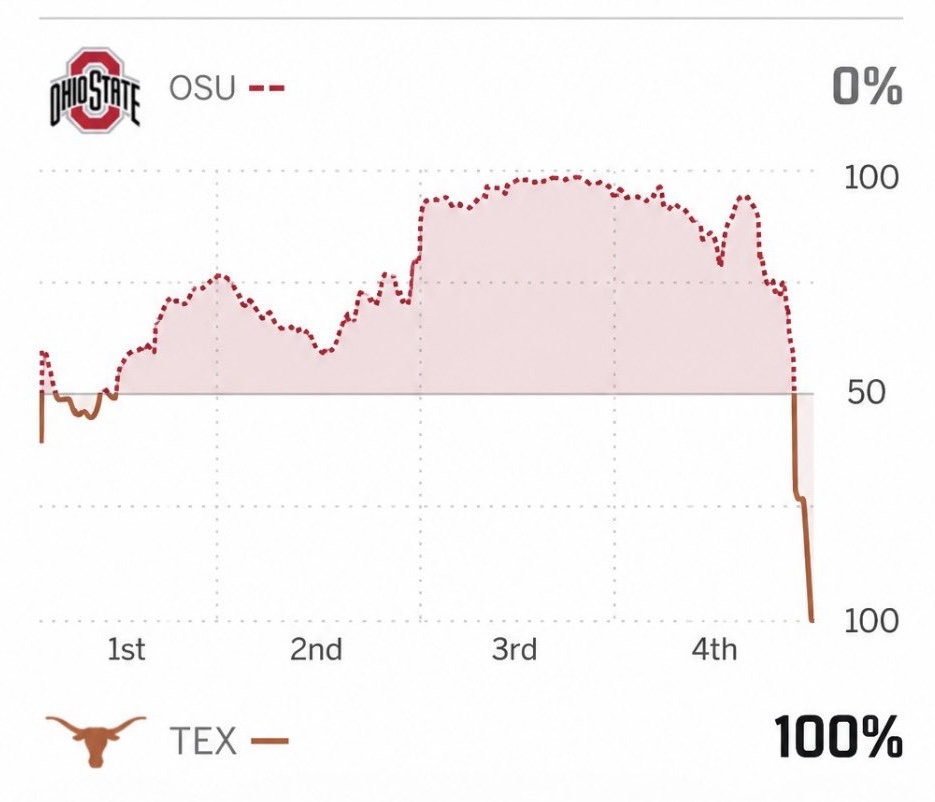
Oh, wait, sorry, that’s the ESPN win probability chart from this weekend’s Longhorns game. How did that get in here? Well, it tells the same story. Sometimes, you can be sure of an outcome (as I was about UT defeating Ohio State), all the data can point the other way, and you can still be correct in the end.
Toyota is the leader in hybrids and, yet, it’s coming out with a lot of electric cars. Ford is working on the Fathom as the first offering in a trio of new EVs. Developing cars is expensive and GM clearly has a lead when it comes to electrification. Maybe that’ll pay off in a few years if there’s a new administration, a new focus on fuel consumption, and a general acceptance of the technology that matches the general acceptance of hybrids.
It’ll be fun to watch. Maybe as fun as the fourth quarter of that game.
Canada Might Become An ‘Associate Member’ Of The European Union

A small number of readers here get mad that I don’t get even madder about the bizarre current state of things. There are a few reasons for this, but the biggest is that there are plenty of places that do this very well and I don’t think we need another one. If you want to be upset, that’s your right. I’m often upset. What’s bad is when we have a lot of angry and ill-informed people, which is what I’m always hoping to fix.
The United States has started a tepid cold war with Canada. Maybe a mild war? This comes after years of intertwining our two markets, mostly to everyone’s benefit. The bet that President Trump has made is that Canada needs the US, but the US doesn’t need Canada. Time will tell on that front, but Canada isn’t wasting time finding new partners.
Canadian Prime Minister Mark Carney went to France to pitch Canada as a place for investment, trying to align itself more with Europe than with the US. As NPR reports, it might be working:
Trump’s tariffs and repeated talk of making Canada the 51st state have pushed Canada to seek closer economic and security ties with Europe. Roughly 70% of Canadian exports go to the United States, and Carney has called for a “unique alliance” with the EU as Canada seeks to reduce that dependence.
“I would like to work with you on opening the door for Canada being the first associate member of the EU,” von der Leyen told Canadian Prime Minister Mark Carney during her annual State of the European Union address at the European Parliament in Strasbourg. Carney nodded, rose from his seat, embraced von der Leyen and kissed her on both cheeks as lawmakers gave a standing ovation. He is due to address the Parliament on Thursday.
A Canadian official familiar with the discussions told The Associated Press last week that Ottawa was exploring ties with the EU that could stop just short of membership. The official said Canada would seek an arrangement allowing its citizens to live and work in Europe without visas as part of a broader strategic partnership.
One could picture a future where Canada shifts its allegiances to Europe as a counterweight to the US. From the perspective of automobiles, Ottawa is already trying to build a car market that doesn’t rely as heavily on imports from south of its border. This is complicated by the reliance on US safety and emissions standards.
So what’s the good news here? Where’s the bright light at the end of the sewer many people see us in given the policies coming out of Washington? There should just be one Asian-European-US-Canadian car standard. While there are differences between the experiences of European and American drivers, they’re not that far apart. A car that’s safe in Europe is fine here.
Perhaps pushing away our closest neighbor any ally will hasten a universal adoption of safety standards that’ll benefit enthusiasts, reduce the costs of localization, and make it easier to import cars from other markets. A boy can dream.
The EU Really Doesn’t Want The UK To Become A ‘Trojan Horse’ For Chinese Cars

The wide acceptance of Chinese cars and Chinese brands in the UK was a bit of a surprise to me when I last visited, but it shouldn’t have been. A weird outcome of Brexit is that Chinese manufacturers aren’t under the same tariff regime that they are when they try to sell cars in the rest of Europe.
Of course, the UK still relies heavily on the rest of Europe for automotive trade, which means that it needs to be friendly with its neighbors. The EU is pushing for its own protectionist trade policies, and it may make Britain fall in line, as Bloomberg reports:
Brussels may put pressure on Britain to follow its lead with levies to prevent an influx of Chinese vehicles into the EU via the UK, where they already account for a fifth of sales, said Massimiliano Messina, a Nissan executive who oversees the region including Europe.
“Europe cannot have a Trojan horse in the UK where Chinese are going to flood the market through the UK,” Messina told reporters on a call.
The European Commission has proposed “Made in EU” local-content rules that could restrict key subsidies to vehicles manufactured in the bloc and exclude the UK operations of automakers like Nissan. The government in London is seeking an arrangement that would prevent its exclusion from the program.
The back half of the 20th century was an attempt to link the world in order to decrease conflict and increase prosperity after years of fucking around and finding out what happens when you allow any single country or society to believe it has the right to dominate everyone else. The first quarter of the 21st century has been forgetting that lesson.
The UAW Might Have Lost The Battle But Won The War

Former Stellantis CEO Carlos Tavares, pictured above, was apparently so unhappy after bargaining with the UAW that he moved a lot of truck production to Mexico. Stellantis wasn’t alone in doing this, and Tavares managed to pick fights with seemingly everyone, so the UAW wasn’t alone there, either.
With tariffs increasing on vehicles built elsewhere, the UAW might get the last laugh. According to Automotive News, heavy-duty Ram production could possibly be moved to Michigan:
The company in recent weeks has asked key suppliers to work up cost estimates for a production shift from Saltillo Truck assembly plant to Warren Truck assembly plant just north of Detroit, according to executives at two suppliers involved.
The automaker has not made any decisions about a production change, and the exploration is preliminary, said the executives, who asked not to be identified because the discussions are private. Stellantis routinely runs “trapline” studies with suppliers to assess the cost of proposed programs.
A Stellantis spokesperson said the company doesn’t comment on “speculation.”
Lol.
What I’m Listening To While Writing TMD
Here’s jazz singer Laufey doing her song “Snow White” from the Guggenheim. The acoustics are kinda great there, though I’m pretty sure Laufey could make this tune sound good in a wet cardboard box pitched on the side of FDR Drive.
The Big Question
Which automaker do you think will be the most surprising success in ten years?
Top photo: GM


Why is everyone so hesitant to make a pickup/SUV EREV? Seems that a 125 mile EV range, more than enough for most people, then an engine kicks in for a road trip would solve every issue. Btw, how GM and VW missed the hybrid train so badly is weird.
I suspect there’s packaging and/or weight issues. People kind of lost their shit over the land cruiser not having a flat loading surface from the back which was done for the hybrid batteries. SUVs already do not have great interior volume and weight numbers for how large they are, and a full EREV would make it worse. I’m certainly not saying it can’t be done… but I suspect it’s a bit of a challenge to hit the needed numbers.
Bingo. You have to package the engine, the gas tank, the emissions equipment, the exhaust system… package them in the vehicle and package them for crash tests. THEN you have to build an EV.
Ironically, maybe the simplest way to do it is with a rear engine… but I suspect the world’s foremost provider of cars like that isn’t interested.
Why do people keep wanting 125 mile EREVs. The battery is big enough at that point, that it basically eliminates any cost advantage it would have. I know commenters on here love EREVs (despite almost none being on the market), but this seems like the worst of both worlds. Oh, you get to pay for a relatively large battery (~50kWh), and you get to pay for a gas engine, and you get compromised packaging, but I guess it saves you from having to sit at a charger for 20 minutes half a dozen or so times a year?
If you need long range, just get a normal ICE or hybrid offering and you won’t have to carry around a large battery.
It saves you money and tons of weight. A Silverado EV that goes 100 miles on a charge with a gas range extender can be cheaper and WILL be way, way lighter. What’s more, it’ll make towing trips much, much faster.
More importantly, it allows for a single platform to be used for EVs (which are not selling) and hybrids (which are — though we don’t know how EREVs will do. Based on Scout preorders, I’m hopefully). It’s a great way to hedge bets.
Using pre-orders as proof is a joke.
Plus, it’ll be interesting what compromises will have to be made for the shared platform.
I wonder how the patent camping situation is driving manufacturer resistance to EREVs. Does someone hold the majority of patents for the logical EREV model?
Toyotas fee on the Prius drive train kind of kept everyone but Ford with their reciprocal patent from using the lowest maintenance most robust hybrid drivetrain.
GM decisions often seem driven by what patents they hold.
I think this makes more sense than the first point about cost savings, which feels like it needs a “citation needed” asterisk… especially for trucks and SUVs where this tech probably makes the most sense and you still need a chonky enough engine and cooling package that can handle J2807 (maybe they skirt this with some sort of fun strategy to ensure SOC when towing is maintained much higher so that there’s significant battery reserve for long grades). I think we’ll see them soon, but the selling point is going to be the easy fill-ups for road trips and trailering, but I can’t see any way these undercut something like a Silverado EV Extended Range on MSRP.
I’m having a hard time believing it will be cheaper or even lighter (at least significantly so). 100 mile range means roughly a 40kWh battery would still have to be in there compared to the 119kWh model. Can you really throw in an engine capable of charging the battery faster than the motor’s max output (510hp on base models) can drain it, plus the engine accessories and needed “infrastructure”, for less money and weight than the other 80kWh of battery that would normally be there on the lowest range Silverado EV? Let alone the packaging compromises that likely have to be made as well. Seems like a lot of complexity and packaging issues to tackle under a pretty strict constraint set.
The beauty of an EREV is that you dont have to meet the max HP output, just the average. And that average is tuned to a single point, usually 3600 RPM. So instead of a 510hp V8 and 10 speed trans, you need a little 3 cylinder connected to an alternator/generator. Something like 10 years ago a Ford engineer carried one of their 3 cylinder engine blocks in his carry on luggage as a publicity stunt. Hopefully that image can give you a good idea just how light that range extender really is.
If you go too small, you end up with the i3 Rex that then slows down going up hills cause the extender doesn’t produce enough juice. Yeah, you probably really don’t need the full 510hp, but you certainly need a lot more than a glorified motorcycle engine, especially if you expect it to produce enough juice to tow with.
Exactly, which is why the (delayed) RAM EREV still has a full size 3.6L V6 onboard.
“full size 3.6L V6” doesn’t exactly blow me away here. If I wanted base engine capabilities, I’d get a base Ram 1500. I’m not sure how Ram is ultimately going to have the EREV play out, but if you have a theoretical 150 miles of electric range, I can easily see that that shrinking to half that or less at highway speeds pulling a trailer. When you use up that juice, you’ll be essentially capped to more or less base engine performance and efficiency. Once the smallish battery is depleted, you’ll never be able to spend more than what the Pentastar can produce. Personally, I’d much rather just get a legit EV and always have performance and just stop for charging a bit more often.
Yeah, 100%. Small engine gives you the supposed “benefits” of the EREV concept, but you end up with severely diminished performance when the battery is depleted. Which isn’t good for towing, one of the main draws to EREVs in the first place.
Put a regular full engine in there and you’re now compromising the concept entirely.
The what, now? Maybe early i3’s had that issue? Have dailied a 2020 for a few years now; never experienced any falloff or lag on the RE engine.
https://www.reddit.com/r/BMWi3/comments/151ac8n/any_real_limit_to_running_rex/
There is an example. Not sure if it was resolved in later years, but it certainly makes since. In the very least, the engine needs to be capable of outputting slightly more energy than what the motor is asking for over some period of time. With a truck made for towing, that can end up being fairly significant.
You are going to have to prove that one. It isn’t as if that Silverado will have a two cylinder range extender in it. The range extender will have to produce as much energy as the electric motors can provide.
People are going to be super unsatisfied if they buy a erev and still have to stop to charge.
Basically… how big of a gas engine will allow GM to cut the battery in half AND still get the same range as the EV Silverado.
Seems people forget that in order to dump a bunch of power to motors, you still need a large pack to handle the power draw.
500hp=373kw.
For an EREV truck that can still tow/do truck things, you’re talking at least a 120kwh pack, which is the same size as the standard pack (119kwh), 7,400lb, Silverado EV.
It is the worst of both worlds!
Sort of.
More so it’s simply that current battery technology is just not good enough for actual truck use. Liquid fuels are just massively more energy dense stores for consistent high output, right now. Battery tech will get closer eventually, but it’s not there yet.
An EV/EREV truck will need an 800+ mile range to do 200-300 miles of towing, and for the EREV that also means at least 200mi or so of pure EV range (given current trajectory).
That’s a more than 4x energy density increase, which will also likely mean around 4x peak output for a given cell. Then EREVs could have a 120 kwh pack with the weight and size of a 30kwh today.
While I agree that 125 is probably high (my personal target would be 75mi), I’d like to see a full breakdown of how to calculate efficiency in different circumstances.
Here’s why I personally want one (have an EREV Terra reservation): I don’t want two cars, that seems wasteful in itself. My commute is 45mi round trip each day and that should be covered by EV only use. But then I need to be able to get up to the mountains for climbing, skiing, backpacking, etc and no amount of range or charging is ever going to fully satisfy those demand due to backcountry and elevation change. It’s the trips in the middle, the 50-150 mile range that I basically never do. So my napkin math makes me think it would work well for me, but maybe I’m wrong?
I just drove a hybrid last week. Toyota Camry.
Never again.
What irked you about it? My understanding is it’s the equivalent of a better ICE-powered version.
You’re not wrong. Our hybrid EV motor knocks nearly 2 whole seconds off the 0-60 from the standard ICE-only version, and the bulk of that extra oomph is obviously noticeable low down in the range what with the instant torque and bonus AWD, so few other cars I’ve driven feel as punchy off the line as our hybrid does, and that’s even before you get into the added firepower a bigger motor and battery gets you with a Plug-In hybrid
Plus it’s nice to sit at a stoplight or slow rolling in traffic and take at least some satisfaction from the idea that I’m not spewing hydrocarbons into the atmosphere for a little A/C and 10mph
Spent 15 minutes in the parking garage trying to figure out if the damn thing started or not. (The gages lighting up just means it’s on accessory mode to me.)
It sits so low that I kept “stomping the ground” every time I got out.
Hit my head three times the A Pilar getting in because it’s raked back so far.
Didn’t even bother with the infotainment screen and drive all week without any music. Did have a nice message telling me there was a problem with Android Auto.
The front overhang was so large that I had to worry about tall parking blocks
The windshield rake and chemical evap coming off the dash caused a nice haze on the windshield that combined with the low sun to hide two beautiful granite extrusions in a state park parking lot which I ran over so hard that everyone inside bounced like on a trampoline and people in the truck behind me head the slams with their windows up!
On top of all that, my lovely wife kept saying how much she hated the car because it’s too small. She owns a Jeep Renegade.
53mpg was not worth the hassle and discomfort. I’d rather have a truck any day.
So it’s entirely a you thing? Not to be a jerk, but it’s hard not to dismiss everything you’ve said when apparently big green “READY” in the bottom left of the cluster is too hard to read telling you the car is indeed on and ready to drive. Shame on Toyota for making people read!!!!!
At least the username is accurate lol
Hell yeah it is! 😉
This was the first hybrid I ever drove. Yes it’s me. I am not alone. There are many that believe they should have to relearn how to operate a car. Everyone at yhe family reunion were driving ICE vehicles. They came from different states.
Connecticut, New Jersey, South Carolina, and Florida.
One Republican, the rest Democrats (including me). That should tell you something.
Fair points across the board, but I think the only one related to it being electric-assist was your first one. Guess the Camry isn’t your cup of tea. You’ll get a lot of electric benefits on either of these 3 pick-up or the e-Torque Ram: CarAndDriver.om/rankings/best-pickup-trucks/hybrid
I appreciate it. Maybe again in another 20 years.
Funny how perception is illusion. The Rengade has 100.1 cubic feet of total passenger volume and the Camry has 99.9 cubic feet.
I guarantee you it’s a height thing.
Why? I own and like an older Camry hybrid and was very pleased with a new one I rented last year.
Please see my response to Waitwaitoknow
I am glad you enjoy it.
The Green READY light threw me on the test drive, now I expect it. The rest of your issues are with the Camry itself, not Hybrids in general. Most modern cars are pillboxes to see out of.
That reminds of the Camaro. The sightlines were horrible!
Because….. gas is close to $7 a gallon here in California. And 35-40MPG is just…. ok. Meanwhile the Equinox EV we have costs more than 50% less to charge. And there’s less shit to maintain.
I’m not putting down EV or PHEV. I rented an EV on for my work trip this week in Texas, had a few teething issues with charging (rentals don’t come with Tesla cable adaptors) and charger prices /speeds varied widely. I never came close to getting stuck, but did have to do some planning (and waiting). I could easily make one work back home with a home charger, but still would prefer a Hybrid for trips.
Yeah, if you aren’t in a easy to charge situation they’re a pain in the ass. I rented one in LA before we got the current car and that’s when I found out that the only practical chargers avail in public for it were level 2 chargers- which are slow. As far as having a 220 volt outlet at home its pretty easy. Just get home and it tops off.
Probably replace the partner’s old Corolla soon. An EV would be perfect for her, rarely drives more than 100 miles in a day. Probably 350 miles a week. Infrastructure in the Pittsburgh region is growing.
You can get used ones pretty cheap. The lease is up on our Equinox EV but there’s loads of cheap 2-3 year old EVs out there. We put 50,000 miles on the Equinox and it was fine. All I did in two years was fill up the window washer fluid.
I’m considering it, the Ionic’s seem nice too and other friends have had good luck with Hyundai/Kia Hybrids.
Read up about those because they’ve had some issues. Given that I know several people with Hyundai Kias with serious engine issues, seems like they have a quality control problem. We’ve had two GM products in the last 10 years and both were surprisingly…. VERY reliable.
My last true GM left a bad taste in my mouth (I consider my daughter’s old Vibe a Toyota). I love H/K as rentals but hesitate to own long term. My current fleet is all older Toyota.
Her old ’07 Corolla will get 32 mpg all day, every day asking for nothing until it rusts apart.
So this – the only viable charger in the township I was staying was a 56kw unit at the Hyundai dealer (my hotel had 6 Tesla chargers, but without an adaptor I was locked out). So I would plug in for 45 minutes or so (roughly one mile a minute of range) each evening and play on my phone. Leaving to fly out of Houston I stopped at Buc-ees 40 miles away and plugged in. By the time I had used the restroom, bought coffee and breakfast sandwiches I had added over 60 miles of range! Then, Avis wanted the car returned with 70% charge – so I had to hunt and wait for a charger to free up by IAH. Needlessly frustrating and added most of an hour to my easy drive to the airport.
T’was an F150 Lightning, ’cause Texas. Any other EV would have been more efficient for what I was doing. Actual, usable range: 150 miles at highway speed.
By comparison, my last trip there I had an Ecoboost Mustang convertible. I never added gas until I stopped at the Shell 1/2 mile from the rental car return.
Either you got a lemon friend or you’re being a hyperbolic diva.
We bought our first hybrid late 2024, clocked 30,000 miles so far, and just did a 3,000 mile roadtrip and frankly our Hybrid crossover was the vehicle for the job, full stop. Never once did we have to wait or deal with EV charging and not ONCE over that entire trip did we get less than 40mpg, in one stint we got 53mpg across an entire fuel tank!
I’m willing to bet that hybrid Camry of yours had the full driver aid suite too, which let me tell you if you didn’t experience it for yourself, is one of the nicest features ever put in a car if you find yourself in traffic. Automated lane tracing and stop-go ability made me the most relaxed I’ve ever been behind the wheel. Like I was sitting on my couch while trundling along at 30mph
Everything you love is everything I hate.
See my reply above
I’m somewhat confused. The majority of your gripes are due specifically to it being a low sedan and generally to all modern car design, very little of which had any relation to whether it was a hybrid or not.
The only criticism you had that actually related to it being a Hybrid is the lack of clarity regarding whether the vehicle was “On” or not, which seems like small potatoes all things considered, and it’s something easily adapted to!
Even after 30,000 miles I sometimes get it wrong and accidentally turn the vehicle off when it was already “Ready” to go, especially after remote-starts, but that’s been a mild and rare inconvenience costing me a couple seconds and a bit of pride at most. Doesn’t seem worth throwing out the baby over the dirty bathwater
Modern gas-only cars with shit UI and start/stop have that same problem. Less commonly, but more frustratingly because I never had this fucking issue with a goddamn key.
The Camry underlined the fact that I am a truck guy and not a car guy. The hybrid disaster is what got the ball rolling. Every time I started it I was disappointed.
That’s why I said never again.
In fact, after that experience I don’t even want those nostalgic cars from my teenage years.
If you enjoy them, on ya mate! You do you. Me? Never again.
If you think that’s bad, wait to you see me unload on GM for getting rid of the oil dip stick!
Short, safe for work version: Not buying a GM V8 truck.
What an asinine choice. They just want to be able to weld the hood shut at the factory.
Yep.
The big one is towing – I don’t think it’s a coincidence that EREV development is focusing on trucks.
If I tow something once a month, and drive empty the rest of the time, I’m saving serious money by driving those empty miles on electric. But the state of battery tech and charging doesn’t really allow for realistic long distance towing, even if someone is willing to wait at chargers.
I think it has more to due with space and expense than anything else. Trucks have large margins. Trucks are physically large. Both beneficial for an EREV. I think towing has less to do with it.
How much money do you spend on gas (or diesel) annually? It’s probably less savings than you think.
Plus, what’s the cost of the EREVs over traditional ICE offerings? Why does everyone that argue for EREVs just compare them to full EVs but completely ignore that when it comes to trucks, ICE is still the standard and thus the baseline for a comparison?
I’ll be anxious to do a thorough cost benefit if and when EREVs are commercially available. For now it’s all speculation.
What I will say is my truck gets 10-11 mpg average (including towing miles) right now. In a typical year that is $3000-4000 in gas. I accept that as the price for the capability I purchased, but I obviously don’t love it. So it would not take a great deal of savings per mile to be worth it over a lengthy ownership period. Assuming capability, reliability, etc are sorted/equivalent to what I have now.
People keep focusing on the fuel cost savings of EV/PHEV vs ICE but ignore the elephant of emissions. But nobody gives a shit about that if it costs them money. Sigh.
Money is the American deity, and we are conditioned to think about our own money in the now over all else – like the planet. Folks don’t remember the awful leaded gas smog of the ’70s.
I do, my eyes used to burn for a day after driving through Queens and The Bronx on family vacations. There was always a layer of brown air above I-95. Back in the 60’s and 70’s. Reminded of it whenever following an old pickup truck or car from that era, the gas vapor in their exhaust is choking.
The blind man, uable to perceive where the other 94% come from and feeling the elephant of emissions via the car he drives every day (uh… don’t think about that part too hard), exclaimed “emissions come from cars!”
https://ourworldindata.org/ghg-emissions-by-sector
There’s only a finite amount of resources to expend on emissions reduction, and people’s personal transportation is getting a disproportionately large share of the attention. How many heat pumps could be installed for every $60,000 electric car? How long would they last? How many more times per year could that EV battery be cycled in a grid attached application where it reduces solar curtailment?
“How many heat pumps could be installed for every $60,000 electric car?”
In my recent experience, about 4. Replaced mine last year for $14,000. Talking with others, that’s about what they cost around here, so I don’t feel like I overpaid, even though it hurt to shell out the cash.
I live in northern Maryland. My house uses heat pumps, and they’re fine 9 months of the year. The other 3ish months it’s too cold and they don’t keep up. When they don’t keep up, they switch over to the back-up heat, which in my case is generated by electrical resistance. My electric bill last february was $685 with the thermostat set at 67. My electric bill in the summer is generally around $200 with the thermostat set at 78. What this tells me is that heat pumps are not adequate in places where it gets cold, but they’re probably great for places where it’s warm in the winter.
You could have paid more for a heat pump that can do full heat output down to -30°F before turning on the backup resistance heat. This may have not made sense for your region’s weather because in addition to costing more, they are less efficient at heating during mild conditions. Every heat pump has a performance vs temperature chart that is unique to that specific model.
Yeah, I don’t think they sell those models here because we’re generally a pretty mild climate. What I had read was that heat pumps lose efficiency around 30 to 40 degrees F, so I wasn’t aware that those were available. I really wish I had less expensive options for backup heat, but natural gas isn’t available in my neighborhood and the house isn’t plumbed for propane.
I think that below zero performance is theoretical, nobody I know (in Maine) gets much heat from a minisplit when temps drop into single digits. It’s been great for AC during a couple hot spells this summer.
I just installed a decent one so I’ll know in a few months how low it can go.
There are roughly three different types sold in the US depending on climate. The kind for the far south can only heat to 37°F, but are most efficient at cooling. The middle of the country gets the kind that can heat down to ~7°F, while the north gets the cold climate models that are rated to -27°F. You are definitely at the northern edge of the middle zone. Efficiency is determined by the delta T between the outdoor unit and the indoor output temperature, because to work at colder temperatures the outdoor coil has to be colder then the surrounding air which requires more compression.
Have you considered a pellet stove? I think that the Thelin Parlour 3000 pellet stove looks sweet.
We have a Quadra Fire pellet stove in our family room. It keeps the family room comfortable, which is probably the most important. Can always throw more blankets on the bed. If it were just me, I’d turn the thermostat down to about 62, but the wife and especially the mother-in-law would not be happy (they’re not happy at 67).
That is cool! You could get a whole house fan or air filtration system (depending on allergies) to move some of the heat from the living room to the bedrooms.
Dude, of course a car is microscopic when talking about global emissions. I’m not an idiot, and I am well aware of the campaign to push the perceived blame onto individual consumers and not corporations. That’s not an en excuse to point to the airplanes and buy a RAM. Cleaning up tailpipe emissions leads to cleaner air for one immediate and local improvement even if it does nothing to reduce overall carbon output.
Though I am under no illusion that the collective We will do diddly squat to avert disaster, we are screwed.
It’s a good thing those things are tied together. Money is always the best lever to influence consumer choice.
Who cares how the consumer got to the “right” choice, right?
I track all my fuel usage. My Excursion averages out to $360/mo. in fuel and an average cost of $0.496/mi.
I work from home typically 3 days a week on average.
If I have to start doing 5 days/week in office, I already know the payment on an EV will cost less than my fuel, and the Excursion can sit and wait for it’s towing/long distance duties.
Especially since my electricity only costs between $0.15/kWh and $0.098/kWh at the times I’d be charging.
If I can get an EREV truck instead, I can sell the Excursion and remove one extra vehicle from the driveway, removing cost of insurance and maintenance for that vehicle. That’s worth the extra bit on payments.
Maybe the math just makes more sense here in Canada where the electricity is cheap, and the gas very much is not.
This is only possible with an EREV and not an ICE vehicle?
An EREV would decrease his commuting fuel costs, but an ICE vehicle wouldn’t.
You’re telling me no ICE vehicle gets better fuel economy than a 21+ year old Excursion?
The marginal gain in fuel efficiency isn’t enough to offset the payment on a new ICE vehicle, as I require towing capacity and seating for 4 tall people.
The fact that my commute in an EREV would cost me less for a month than one day in an ICE vehicle is the driving factor.
At $360 per month in fuel costs, you can’t possibly save enough to cover the monthly payment of an EREV. Even if we say it jumps up to $600 by going to a 5-day commute, you aren’t going to get an EREV for less than $600 per month unless we start talking crazy long loan term.
And at $600 per month, that’d be like 12,000 miles of driving, and even if it were all electric, that still is a hair under $500 at the best rate you provided.
An F150 Ecoboost has got to be more than a “marginal” gain in fuel efficiency.
1 – I’m not seeing how going from 2 days to 5 days would increase my fuel usage by less than 50%
2 – last time I checked, ICE vehicles aren’t free.
I had an ecoboost F150. I averaged 18-20mpg.
My Excursion does 12-15mpg.
So no, the savings on the ecoboost will barely make a dent in monthly run costs compared to commuting on electrons.
Plus, I can significantly lower my electricity costs thanks to gov’t grants on battery backups, solar, and Ultra Low Overnight energy plans.
But I doubt gas is gonna get cheaper.
I misread it and thought you currently commute 3-days. The math still doesn’t work. What are you figuring these EREV trucks are going to cost?
And the argument isn’t that ICE vehicles are free, it’s that in this cost argument it’s likely cheaper than the EREV.
Not if I still have to spend $400+ on fuel every month.
And since I’m in Canada, I’m hoping for a BYD Shark here. Which works out to about $60k in Canadian Pesos.
I think there’s also a big issue of buyer education…who’s gonna pay for a 1-minute Super Bowl ad to explain how EREV ownership works on a practical basis and then only manages to squeeze 15 seconds in for that manufacturer’s own vehicle(s) in that category?
We might know how an EREV works, but to the average buyer, it might sound complicated, or they just might not have any idea. Hell, apparently PHEVs aren’t being plugged in by a lot of owners, either.
Stupid is as stupid does. IMO ICE platforms have become way more more complicated than your average EV.
I mean, they certainly have more wear parts than an EV. But for day-to-day ownership, it’s not like the very basics of “fill with gas, change oil every so often,” and basic controls have substantially changed
That rumor was based on a UK survey of employees with company tax benefits that advantaged the company car to be a PHEV and not to incentivize home or public charging since the companies were set up to issue fuel cards/ gasoline/ diesel stipends. Not how owners actually use them when it’s their own money. Majority charge every day to minimize fuel usage
Okay, if you’re right about that survey, that makes sense, but do we have actual data somewhere on PHEV owners plugging in to support your second point?
I think it’s going to be a flood when they start coming out. They are the perfect solution.
Or maybe the marketing/cost of it all will make it a problem. Time will tell.
They are “a solution”. All drivetrains have plusses and minuses.
Personally I’m all in on BEVs. I don’t tow, and when I go on road trips 3-5 times a year I’m ok with spending some more time planning and stopping. It’s great (for me) but not perfect. Having to deal with a gas engine on a hybrid would be nicer on those road trips, but not as nice the rest of the year when I never have to visit a gas station, or deal with the standard maintenance a gas engine needs. Again, it would work but not perfect.
EREVs also work as transitional technology. A lot of people are going to discover how much range they actually use, and become accustomed to the EV lifestyle.
Then when it comes time for the next vehicle, they’re more likely to go full EV. Especially since range is improving every generation.
It works the other way too. I’m guessing we’re 10 years to forever away from having charging everywhere I’d need it to be BEV only (excepting a max pack GM truck for $100k I don’t have), as I have discovered over the last 5 years of owning a BEV.
Disagree on EREV (rebranded series hybrids) being the perfect solution. They cover niche use cases and vehicle categories and alleviate some range anxiety, but the day-to-day practicality and reality of still owning an ICE and the maintenance that entails outweighs most of the benefits.
Either you run a small engine balls out and deal with customers complaining about the noise and drone and how worried they are about their little engine screaming when they aren’t touching the gas, or you run a normal 2.0L I-4 at its peak alpha map efficiency and then have the weight of a full BESS and full-size ICE powertrain. With battery costs continuing their decline, outside of maybe some towing or small truck applications, they really don’t win in a lot of real-world driving applications.
They may win temporarily in real-world customer-want applications, but it would be a temporary win at best.
As an owner of a PHEV, I disagree. Running most of your miles on electric means the gas engine gets zero wear and tear. The maintenance you speak of is oil changes.
Which is something I don’t have to do in my EV. Or stop at gas stations. What does an EREV gain you over the PHEV at your usage? A few more electric miles? Needing to pee being the thing making you stop on trips instead of needing to fuel? There’s use cases for them, but they’re far from a perfect solution.
We can drive it to go skiing and hiking where it was literally impossible with my Lightning. We can drive it to Florida. Etc.
Edit: by impossible I mean the only charging available is Level 1 in a huge part of this area.
I thought the benefit would be fuel economy and wear and tear on the ICE because of more ideal usage in series vs. PHEV. Probably less stringent maintenance as a result, no?
It’s either an EREV or two vehicles for me. Believe it or not, there are still places you can’t go and get home from without significant detours for charging, like 30% travel time or more. I love my EV for daily driving, but it can’t be my only car, but an EREV would do it.
I drive a Honda Fit and still have to pee way more than fuel.
They looked at the Ford Lightning and GMC ev sales numbers and said, “Nope”.
I’m on a work trip this week and have a Lightning as my rental for the week in Texas. First experience with a full EV. The acceleration is mind blowing. It porpoises badly over road undulations, likely the massive weight. Charge infrastructure is spotty out here in the rural areas (I see a lot of Tesla chargers, but I cannot use them). I found a lone Chargepoint station in the town I am staying in, at a Hyundai dealer. Don’t get me started on having to load an App, etc… just to use it.
I’ve not experienced ‘range anxiety’ per se, but definitely pay closer attention than I do the fuel gauge on my hybrid.
Is that because the rental doesn’t have an adapter or did the Lightning never get Tesla compatibility at all?
Lightnings can charge at Superchargers with an adaptor.
Rental so no adaptor cable… in a part of the country where one is really essential.
I can absolutely see an EV in my normal life (not one as gargantuan as the Lightning) with a home charger.
Because as much as this website and the commenters here love EREVs, the market does not, and will not.
To an average consumer, there’s no difference between a plug-in hybrid and an EREV. The pitch is the same: “your daily commute on electric, gasoline as a backup for longer trips”. The nuances of how that actually works under the hood are irrelevant to people.
And the reality is, plug-ins have been on sale for a while and are neither eclipsing BEVs nor traditional hybrids. EREVs would come in to split that tiny part of the pie.
There are very niche applications (mostly towing) where EREVs can make some sense. But improvements in battery chemistry for BEVs are quickly narrowing that niche.
Re the Laufey video, That sounds to me like a studio recording, not live in the Guggenheim. But regardless of the acoustics, god, that’s a sad song.
Lucid. But in the Middle East. The Saudis have to be looking at how to juice their non-oil-related industry since their oil infrastructure is being turned into expensive scrap.
TBQ: SEAT, nobody expects the Spanish Inquisition!
Our two weapons are fear and surprise…and ruthless efficiency…
On a long enough timeline, everything is an interim solution. The logic of Barra’s reasoning seemed silly at the time, and is even sillier now.
Sarkisian is a dick.
But I also really enjoy the tears of OSU fans, so I’m quite torn on that outcome.
When it comes to Carloses, I’m more a Ghosn than a Tavares. That guy sucks.
Carlos Tavares is the encapsulation of what’s wrong with capitalism and society writ large today: the objective is short-term profitability over long-term success, quarter-by-quarter rather than big picture. Carlos Tavares was enshitification (sic?) incarnate for Stellantis.
History is circular, not linear. The high cost of low wages comes to roost eventually.
Which automaker do you think will be the most surprising success in ten years?
Dodge. Nobody would expect it.
TBQ: Mitsubishi. Double down on cheap and go for the buyers whose pre-Covid cars will be well and truly worn out by then.
I’m curious how the margins compare between GM and Hyundai, obviously excluding full size trucks. Hyundai has a pretty comprehensive portfolio of ICE, hybrid and EV. I would consider their car/CUV lines a pretty good match to GM in offerings (with the difference being more hybrids). Are their EVs losing money? Are their profit expectations lower than GMs?
I’m betting their labour costs are in a different league, but what’s that got to do with propulsion technology?
TBQ: I’m hoping it’s Slate. Cheap, simple transportation without being locked out of DIY and/or being hostage to dealership for repairs – sounds like a wonderful future, if we’re brave enough to take it.
Was going to say the same. I may be in the market in a few years and I’m really hoping they’ll be around for me.
Chrysler. They’re going to full-on double their sales volume by releasing one more lukewarm model. Buy. The. Stock.
But Lease. The. Car.
It will probably be a RAM based full sized pickup truck because every brand/division has to have one.
Time may prove GM right, but historically speaking (at least for the last 50 years or so), it has mostly proven them wrong.
Historically speaking, completely kills their good decisions before someone else makes it into a commercial success.
So if you want to bet on a horse, look for whatever GM just abandoned.
Oh, no. Brightdrop is the future?
Whaddya mean, “oh, no”? I, for one, welcome our electric van overlords. 😛
The Canadian government should have bought that plant & all the IP from GM, and gotten themselves started on a domestic automotive industry. I’m sure they could have acquired everything for pennies on the dollar, kept their citizens employed, and gained instant goodwill for the brand.
And if you’ve never run a car company before, then a low-volume commercial manufacturer is probably the safest way to gain experience. Gigantic missed opportunity as far as I’m concerned. (And I’m from the USA.)
GM is the GOAT at snatching defeat from the jaws of victory.
“Which automaker do you think will be the most surprising success in ten years?”
God I hope its Slate…
(Homer Simpson) “PLEASE PLEASE PLEASE PLEAAAAAASE!”
TBQ: gonna have to pick a currently-not-doing-well OEM, so I’ll just say VW. Somehow they’ll turn it around, just you wait!
In classic German fashion, they will claim you neglected to specify an angular displacement parameter, complete their 360 degree revolution, and wonder why nothing has changed.
“Wet cardboard box pitched on the side of FDR Drive” How do you know where I live and why are you inviting people over for concerts?
TBQ: Tesla- they won’t make cars for the terrestrial retail market anymore, having gone full-on robotics focus, both in terms of Robocabs and creepy android robots. Also won’t technically exist as a company, as they will have merged with SpaceX. Will still produce Lunar and Martian rovers. Financially a huge success, but probably not answering in the true spirit of the question.
In the proper spirit of the question- SubaruVian! Subaru and Rivian see an opportunity to corner the black-cladded-outdoorsy lifestyle market and have a merger of equals, with Subie bringing the ICE and smaller car know-how, and Rivian doing the EV and big stuff. Their first joint production R2/Forester sized thing is available in PHEV, EREV, and EV drivetrains with good numbers for all of them and a reasonable price tag. They sell approximately 10 bajillion and you will see nothing else in the parking lots of your local hiking trails or ski areas.
Hybrids sound great on paper until you compare them price wise against a used two year old EV.
I would have loved a RAV4 Hybrid or new gen Prius unfortunately for 25-30k you’re getting one that has 60k-100k miles it seemed.
For around 24-25k I was able to pickup a 24 blazerEV with 8k miles, bumper 2 bumper warranty in tact.
TO be fair, that is a comparison between one of the most in-demand vehicles on the market and an often forgotten but good GM EV. That said, the point does broadly stand. For new though, that exact depreciation is exactly why Hybrid sales are booming, great efficiency without a cratering value right off the lot.
Yeah I’ll let someone else eat the depreciation. Pretty much across the board that’s not true on used hybrids even non toyota based ones.
Oddly the best non EV vehicle for our needs at a price we were willing to pay was a brand new Chevy Trax. That thing is a bonafide hit and who knows if they push fleet hard enough could give the RAV4 a run for the money on the best seller list.
Nice buy!
Wow, I hadn’t even been looking at Blazers, but used they’re going for basically the same price as the less expensive Equinox. Thanks for the heads up, now please delete this from your post so no one else notices. 😉
EV’s are not zero emissions either, as the emissions are emitted elsewhere. Barra’s decision is based on the government regs about the vehicles themselves not emitting emissions. But there are still emissions, just NIMBY
Solar, hydro, wind, geothermal?
Shhh. Stop bringing logic into this.
We’ll just remove environmental rules for coal power, instead.
Not to mention that fossil fuel generated electricity powering an EV is still more efficient and less polluting than burning the fuel in a vehicle.
especially if it natural gas.
Not in the southern states
I had to look it up, but you may have a point – if your electricity is coming from a coal fired plant the energy produced at the plant is 35% to 40% efficient – which is not much better than a good ICE engine. If memory serves me right: in addition to the low energy conversion coal makes more atmospheric carbon than gasoline due to burn chemistry. However, almost no place in the country has 100% coal fired electricity, and a combined-cycle natural gas plant can convert the chemical energy into electricity at 60% to 64% efficiency, which will highly favor the EV. This all assumes the distribution losses are similar, and I think electricity is just a wee bit more efficient than gasoline.
It’s a political statement for them. They’re still fighting the war.
I am there. I have solar. I always have an excess.
Enjoy
These are all wonderful, truly. But they will not cover demand now or in the future, especially as EV’s rise as a percentage of all vehicles. Nuclear? The French have done a pretty job with nukes. But still, scary stuff when done wrong. And that pesky waste.
“It will never be enough or perfect so do not even try” is used by far too many people far too often.
I agree. Each brings pros and cons, use them where and when best suited. In time solar, wind, or fusion will hopefully provide all the energy that humanity will need. Until then we must make intelligent choices, and yes compromises, to get us there. That includes regulations as well. Vehicles are too large, too powerful, too heavy, both ICE and EV. Houses are much too large as well. Although it looks like the ridiculous prices of both will do much to shrink them back down from 2XL to L.
Economies of scale apply to power generation. Power generated at a power plant, even if it comes from fossil fuels, is way more efficient than a single ICE vehicle only working to power itself.
I agree.
FWIW I appreciate that The Autopian generally stays out of politics, while some politics is inevitable with cars (maybe that’s everything) reading about cars is sort of my online refuge. Plenty of other places I can read about the latest outrageous decision from the current administration as they do their level best to turn us into a banana republic. Somehow I don’t think more cutting take downs on these pages is going to be what finally makes a certain segment of the population see sense.
I think you’re right. Polls consistently show that 1/3 of the population is irredeemable in the eyes of the other regardless of facts.
GM: We don’t build hybrids because they aren’t zero emission. BTW, would you like to buy a full size V8 powered truck? We have hundreds to choose from.
Literally. The everything-but-Buick GM dealer I drive past every day is running out of room to park them all. They can’t keep a Bolt on the lot for more than a week though.
They’ll give a free truck with each Bolt sold. “We may be losing $1000 on each one but at least the factory is humming!”
No because you got rid of the oil dipstick.
“Can I have one with a V8 that doesn’t eat itself?”
“…no.”
I will provide a lukewarm defense of GM here and point out that their big V8 pickups are actually among the most fuel-efficient of the half-ton market. Turns out smaller turbo engines that are constantly in boost are not actually that great from an efficiency standpoint.
And of course, a seized 6.2 burns no gas whatsoever. Like I said, lukewarm. 🙂
Which automaker do you think will be the most surprising success in ten years?
The one that commits to a cheap EREV.
As good an idea as EREVs are as a concept, I don’t think the average person knows how they work or what ownership would entail. And no manufacturer wants to be the one who has to figure out how to market an education campaign
How is it any different than a standard hybrid? Maybe a PHEV is closer because that ICE has to turn on at some point and is forced to by the car electronic nannies so it doesn’t just lump out.
EREVs drive completely off the battery and electric motor. The ICE is there solely to charge the battery if required and the battery is much larger than in a PHEV, about 3X the driving range on a fully charged battery (120 miles or so) before the ICE generator kicks in so many people could drive it fully on electric except for longer road trips and such.
Thanks. I misread VanGuy’s comment and thought he meant maintenance aspects, which wouldn’t be much different. But like you said, they function very differently even if the parts are mostly all the same.
[i]The Decade Of The Hybrid Can’t Last Forever, Right?/i]
I give it 10 years. At the most.
As for the big Q, I say Nissan, because they’ve done it before.
Or Stellantis. They can hire Carlos “Gone Baby” Ghosn to turn things around without looking desperate. And then you can use Rowan Atkinson for his pictures.
That would be hilarious.
Wasn’t GM’s big thing that their EVs were profitable as soon as they rolled off the line? That they didn’t have to operate at a loss to make them?
The more expensive EVs are variable profit positive, which is to say that they sell them for more than they cost to make them, but not overall based on the investment so far.
I suppose my main question is, if selling the car for more than you make it isn’t profitable enough to justify their development, how will any of us outside GM know when they do become profitable?
Crazy that they don’t go guns blazing behind IONNA. Tesla Superchargers and Electrify America must be printing money at the rates they charge for kilowatts.
In other word an accounting profit
A lot of GM’s EVs have only come out in the past few years. How long does it normally take for a gas vehicle to become net profitable? None of them (except the Bolt, I guess) have even hit a second generation yet, and once they do development costs should be substantially lower from what they learned in gen 1.
That was Ford’s claim with the Mustang Mach-E
Morgan
Well, I’d certainly be surprised.
As I understand it, this sort of thing is one of the major reasons for the disagreement between the US and Canada as well.
Rather funny juxtaposition then with this headline and the talk of Canada aligning more closely with the EU.
On the timeline, Chinese cars weren’t granted reprieve in Canada until someone in a large white house decided to disregard a standing free trade agreement under USMCA.
Another reason that decision was so unfortunate for all involved.
That made me chuckle too. Don’t want the UK as a CCP stalking horse? Might want to watch out when a certain someone asks you to hold their Molson.
When our allies suddenly have to weigh whether China or the US is the bigger economic threat and bad faith actor to defend themselves against, weird juxtapositions are going to follow.
When our “allies” start asking that question seriously, then it’s time to consider whether they are worth having as allies.
If you live in certain border states that have been heavily impacted by Canadian trade perfidy for decades, the idea that Canada is some sort of pure, innocent, naive actor is quite laughable. Trump certainly aggravated the situation, but “good faith” has been absent north of the border since about the 1970’s on the trade issue. Quiet conversations have happened for the entire careers of the trade delegates involved, and achieved precisely nothing.
“it’s time to consider whether they are worth having as allies”
From what I can see, the entire world has lately been asking that about the United States except Orban’s Hungary and now, strangely, North Korea. If everyone you know is suddenly an asshole, maybe it’s not them.
I’m not sure breaking everything with everyone is a sound strategy for reducing “trade perfidy” in “certain border states”.
Hey now. Telling the Allied countries to stuff it in exchange for cozying up to *checks notes* …Russia and North Korea, shows that you’re on the correct side of history! Just you wait!
Indeed, I saw Tucker Carlson’s totally objective visit to Moscow and apparently you could get a nice loaf of bread there for cheap so how about we just lay off the whole “you shouldn’t just kill all the Ukranians who don’t want to be assimilated by your empire” thing, OK? The only thing Canada’s done for us lately is refuse to be our 51st state and not say “thank you Mr. President” for ridding them of that godawful lake name.
Thanks for describing exactly what media bubble you live in. Reality is a somewhat different place than the NYT editorial pages, but then you have to actually go out and do things to know that.
Freeloaders whining about the money spigot drying up is the most predictable response in the history of ever.
Again, no experience, only propaganda. Canada is not, and has not been for like, half a century, a good faith trade partner to the US. If you think Trump somehow magicked this situation out of thin air, well, perhaps you should reconsider your echo-chamber domicile.
Oh cool, we have a MAGA now! Fun!
Odd, not a member.
Dissenting opinions? The horror!
You’re right, I don’t have experience in your sector, just as you have none in mine.
Between this and your responses to Taargus, it looks to me like you don’t understand that there is a world outside your border region and are fine letting other people absorb the consequences of bad policy as long as it assuages your multi-generational grudge.
NYT editorial page? Never read it.
How many passports do you have? How many visa stamps from how many countries? You think your ideological bubble represents those “other people”. I do business and build things with those “other people” and they are quite frank that it does not. You think a more protectionist trade policy is a bad policy, I have direct experience it’s quite the opposite, because it’s been so bad for so long.
And yet the unnuanced “everything Trump does is bad because Trump” view could be lifted straight from it’s pages any day of the week.
“How many passports do you have? How many visa stamps from how many countries?”
More than you’d guess. And you’re not the only one dealing with international trade and business issues 🙂
Excellent! Then you should be one of the people who understand the situation is more complicated than “everything was fine until two years ago when it all broke”, which seems to be the dominant narrative on say, US-Canada issues in these fine headlines.
You thinking the NYT is pro-Trump proves you’ve never read it. Over the past 15 years or so, the NYT has willingly paved the runway for Trump. You should invest in a subscription, clearly they’re your kind of people.
You win the prize for the silliest comment of the day!
As a resident of a border area (Upstate NY) I would much prefer to go back to the prior arrangement, before our entire tourism industry went to absolute shit. Nobody here agrees with this shit AT ALL. Even the most right-wing people I know think this is the dumbest shit of all time.
As a resident of a border area (upper WA) with multiple industries that have been screwed over by Canada for decades, most people not living in the Seattle bubble are happy finally someone is doing something. Even the most left-wing people I know are privately relieved that their concerns are actually being heard for once.
OOOO DUELING ANECDOTES!!!!!!!
I guess you can continue enjoy your antagonistic relationship with Canada then.
Lol, that’s been my entire life, and most of my parents too. I look forward to actually having a good one once the northerners come to their senses.
Yeah I wouldn’t hold my breath on that one. The latest polling says 74% of Canadians now think the USA is not a trustworthy ally. It’s going to take a lot of work to get back to friendly neighbour interactions.
And for anyone who’s curious:
https://en.wikipedia.org/wiki/Dispute_settlement_in_the_World_Trade_Organization#Paralyzation
https://en.wikipedia.org/wiki/Canada%E2%80%93United_States_softwood_lumber_dispute
Are you talking about lumber tariffs which were ruled largely, by WTO and USMCA, in Canada’s favor?
Or are you talking about dairy which, since USMCA, has a quota limit for tariff-free export to Canada that has never been hit (thus has been virtually 0% since USMCA & NAFTA)
Or are you talking about the Autopact/NAFTA/USMCA which, when signed, aligned Canadian standards with American, limited Canadian exports of autos not to exceed their imports from the US, and thus led to significant engineering job losses in Canada in favor of the US?
From the Canadian perspective, either vehicle supplier is a foreign Superpower that spies and collects data on us, none of which is to our benefit.
It’s a real Sophie’s Choice, so we’re choosing the one that’s more long-term stable when making decisions.
Canada had a 100% tariff against Chinese EVs that was a product of aligning with the Biden Administration on EV development in North America. This article is from October 2024:
https://www.cbc.ca/news/business/china-electric-vehicles-tariff-trade-canada-1.7338087
This, uh, did not last given the current tensions between countries.
As for pivoting towards the EU, I mostly view it as an optics play at this juncture. It looks good on paper, but mostly ignores how regional trade blocs work. Doubly so for the types of vehicles Canada produces, which are catered to North American tastes. The UK produces vehicles that are much more in line with European tastes.
Canada might be useful for exporting energy (LNG/oil) to Europe, or producing energy-intensive bits at lower cost here, but serious integration into the EU? ‘Associate Member’ is window dressing, like a Participation ribbon
I expect the current Canadian government is more interested in seeing what the next US Administration will be at this juncture realistically.
Canadian vehicle production is primarily Toyota and Honda SUVs at this point. The CRV and RAV4 are worldwide platforms, so I would expect there to be some minor adjustments that they could export them outside of North America if it’s not happening already.
The manufacturers in Canada will produce whatever they can sell; if it’s more profitable to build Euro-spec models, watch how quickly they get certified for use here. Canadian tastes in cars have historically tended more compact than in the USA, from what I can tell. Maybe further divergence is coming.
As for LNG/oil – Canada doesn’t have export terminals on the east coast, nor do we have the pipelines to get the fossil fuels to the east coast in the first place. Fossil fuel exports from Canada have always gone South and West.
Oh Canada adores it’s big trucks and SUVs. I should know, my daily is an Excursion.
But Euro models would sell well here as well, we’re stocked pretty deep on the likes of VW/Porsche/Volvo SUVs and whatnot.
Plus, if we adopt Euro safety standards, that makes bringing in Chinese vehicles a snap since they’re already made to those standards.